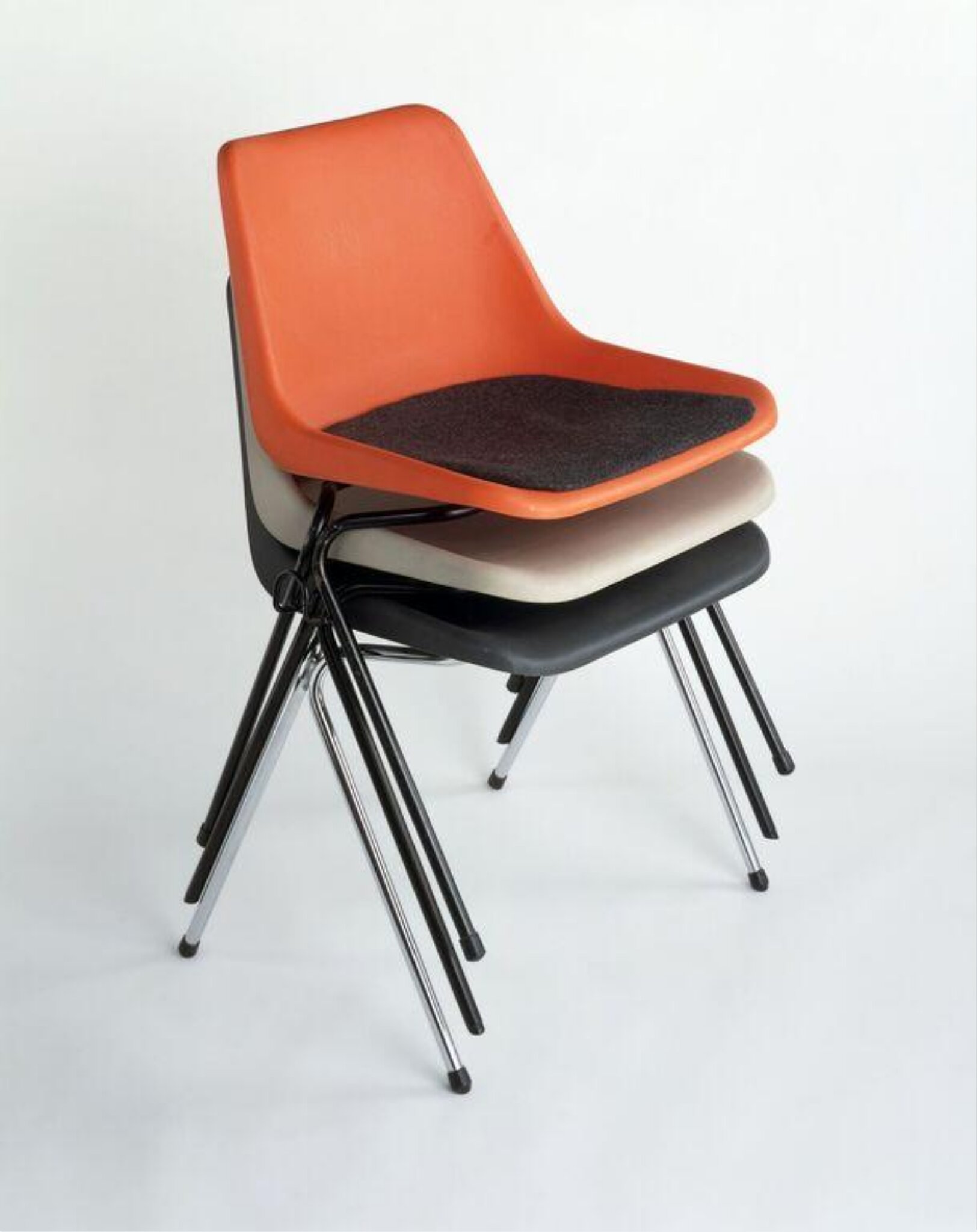
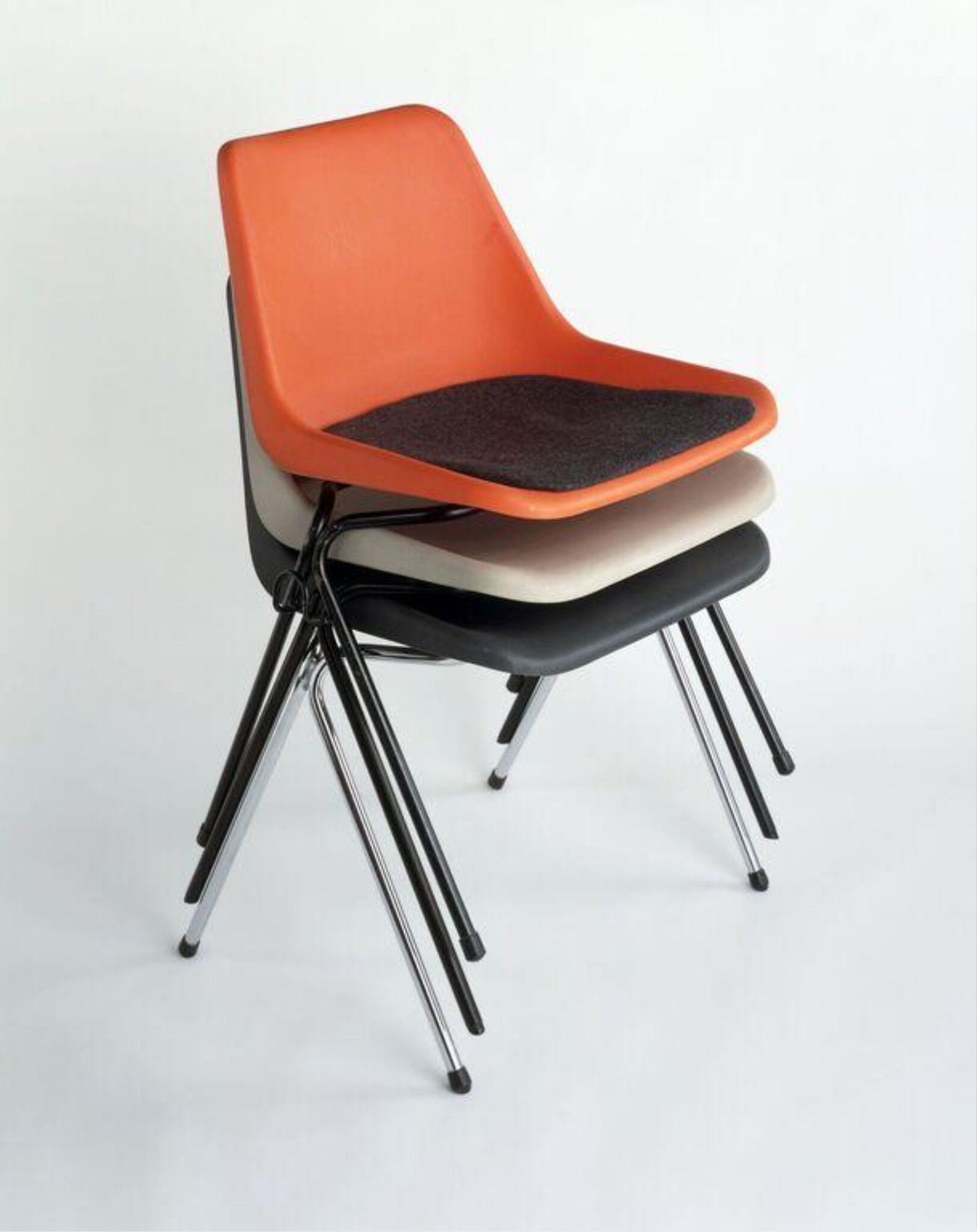
Polypropylene Chair (Mark II)
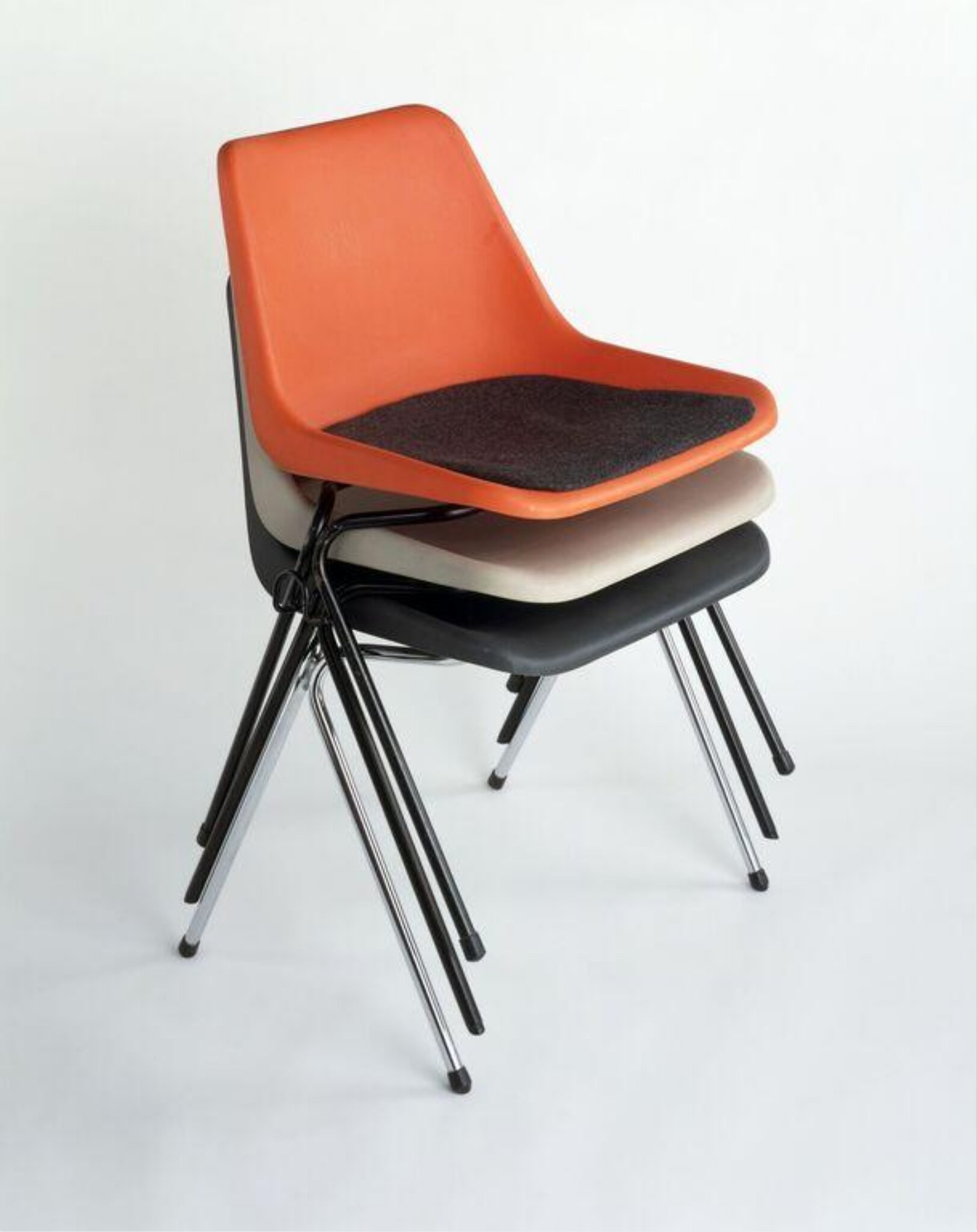
- Gallery: Design 1900 to Now, Room 74
- Maker: Robin Day (designer)
- Made in: Great Britain
- Date: 1964
- Object type: Chair
- Materials: Injection-moulded polypropylene shell on a metal base
- Dimensions: Height 73.7 cm; Width 53.3 cm; Depth 41.9 cm
- Museum: V&A South Kensington
- Collection record: V&A website
- Image © Victoria and Albert Museum, London.
Listen to the free audio guide
In the museum now? Point your phone at the next object and hear its guide.
About this object
Before you is the "Polypropylene Chair (Mark II)", a stackable chair designed by Robin Day in Great Britain. This piece features a single-piece shell made from injection-moulded polypropylene, resting on a metal base.
The name of this chair comes from the revolutionary plastic material used to create it. This new material was invented in 1954 and was prized for being lightweight, flexible, and very easy to mould. While previous one-piece chairs often used expensive glass fibre, this polypropylene shell was much more affordable for mass production. Although the initial tools required to make the shells were expensive, the process was incredibly efficient, allowing a single tool to produce thousands of shells every week.
This design was an immediate commercial success when it was launched in the early 1960s. It became a ubiquitous part of modern life, with millions of these durable chairs sold in countries all over the world. Even today, this iconic design remains in production.
See it in person
Polypropylene Chair (Mark II) is on display in Design 1900 to Now, Room 74 at the V&A South Kensington on Cromwell Road, London — free to enter. Choose V&A South Kensington on audioguide.london and take a photo of it to hear this free audio guide in six languages — no app download needed.
New, in beta. V&A support has just launched and is still improving: 1,000 objects with audio so far, with more added all the time.