Pilgrim flask
- Gallery: Room 2a
- Maker: Workshop of Patanazzi Family
- Made in: Urbino
- Date: 1585-1600 (circa)
- Object type: pilgrim flask
- Materials: earthenware
- Museum number: WB.64.a
- Museum: The British Museum
- Collection record: British Museum website
- Image © The Trustees of the British Museum, shared under a CC BY-NC-SA 4.0 licence.
Listen to the free audio guide
In the museum now? Point your phone at the next object and hear its guide.
About this object
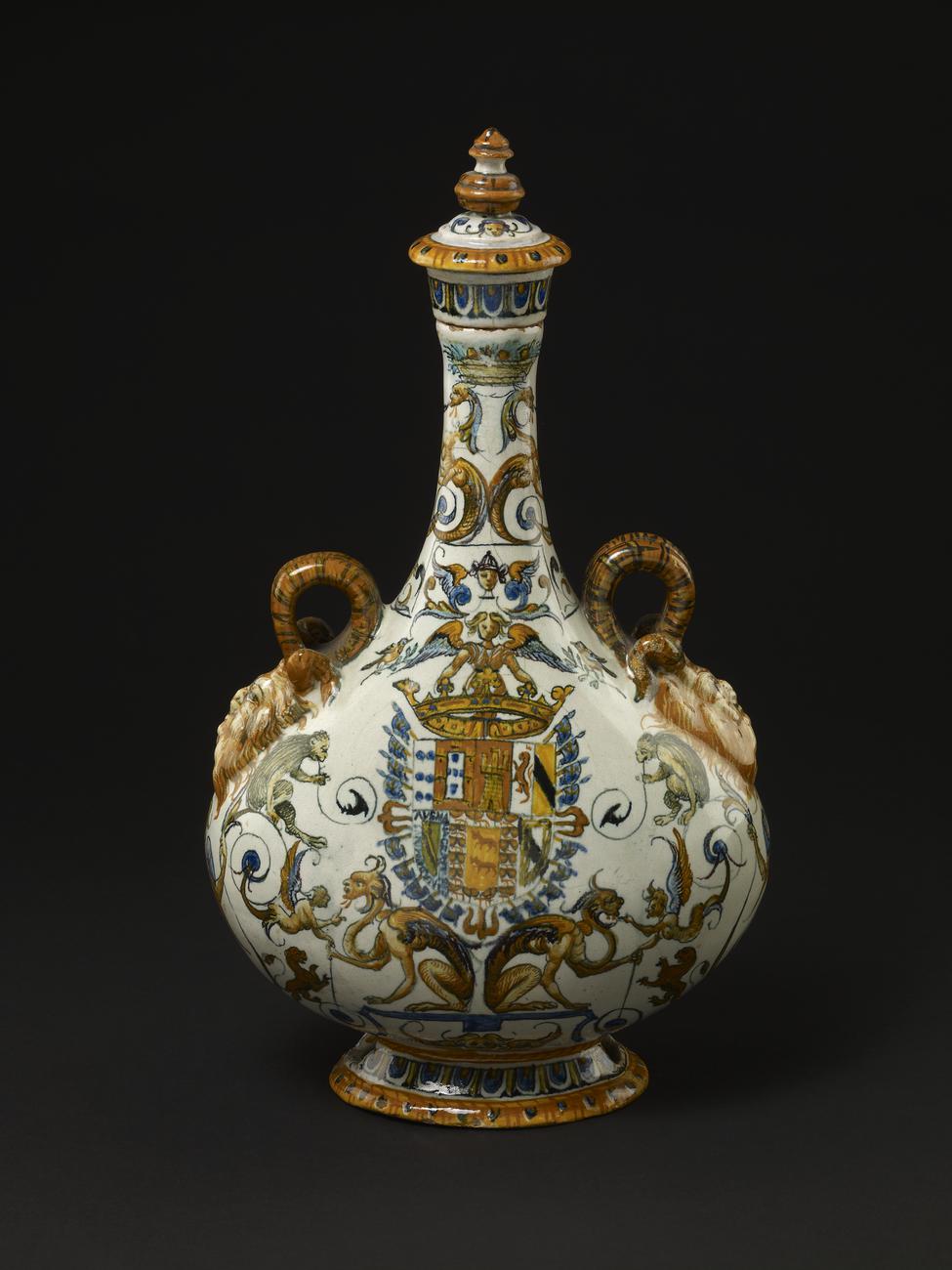
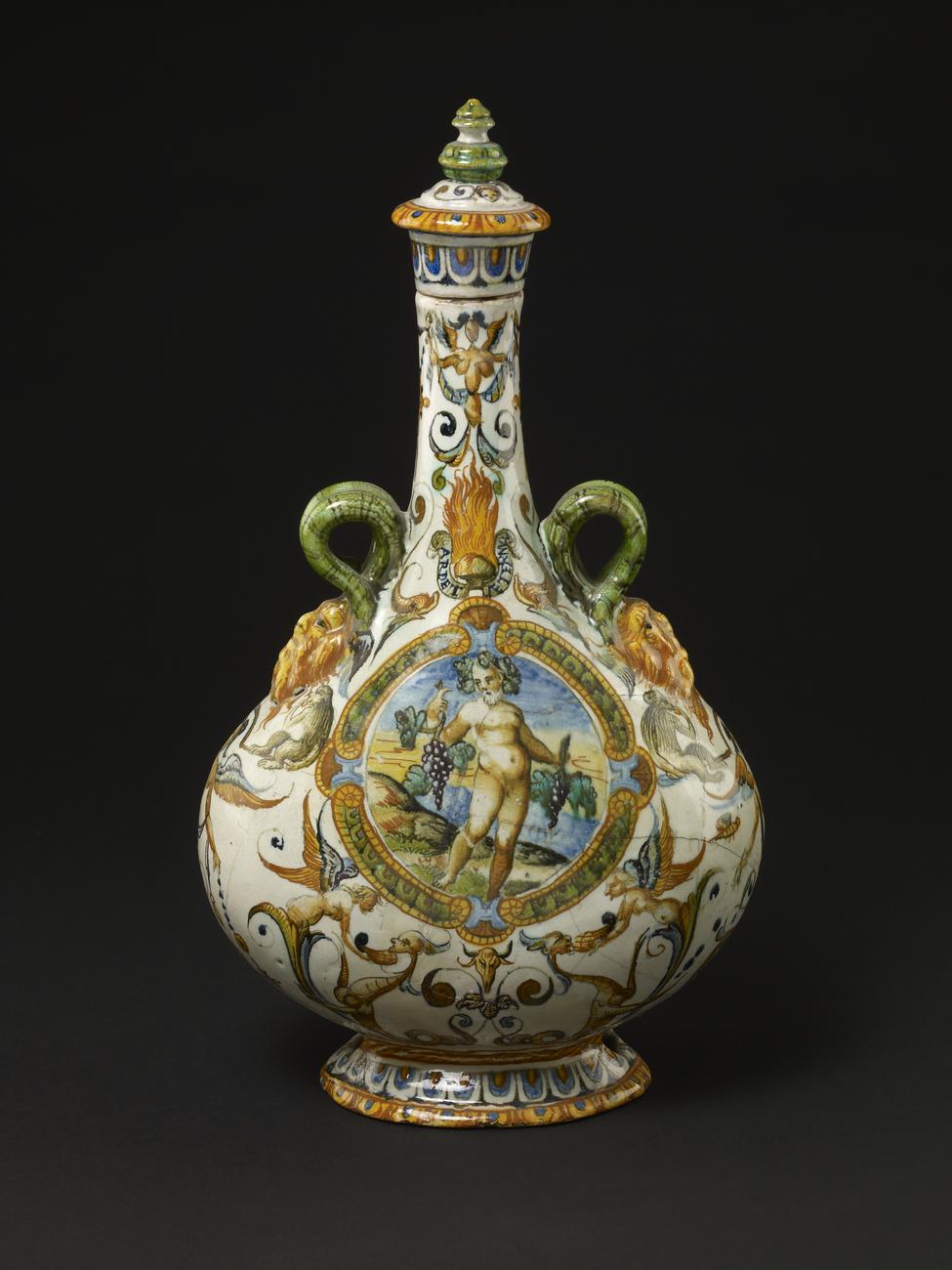
Before you is a pilgrim flask created in Urbino, Italy, in the late 1500s. The flask has two scrolling handles that end in mask-like features and a foot with slots on each side. It is made of earthenware covered in a tin-glaze, a technique known as maiolica, and adorned with painted scenes.
On either side of the flask are decorative medallions illustrating seasonal figures. One shows an old man warming his feet by a brazier, representing Winter; the other shows a nude male holding grape bunches, symbolizing Autumn or Bacchus, the god of wine. Above each figure is a fiery emblem with the Latin phrase ARDET AETERNUM—“It burns forever”—referring to an ancient legend about a fire-resistant stone.
This flask is part of an elaborate set of ceramics, likely made for a grand Renaissance court event and later collected by Baron Ferdinand Rothschild. Its intricate decoration reflects the artistic ambition of the Patanazzi family workshop.
See it in person
Pilgrim flask is on display in Room 2a at the British Museum on Great Russell Street, Bloomsbury, London — free to enter. Choose British Museum on audioguide.london and take a photo of it to hear this free audio guide in six languages — no app download needed.
New, in beta. British Museum support has just launched and is still improving: over 1,000 objects so far, with more added all the time.