Painted in a Welsh Village
- Artist: Albert Houthuesen
- Date: 1933
- Medium: Oil paint on canvas
- Dimensions: support: 940 x 686 mm
- Museum: Tate Britain
- Collection record: Tate Britain website
Listen to the free audio guide
About this artwork
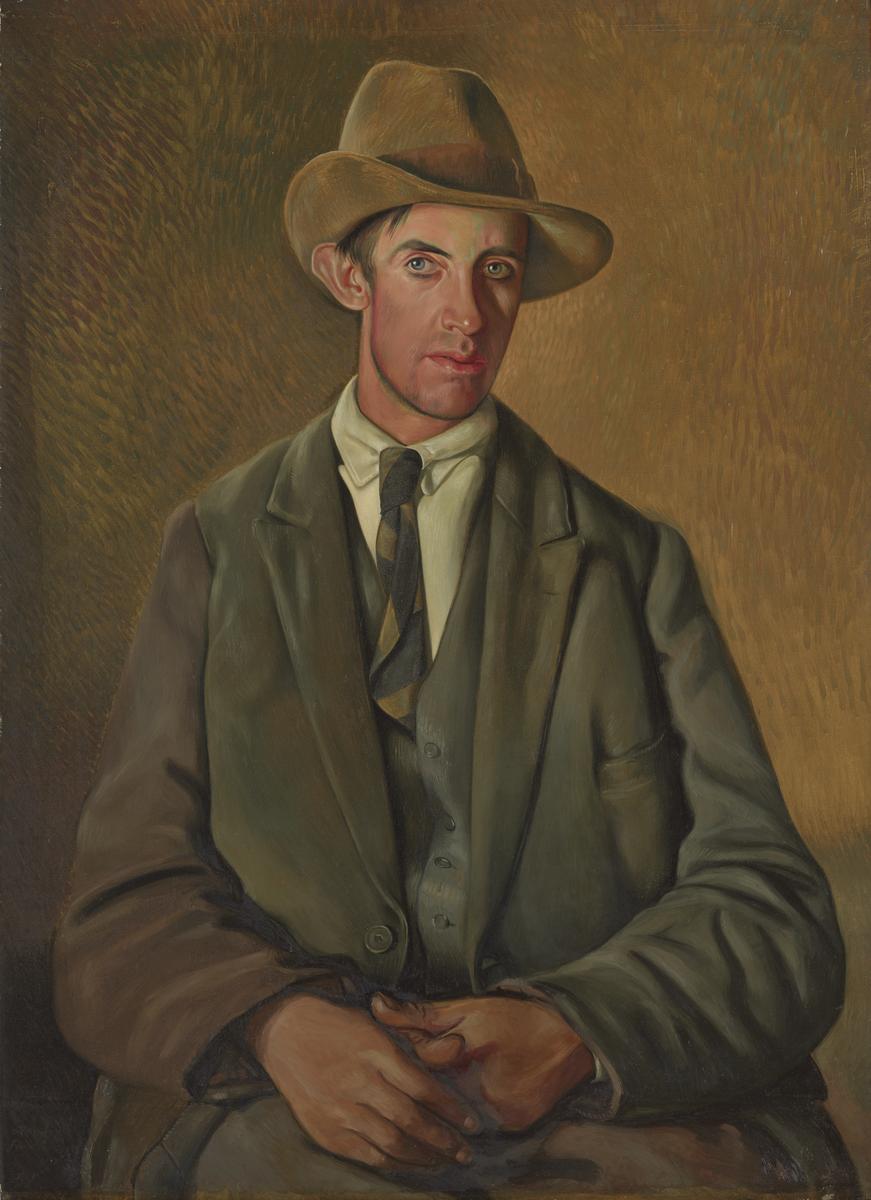
This is the “Painted in a Welsh Village” by Albert Houthuesen, painted in 1933 while he was staying in Trelogan, a mining town on the north coast of Wales near Liverpool. The canvas shows Harry Jones, a young collier, who sat for the artist four times. Jones appears in a smart but rumpled three‑piece suit, a long black overcoat and bowler hat, holding a bundle of wildflowers he gathered from the hedges. Houthuesen captured more than just a likeness; the portrait reflects his engagement with the daily lives of people around Welsh collieries during the 1930s. He was known for painting miners and sweeping landscapes during his Welsh sojourn. The work was presented by Dr Edwin Charles Montgomery‑Smith in 1938 and had already appeared at the N.E.A.C. exhibition earlier that year. It sits here in the Historic and Modern British Art section, reminding us of a time when industrial life and quiet moments coexisted. Notice how the light falls on Jones’ face, lending a gentle empathy that draws you into the scene.
See it in person
Painted in a Welsh Village is in the collection of Tate Britain on Millbank, London — free to enter. Point your phone at any artwork there and audioguide.london plays a free audio guide in six languages — no app download needed.