Noli me tangere

- Artist: Giotto di Bondone
- Date: (mid-14th century) 1350 - 1375
- Medium: tempera on panel
- Museum: The Courtauld Gallery
- Collection record: The Courtauld Gallery website
Listen to the free audio guide
About this artwork
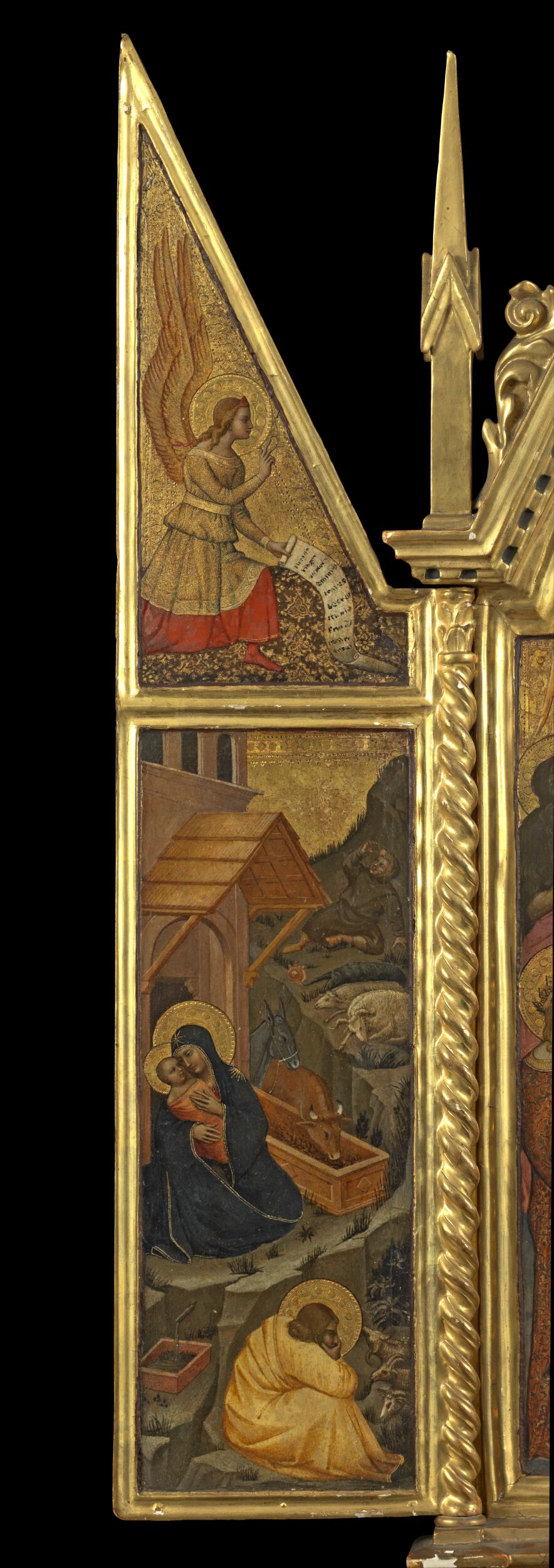
This is the “Noli me tangere” by Giotto di Bondone. Painted in the mid‑14th century, around 1350‑1375, it showcases the early Renaissance shift toward naturalism that Giotto pioneered. The work is executed in tempera on a wooden panel, a medium that allowed him to layer thin, luminous washes of pigment for dramatic light effects.
Giotto’s composition is tightly organized around a central vertical axis. In the foreground, a kneeling figure—most scholars identify her as Mary—offers a gesture of humility, while a figure of Christ stands poised, the hands crossed, inviting contemplation. The use of gesture is striking: Christ’s outstretched palm seems both a greeting and a command, “Do not touch me,” as the Latin title implies. The background is deliberately flattened, focusing attention on the human drama rather than on architectural grandeur.
The color palette is restrained—earthy browns, muted reds, and subtle blues—yet Giotto brings depth through careful shading. His mastery of chiaroscuro, even within tempera’s limitations, gives the figures a three‑dimensional presence. The panel’s wood grain is almost invisible, letting the painted surface dominate the eye.
“Noli me tangere” is a milestone, bridging medieval iconography and the emerging secular perspective that would define Renaissance art. It invites viewers to reflect on faith, humanity, and the power of artistic narrative.
See it in person
Noli me tangere hangs in The Courtauld Gallery at Somerset House, London. Point your phone at any artwork there and audioguide.london plays a free audio guide in six languages — no app download needed.