Neo-Assyrian wall panel
- Gallery: Room 7
- Culture: Neo-Assyrian
- Date: 865BC-860BC
- Object type: wall panel, relief
- Materials: gypsum
- Museum number: 124543
- Museum: The British Museum
- Collection record: British Museum website
- Image © The Trustees of the British Museum, shared under a CC BY-NC-SA 4.0 licence.
Listen to the free audio guide
In the museum now? Point your phone at the next object and hear its guide.
About this object
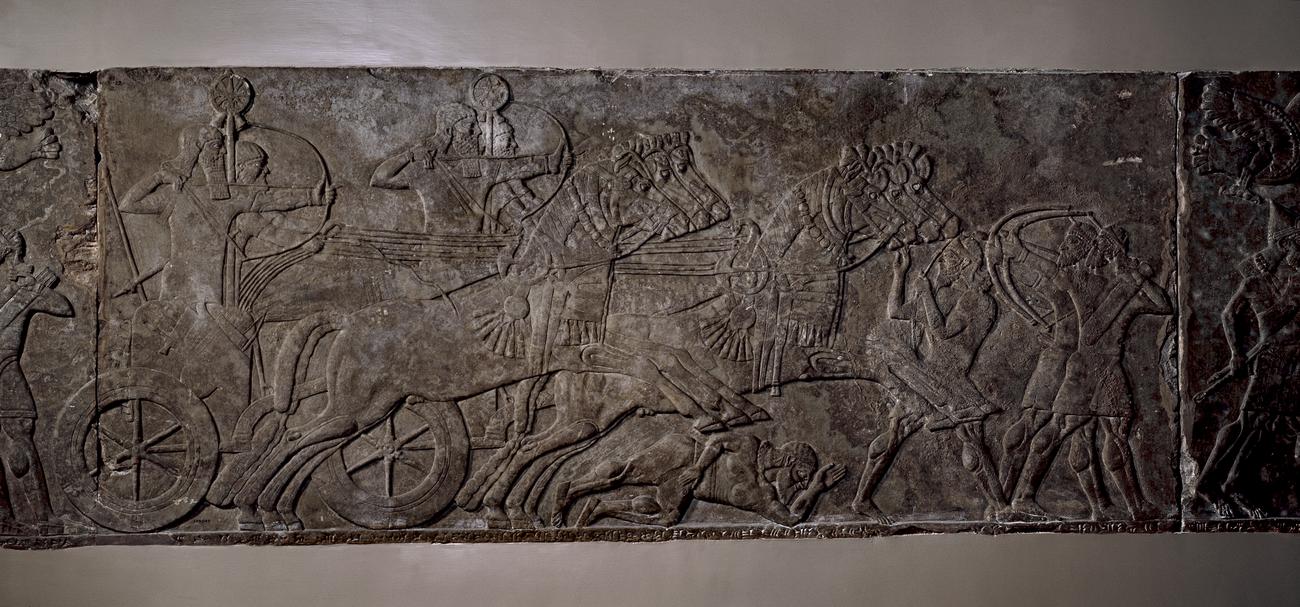
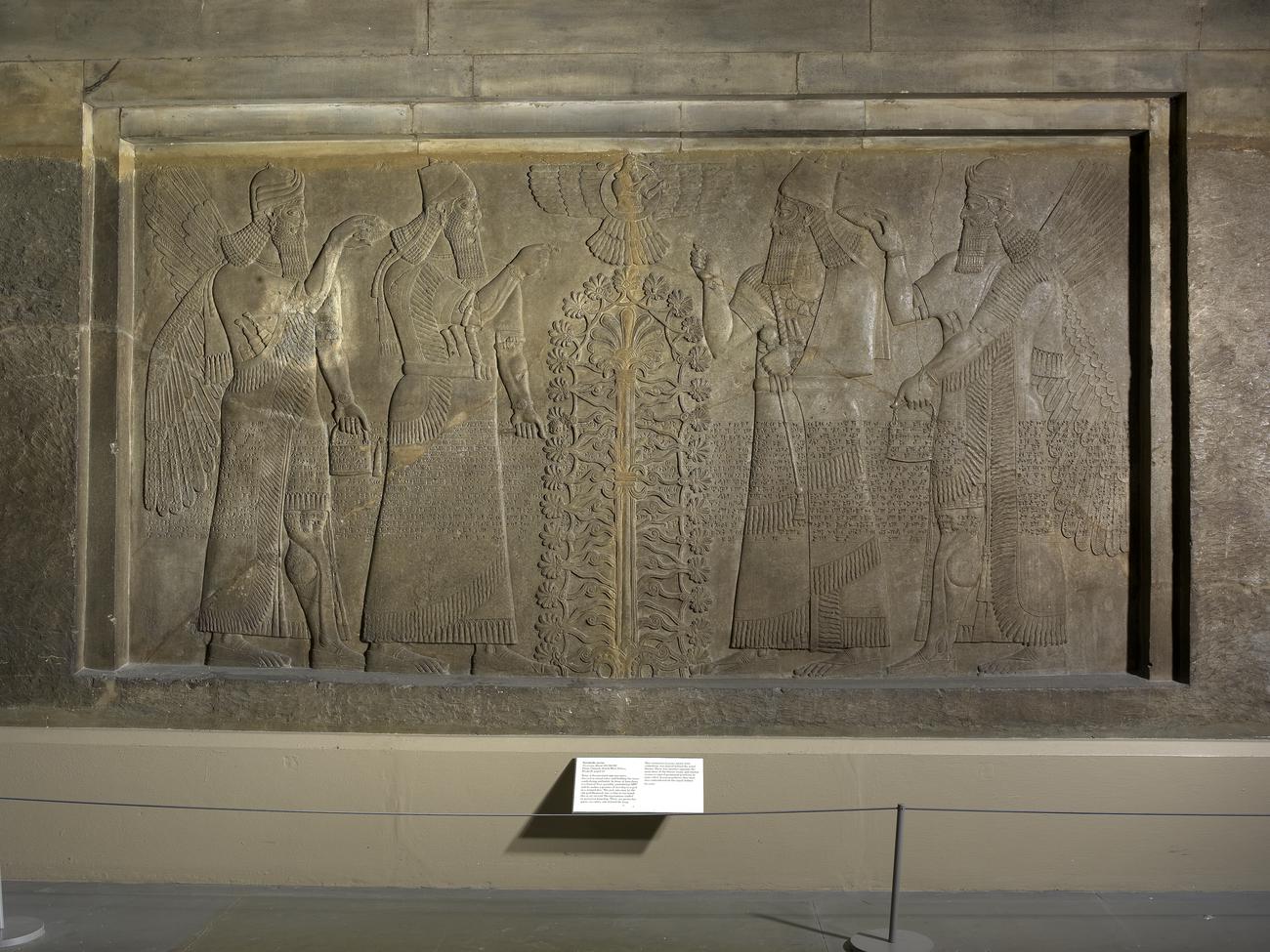
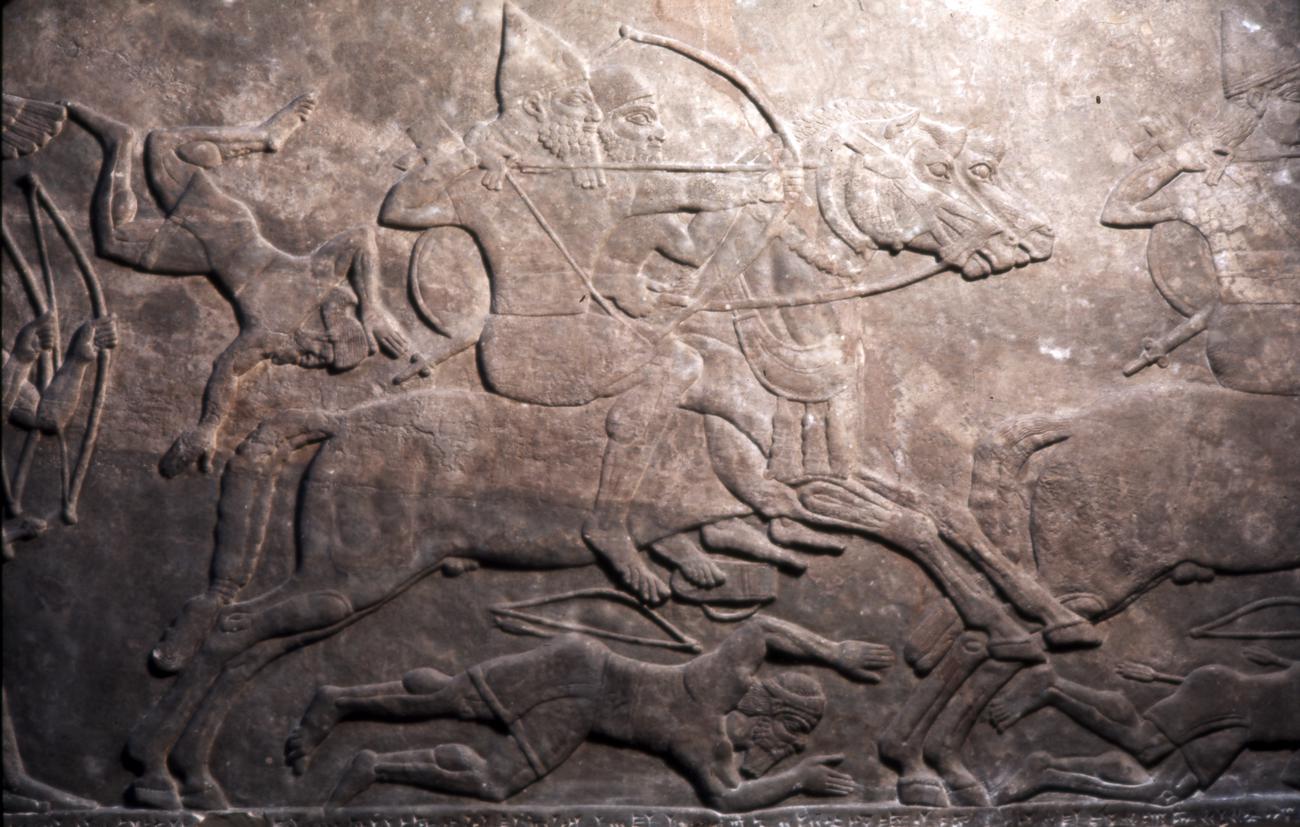
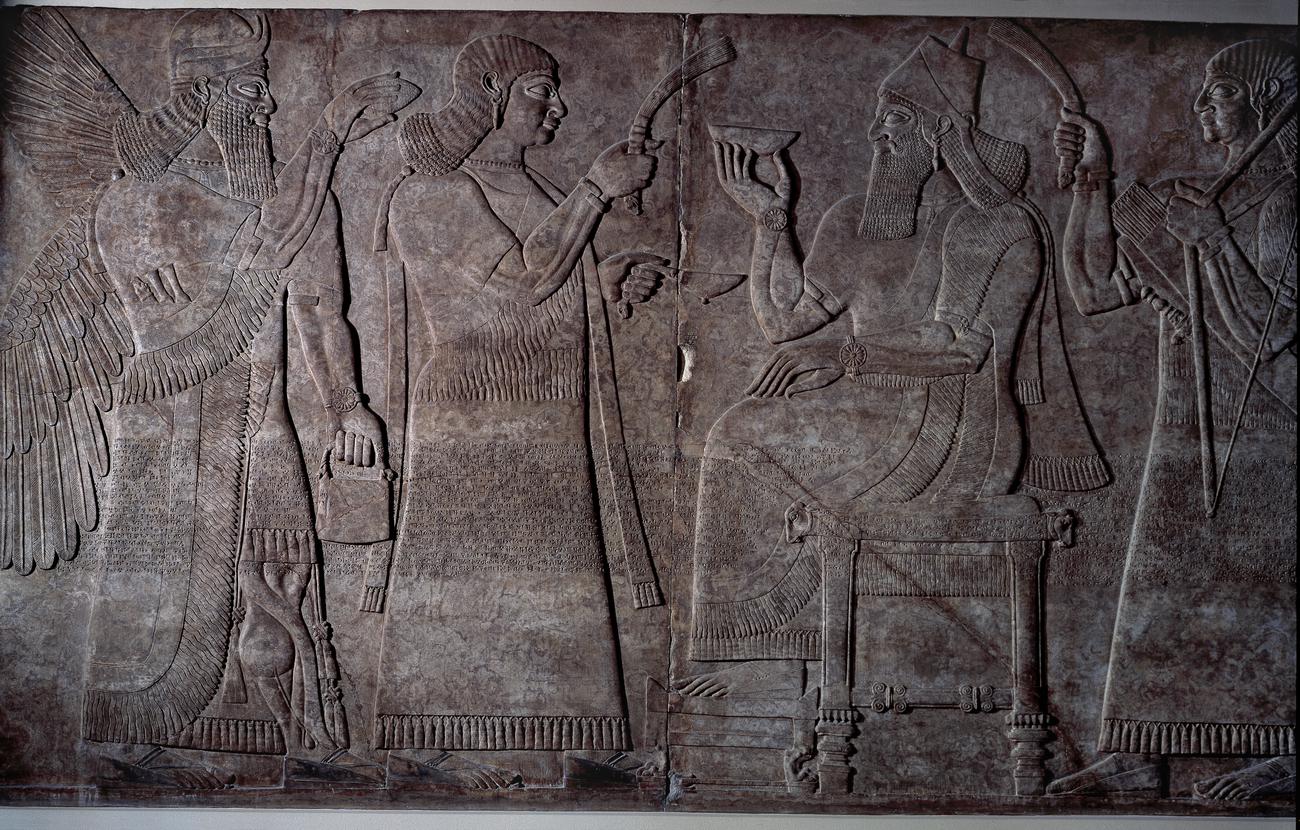
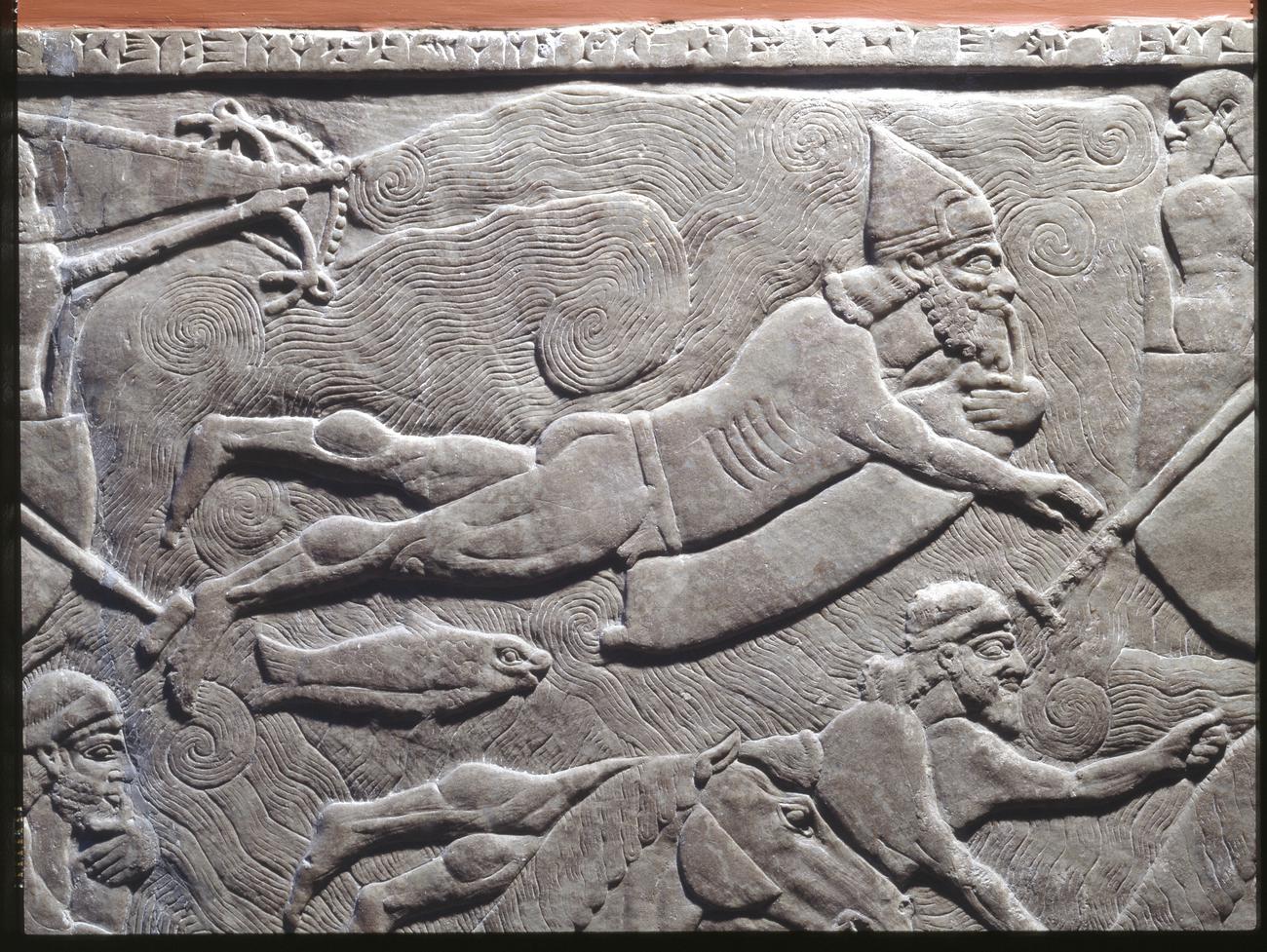
This Neo-Assyrian wall panel dates to around 865 to 860 BCE and shows a scene of people and animals crossing a river. Horses swim alongside grooms, and a chariot, bed, and jar are carried on small boats called coracles. In Assyrian art, figures are fully visible rather than partially submerged — a feature you’ll notice here. An inscription in cuneiform script, one of the oldest forms of writing, adds historical depth to the scene. The piece comes from the North West Palace, where it was discovered during excavations. Made of gypsum, it was carefully removed and later brought to England aboard the HMS Jumna, following a journey noted in historical archives. This relief is part of a larger set of panels, each telling different stories from Assyrian life. As you look closely, consider how the ancient artists captured movement and detail in their storytelling — a remarkable achievement from over 2,800 years ago.
See it in person
Neo-Assyrian wall panel is on display in Room 7 at the British Museum on Great Russell Street, Bloomsbury, London — free to enter. Choose British Museum on audioguide.london and take a photo of it to hear this free audio guide in six languages — no app download needed.
New, in beta. British Museum support has just launched and is still improving: over 1,000 objects so far, with more added all the time.