Neo-Assyrian wall panel
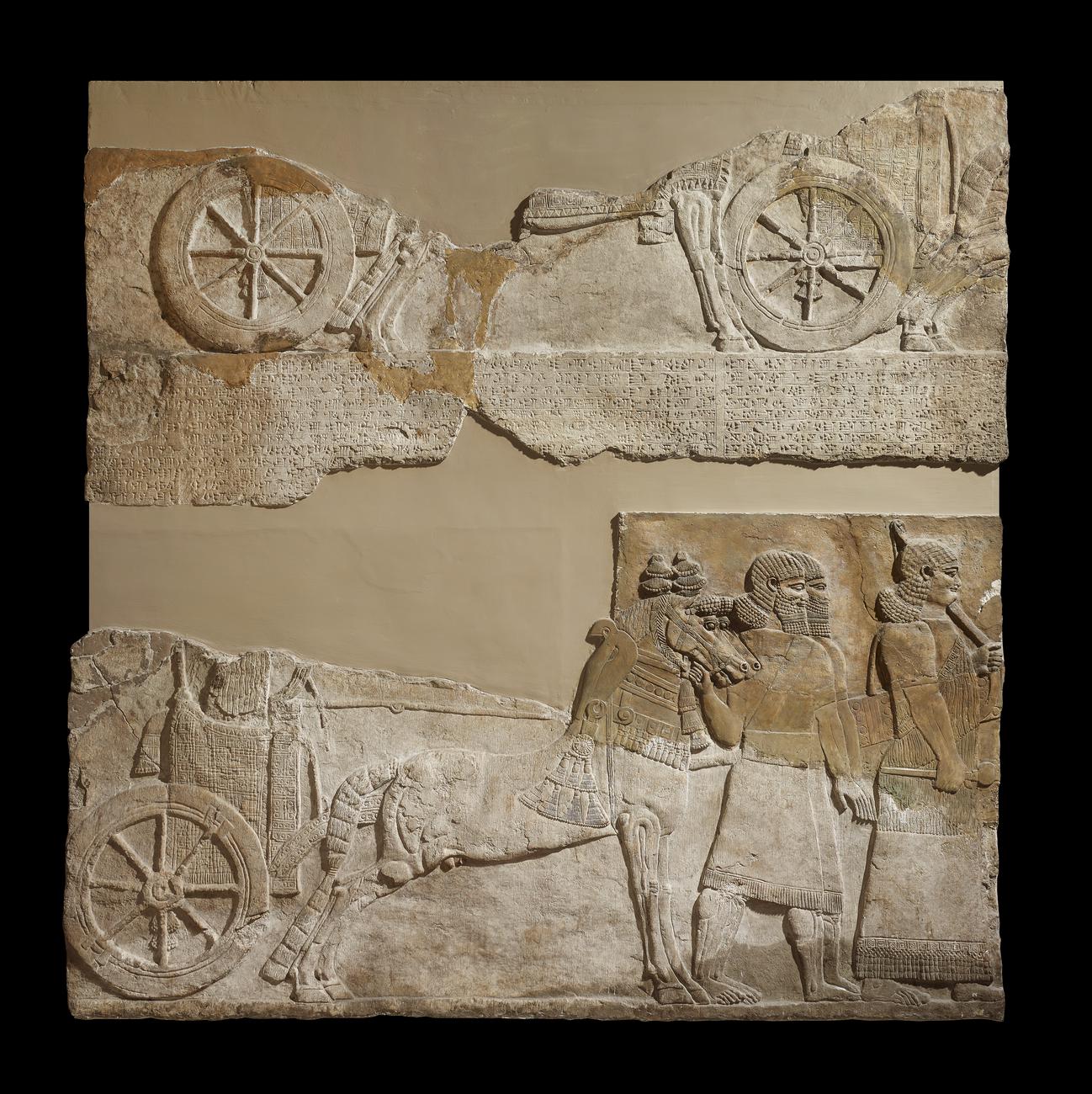
- Gallery: Room 8
- Culture: Neo-Assyrian
- Date: 728BC
- Object type: wall panel, relief
- Materials: gypsum
- Museum number: 124961
- Museum: The British Museum
- Collection record: British Museum website
- Image © The Trustees of the British Museum, shared under a CC BY-NC-SA 4.0 licence.
Listen to the free audio guide
About this object
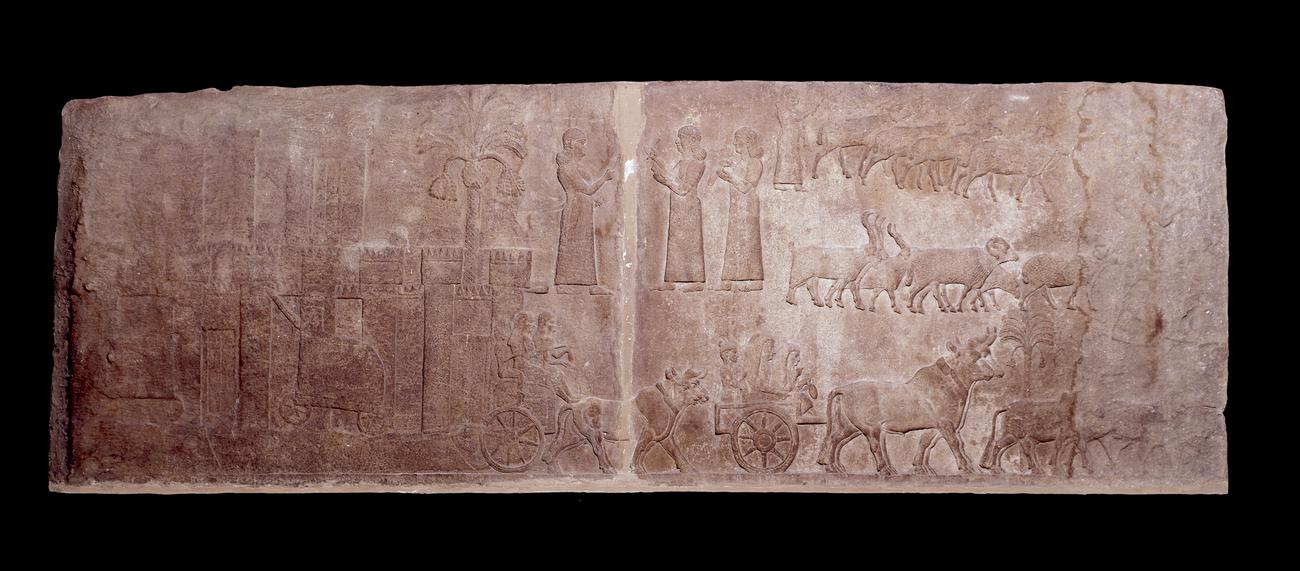
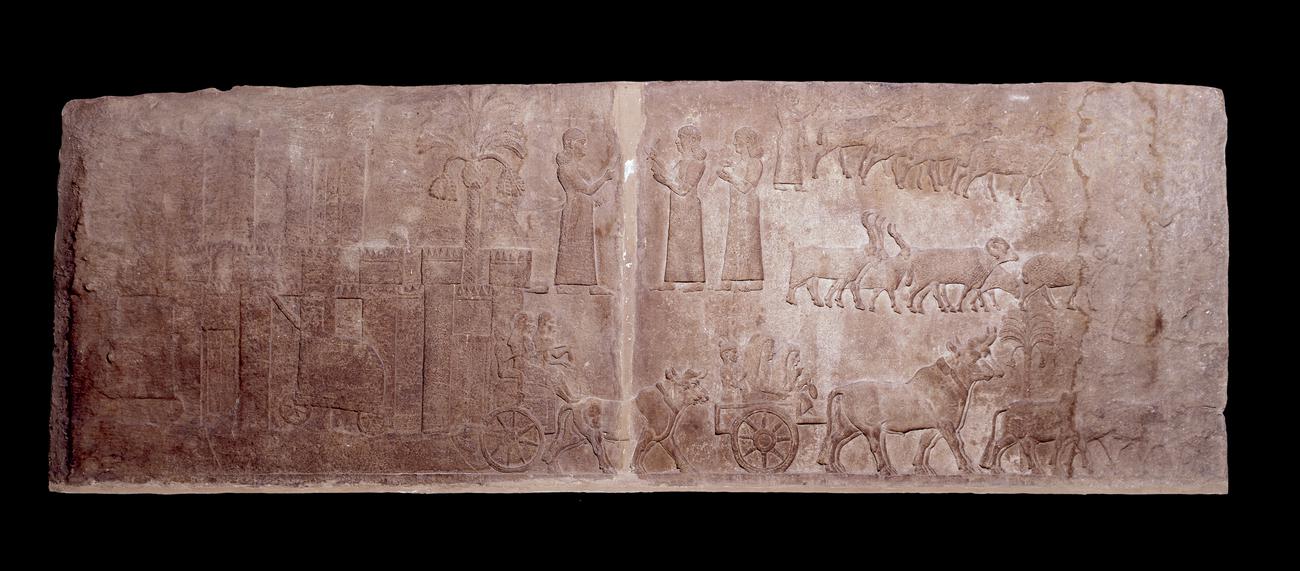
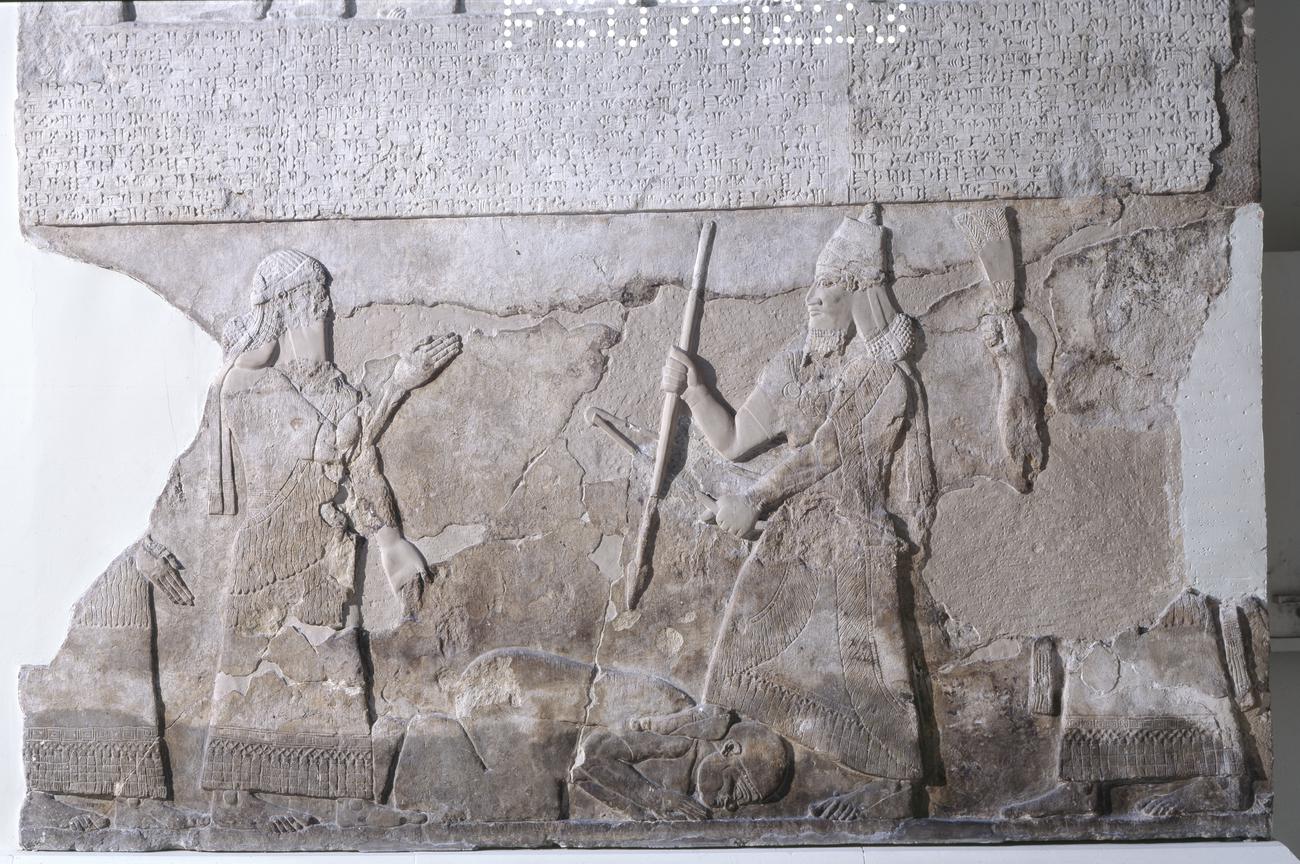
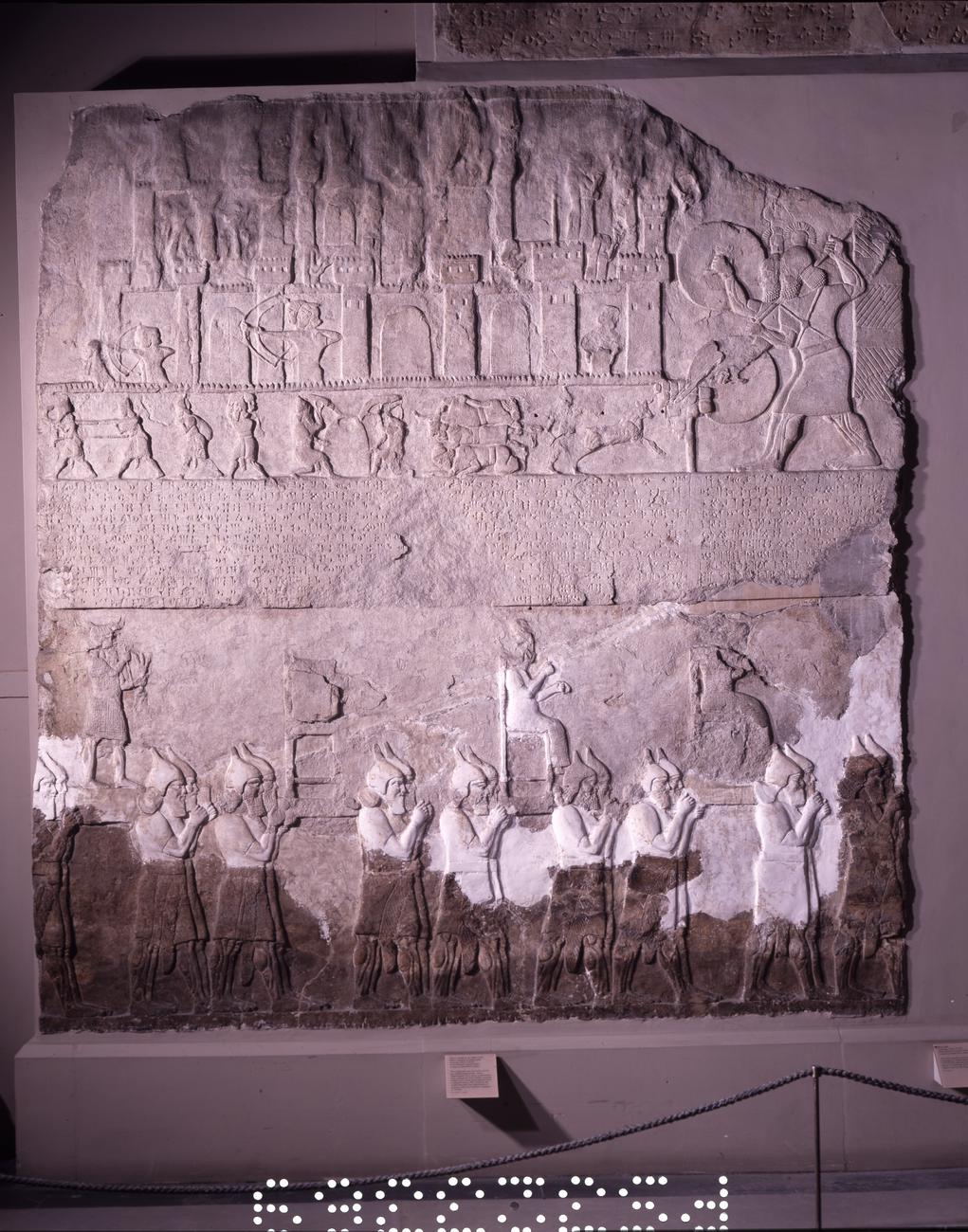
Before you stands a Neo-Assyrian wall panel, part of a larger relief that once adorned the palace of Tiglath-pileser III, who ruled from 745 to 727 BCE. The panel shows a richly detailed scene of a royal chariot and a figure associated with the king, possibly his servant or attendant. The chariot is adorned with elaborate decorations, and the horses are finely detailed with elaborate trappings. The figure in the chariot holds the reins and a whip, while two men support the horses’ bridles. This panel is carved in gypsum and preserves important cuneiform inscriptions at its base, recording details of the king’s military campaigns in Syria and Iran around 738–737 BCE. The piece was excavated in what is now southern Iraq, from the site of Nimrud, and was brought to the British Museum through the efforts of Sir Austen Henry Layard.
See it in person
Neo-Assyrian wall panel is on display in Room 8 at the British Museum on Great Russell Street, Bloomsbury, London — free to enter. Choose British Museum on audioguide.london and take a photo of it to hear this free audio guide in six languages — no app download needed.
New, in beta. British Museum support has just launched and is still improving: over 1,000 objects so far, with more added all the time.