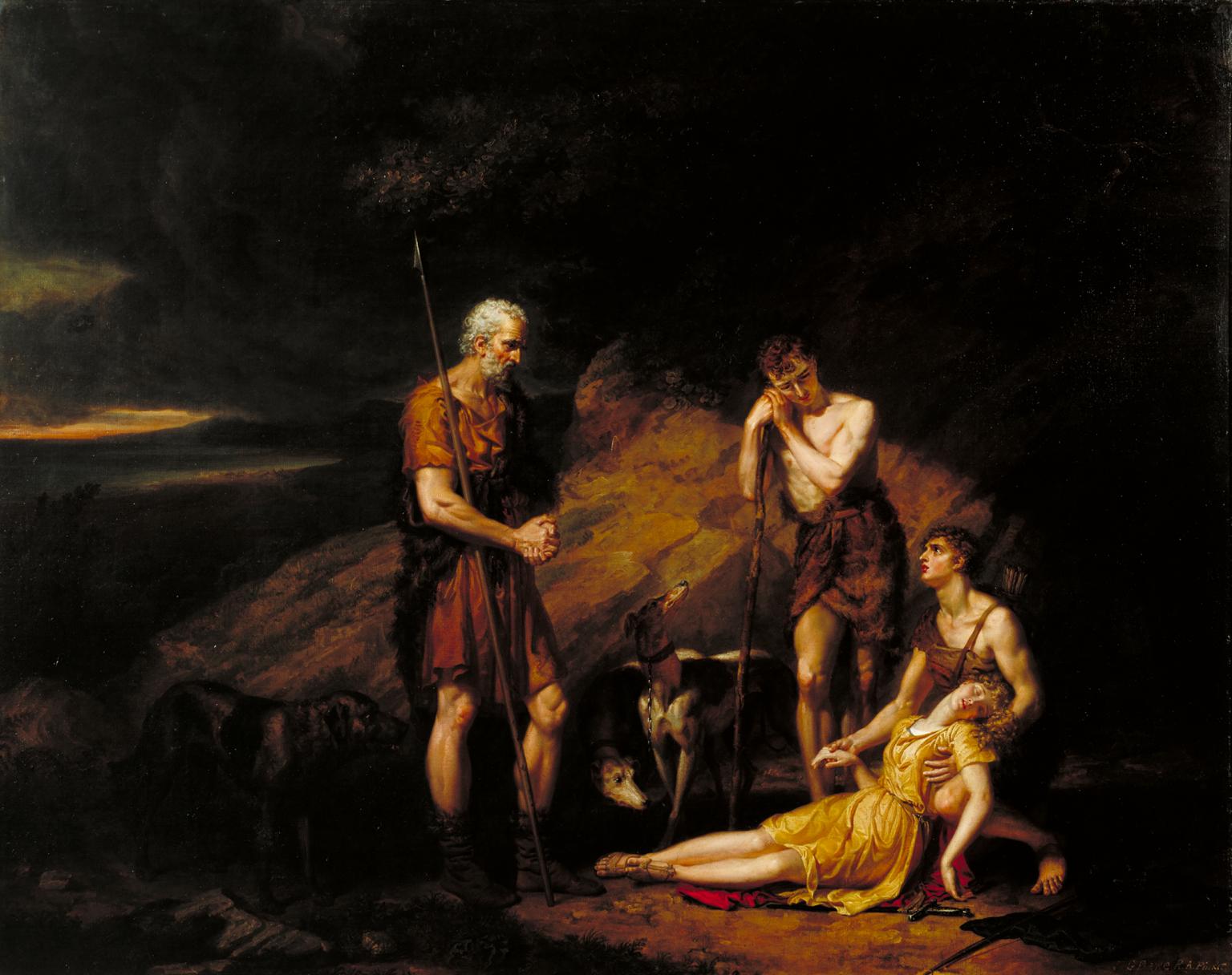
Naomi and her Daughters
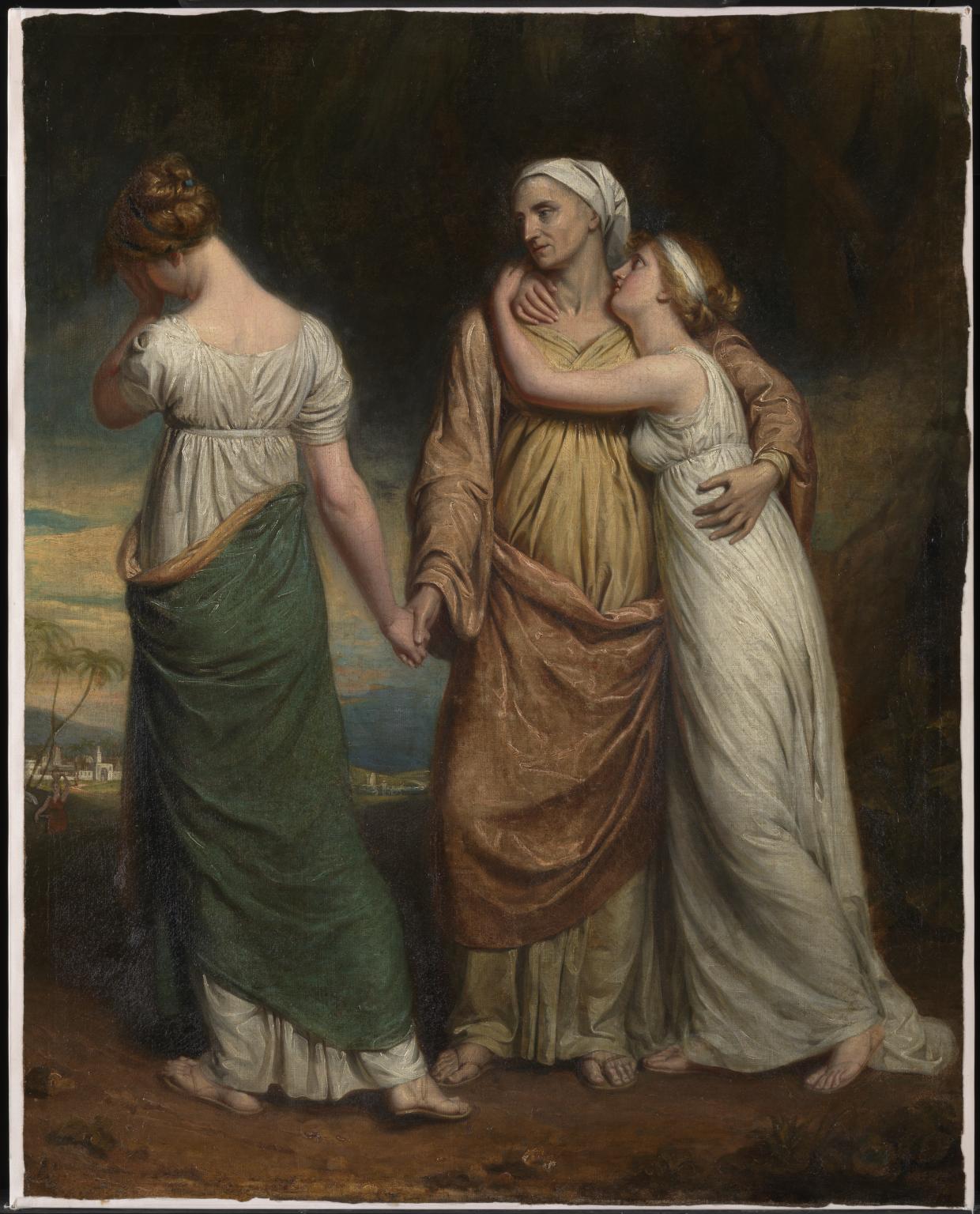
- Artist: George Dawe
- Date: exhibited 1804
- Medium: Oil paint on canvas
- Dimensions: support: 961 x 769 mm
- Museum: Tate Britain
- Collection record: Tate Britain website
Listen to the free audio guide
About this artwork
This is the “Naomi and her Daughters” by George Dawe, painted in 1804. The canvas captures a quiet yet powerful moment from the Old Testament: Naomi stands in the centre, urging her widowed daughters‑in‑law to return to their own people instead of following her to Bethlehem. You’ll notice Orpah on the left, tears streaking her face as she departs, while Ruth on the right clings to Naomi, refusing to leave. Dawe chose this instant to show loyalty and grief side by side.
It was the very first painting Dawe showed at the Royal Academy, and he used it to prove he could tackle high‑minded, emotive subjects. The artist kept the palette restrained, favouring subtle earth tones that give the figures a sculptural, almost idealised quality. That approach was in line with what was popular among early‑nineteenth‑century painters, who prized a calm, dignified presentation of biblical scenes.
Overall, the work feels almost cinematic: a quiet exchange of emotions, a gentle tug‑of‑war between duty and devotion, all wrapped in the quiet dignity that defines Dawe’s early style.
See it in person
Naomi and her Daughters is in the collection of Tate Britain on Millbank, London — free to enter. Point your phone at any artwork there and audioguide.london plays a free audio guide in six languages — no app download needed.