Moses and the Burning Bush
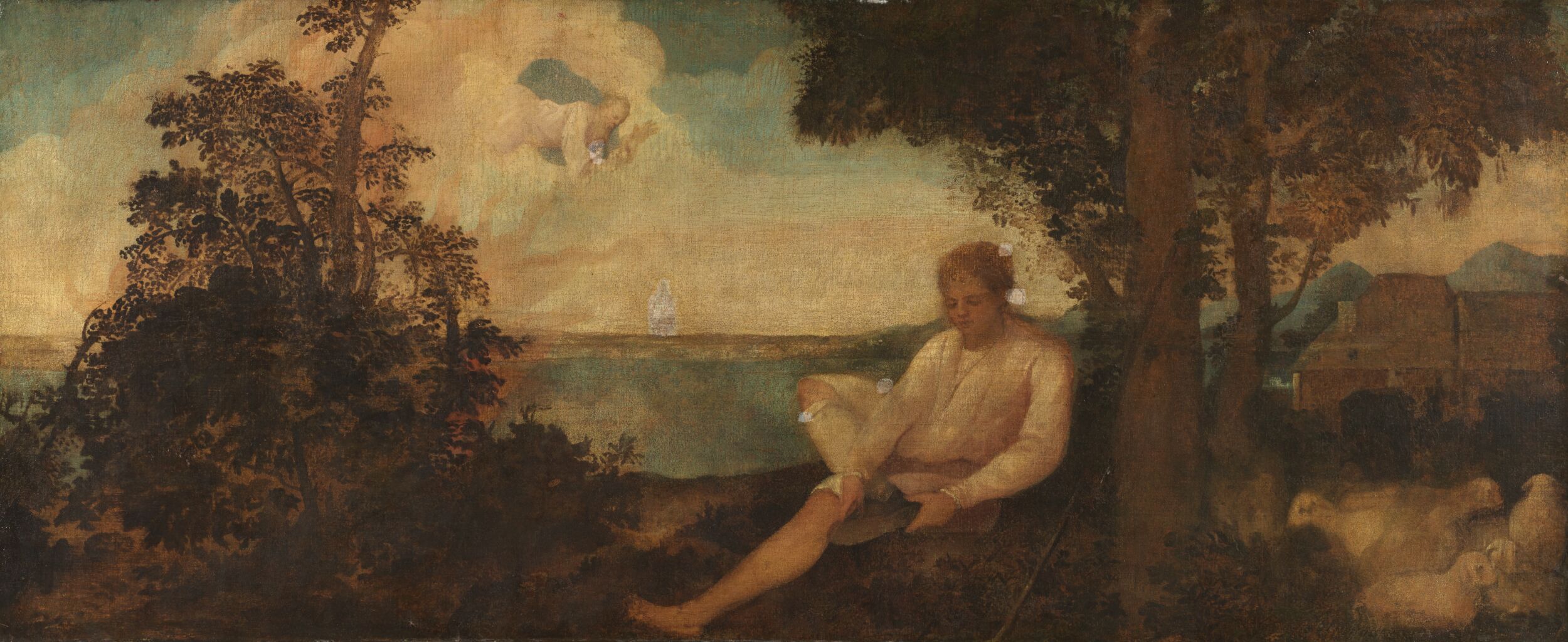
- Artist: Italy (Venice) 16th century (Artists)
- Date: (circa) 1500 - 1530
- Medium: oil on canvas
- Museum: The Courtauld Gallery
- Collection record: The Courtauld Gallery website
Listen to the free audio guide
About this artwork
This is the *Moses and the Burning Bush* painted in 16th‑century Venice. The work is an oil on canvas created around 1500–1530 by a Venetian artist whose name isn’t recorded here. The scene captures the biblical moment when Moses first encounters the divine presence in a miraculous, burning bush that does not consume itself. The composition places Moses in the foreground, his hand raised in awe, while the bush flickers dramatically in the background, illuminated by a subtle yet intense light that seems to emanate from the flame itself.
The use of oil allows the artist to achieve rich, luminous colors: the warm reds and oranges of the fire contrast with the cool blues and earthy tones of Moses’s robe and the surrounding landscape. The brushwork suggests a careful layering, typical of Venetian painters who favored subtle gradations and a sense of depth. Even without detailed provenance, the painting reflects the period’s fascination with dramatic religious narratives and the interplay of light and shadow to convey spiritual intensity.
You’ll notice the figure of Moses is rendered with a modest yet expressive face, his robes flowing in a way that hints at the surrounding air moving around the flames. The overall effect is one of quiet reverence mixed with the awe of a divine encounter, a testament to how 16th‑century Venetian artists balanced storytelling with the technical mastery of oil painting.
See it in person
Moses and the Burning Bush hangs in The Courtauld Gallery at Somerset House, London. Point your phone at any artwork there and audioguide.london plays a free audio guide in six languages — no app download needed.