Ming dynasty banknote
- Audio guide stop: 524
- Gallery: Room 68
- Culture: Ming dynasty; Hongwu
- Made in: China
- Date: 1375
- Object type: banknote
- Materials: paper
- Museum number: CIB,EA.260
- Museum: The British Museum
- Collection record: British Museum website
- Image © The Trustees of the British Museum, shared under a CC BY-NC-SA 4.0 licence.
Listen to the free audio guide
About this object
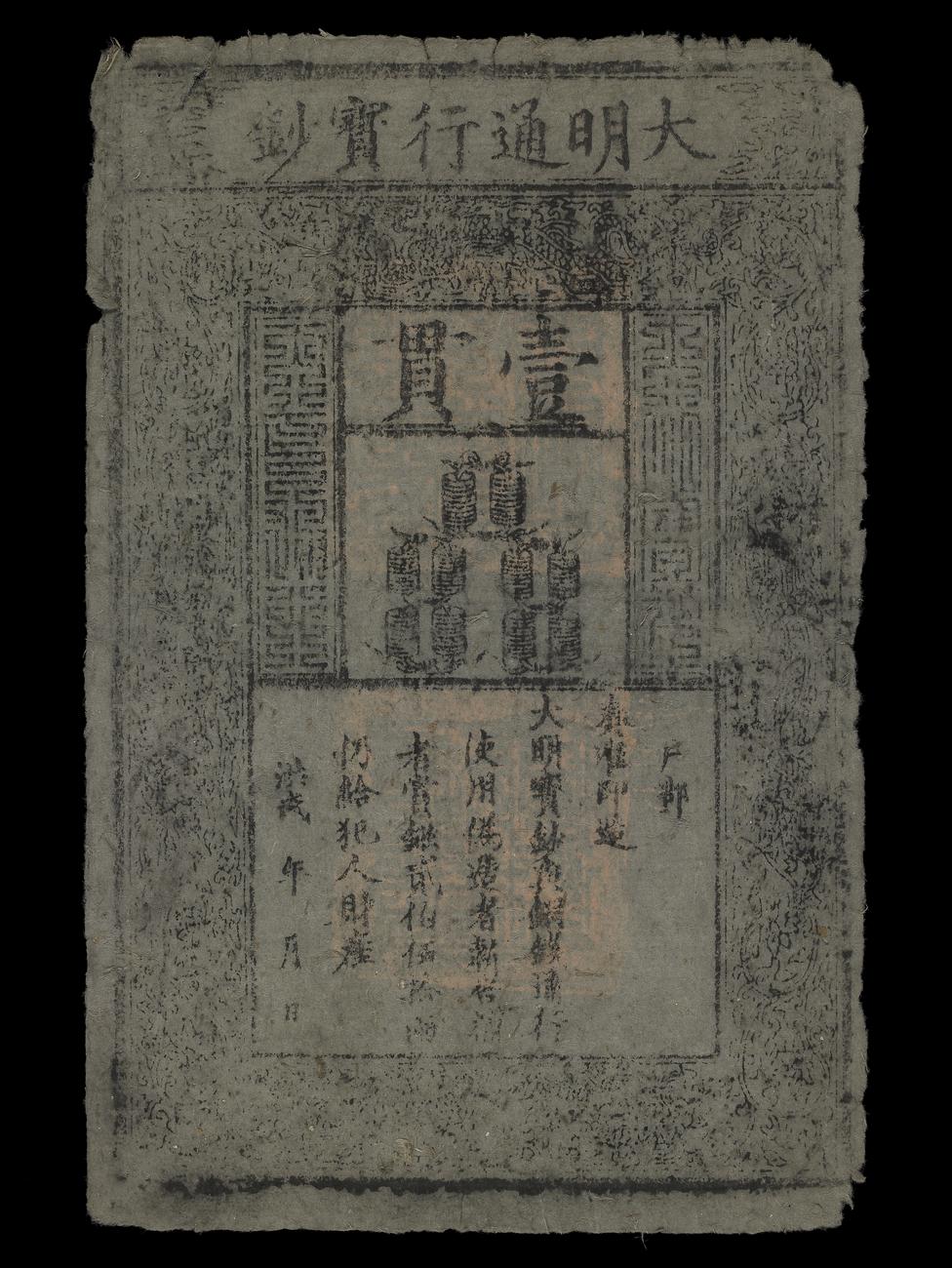
In this work, before you is a banknote from the Ming dynasty. It was issued in China in 1375 during the early years of the Hongwu reign. The note measures about 34 centimeters tall and is printed on durable paper. At the top, bold Chinese characters declare "Great Ming Circulating Treasure Note," with a central inscription naming it "one string," indicating its value of one thousand coins.
Richly decorated dragons frame the border, symbolizing power and authority. In the center, an image of one thousand coins shows how they would be counted—ten groups of one hundred, strung together.
The text surrounding the picture contains crucial details. It warns strictly against counterfeiting and even lists the sentence: death for the printer and a generous reward for informants. This reflects the seriousness with which the Ming government treated currency security. It's a fascinating glimpse into early Chinese financial systems and governance.
See it in person
Ming dynasty banknote is on display in Room 68 at the British Museum on Great Russell Street, Bloomsbury, London — free to enter. Choose British Museum on audioguide.london and type its audio guide stop number, 524, from the gallery label, or take a photo of it, to hear this free audio guide in six languages — no app download needed.
New, in beta. British Museum support has just launched and is still improving: over 1,000 objects so far, with more added all the time.