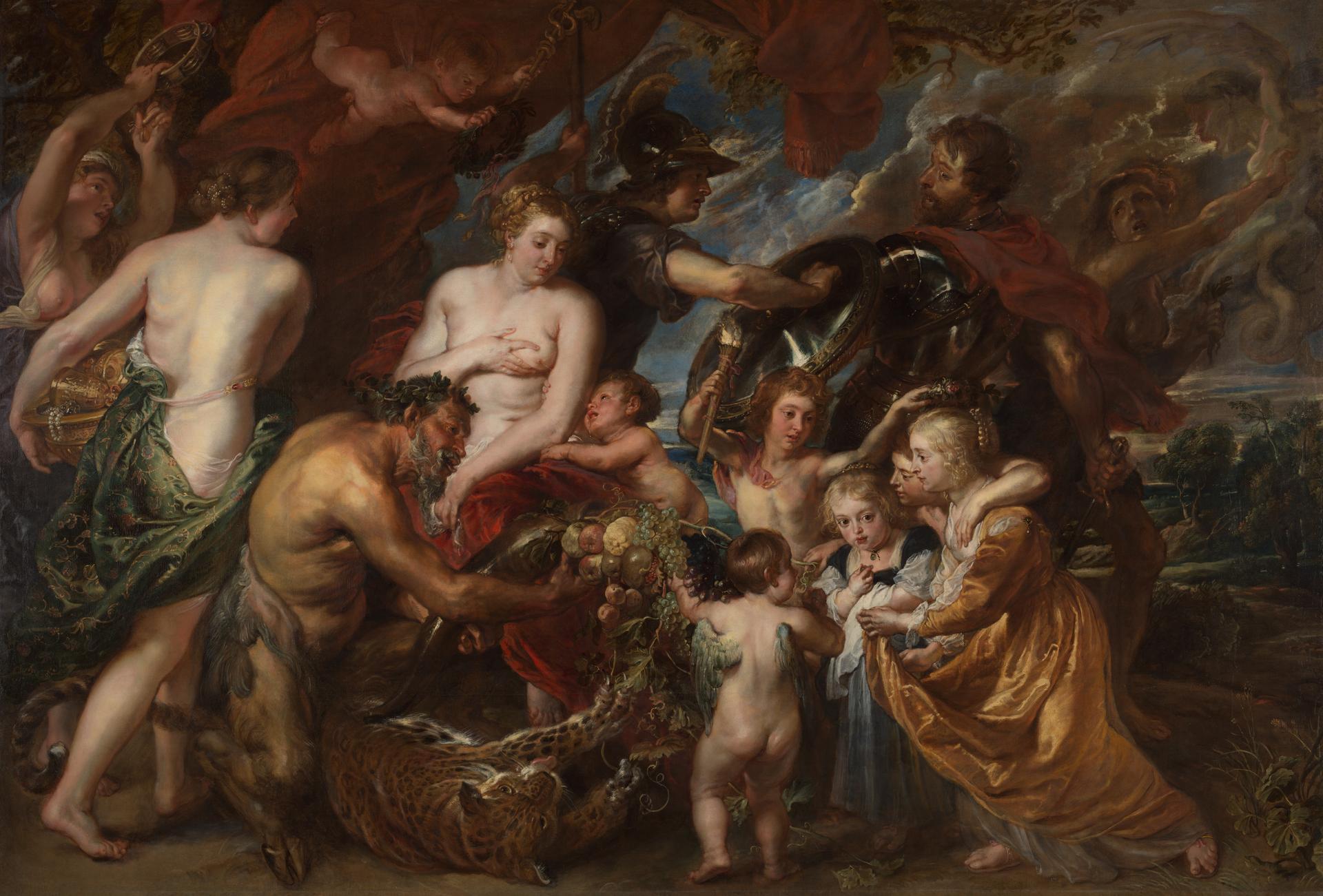
Minerva protects Pax from Mars ('Peace and War')
- Artist: Peter Paul Rubens
- Date: 1629-30
- Medium: oil on canvas
- Museum: The National Gallery
- Collection record: The National Gallery website
Listen to the free audio guide
About this artwork
This is "Minerva protects Pax from Mars ('Peace and War')" by Peter Paul Rubens. Painted in the early 17th century, it's a prime example of Baroque art. The painting is an allegory, with figures representing different virtues and abstract concepts.
In the centre, we see a woman who personifies both Pax (Peace) and Ceres, goddess of the earth. She's feeding children from her breast and sharing her bounty with them. These kids are likely portraits of the children of Sir Balthasar Gerbier, Rubens' host in London.
Just behind Pax, Minerva is protecting the group from Mars, god of war. The overall message is clear: rejecting war and embracing peace will bring prosperity and plenty. It's no coincidence that this painting was created during a time when England and Spain were keen on signing a peace treaty. In fact, Rubens' mission was successful, and a peace deal was signed in November 1630.
The painting also features other mythological figures, like the putto carrying a caduceus above Pax's head, which represents fair exchange and negotiation. It's a beautiful example of Rubens' skill as both an artist and a diplomat.
See it in person
Minerva protects Pax from Mars ('Peace and War') hangs in The National Gallery on Trafalgar Square, London — free to enter. Point your phone at any artwork there and audioguide.london plays a free audio guide in six languages — no app download needed.