Margate (?), from the Sea
- Artist: Joseph Mallord William Turner
- Date: about 1835-40
- Medium: oil on canvas
- Museum: The National Gallery
- Collection record: The National Gallery website
Listen to the free audio guide
About this artwork
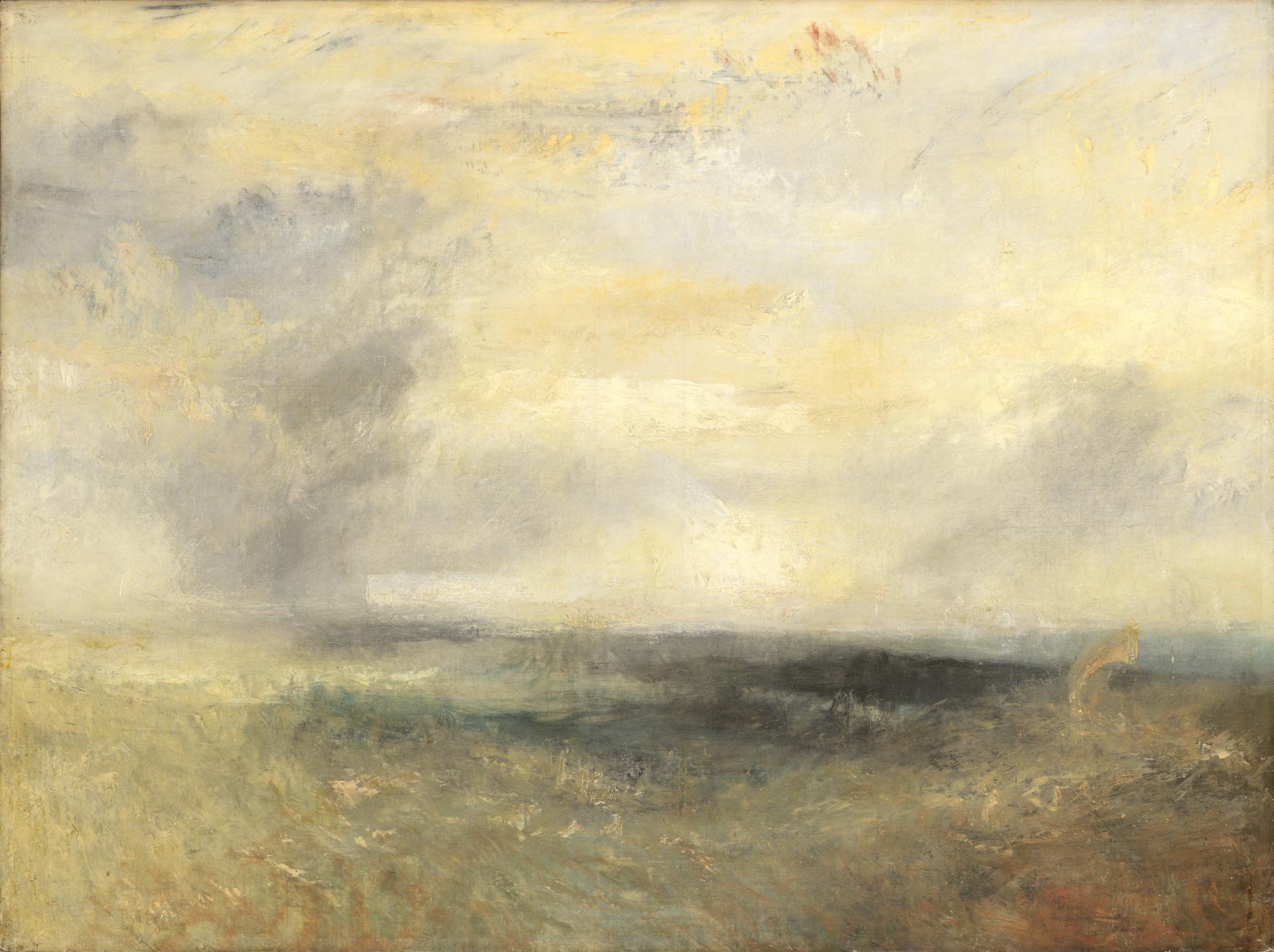
This is the "Margate (?), from the Sea" by Joseph Mallord William Turner. The title of this picture was not his choice, but was decided on some 50 years later when an inventory was being made of the Turner Bequest. We can’t be sure that it shows the north Kent seaside town of Margate, but the white cliffs just visible on the horizon recall other views of Margate by Turner.
He first came to Margate aged 11 and returned ten years later to sketch. From the 1820s, he became a regular visitor, finding refuge there from London. This painting belongs to a group of around 20 late sea-paintings from the Turner Bequest, which were not exhibited during his lifetime.
As you can see, the painting has a relatively low horizon created by a line of breaking waves or just a hint of distant shoreline. Whether this picture is of Margate or not, it's not that important. What's significant is the way Turner captured the changing character of the sky and the sea in this work. He was interested in the power of the wind to stir up the waves, and you can see the choppiness of the waves and wisps of spray recreated with a variety of brushstrokes.
The paint has an almost sculptural quality, especially the use of clotted impasto. Turner built up the clouds and used thickly applied white paint to suggest white cliffs on the central horizon. Scale is ambiguous, and objects are hard to identify. A curled shape in the lower right corner may be a boat’s sail, but we can't be sure. This painting is a fine example of Turner’s lifelong preoccupation with the changing character of the sky and the sea.
See it in person
Margate (?), from the Sea hangs in The National Gallery on Trafalgar Square, London — free to enter. Point your phone at any artwork there and audioguide.london plays a free audio guide in six languages — no app download needed.