Dido building Carthage
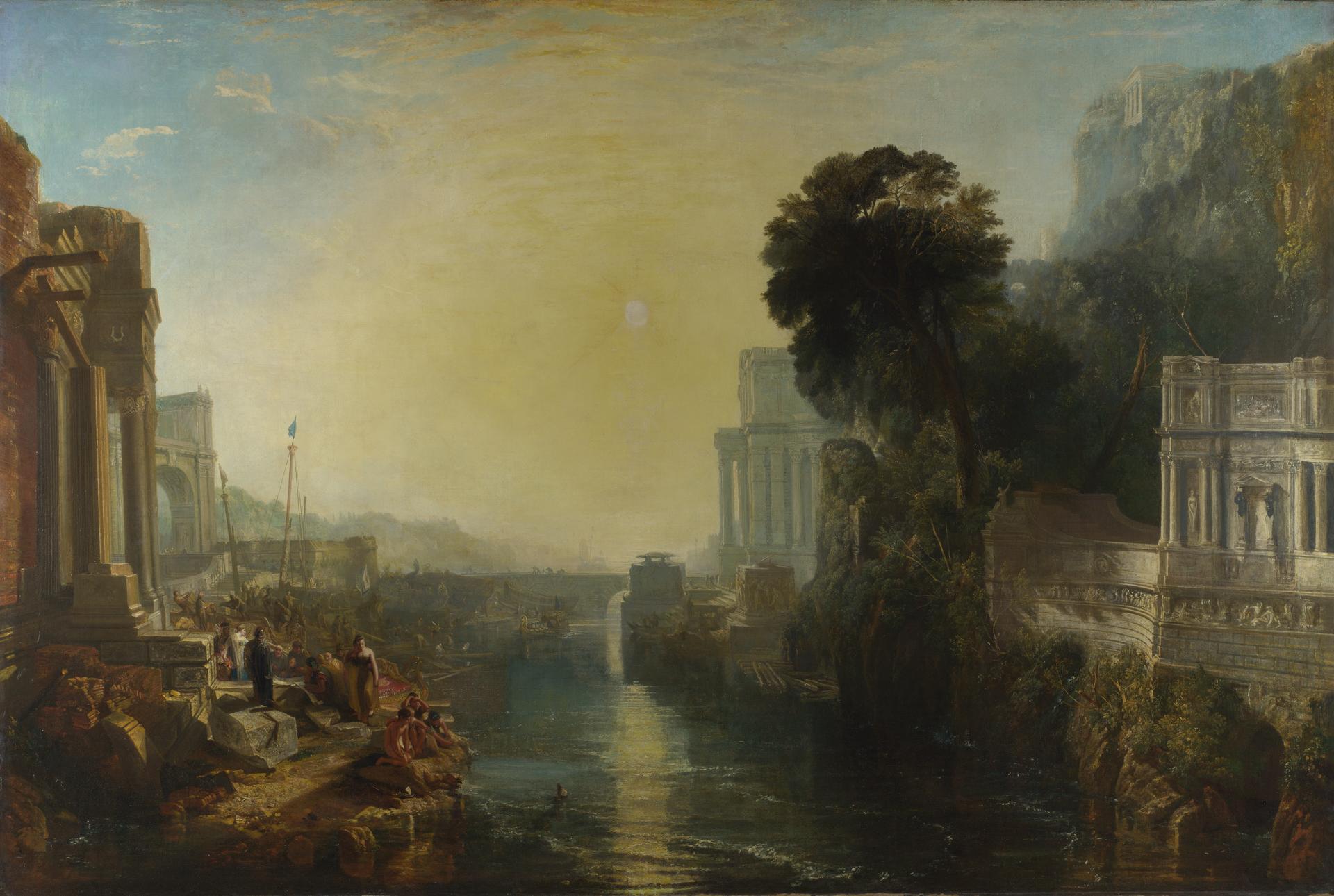
- Artist: Joseph Mallord William Turner
- Date: 1815
- Medium: oil on canvas
- Museum: The National Gallery
- Collection record: The National Gallery website
Listen to the free audio guide
About this artwork
This is "Dido building Carthage" by Joseph Mallord William Turner. Painted in 1815, it's one of the artist's many works inspired by Virgil's epic poem, the Aeneid. The story goes that Dido, the queen of Carthage, founded the city after being shipwrecked on its shores and falling in love with the Trojan hero, Aeneas.
In this painting, we see Dido visiting the tomb being built for her dead husband, Sychaeus, while a figure resembling Aeneas stands before her. Turner was known to have been fascinated by the rise and fall of empires, particularly Carthage, which he painted ten major works about.
Here, Turner attempts to match the style of his French counterpart, Claude Lorrain, who's famous for his seaport paintings. But while Claude's works are often characterized by classical simplicity, Turner's "Dido building Carthage" is more detailed and textured, filled with architectural features and human activity.
Turner even specified in his will that this painting should be hung alongside two of Claude's works in the National Gallery. A testament to his admiration for Claude's style, but also a nod to his own unique artistic vision.
See it in person
Dido building Carthage hangs in The National Gallery on Trafalgar Square, London — free to enter. Point your phone at any artwork there and audioguide.london plays a free audio guide in six languages — no app download needed.