Mama Look A Mas Passin
- Artist: John Lyons
- Date: 1990
- Medium: Oil paint on canvas
- Dimensions: support: 1208 × 970 x 35 mm
- Museum: Tate Britain
- Collection record: Tate Britain website
Listen to the free audio guide
About this artwork
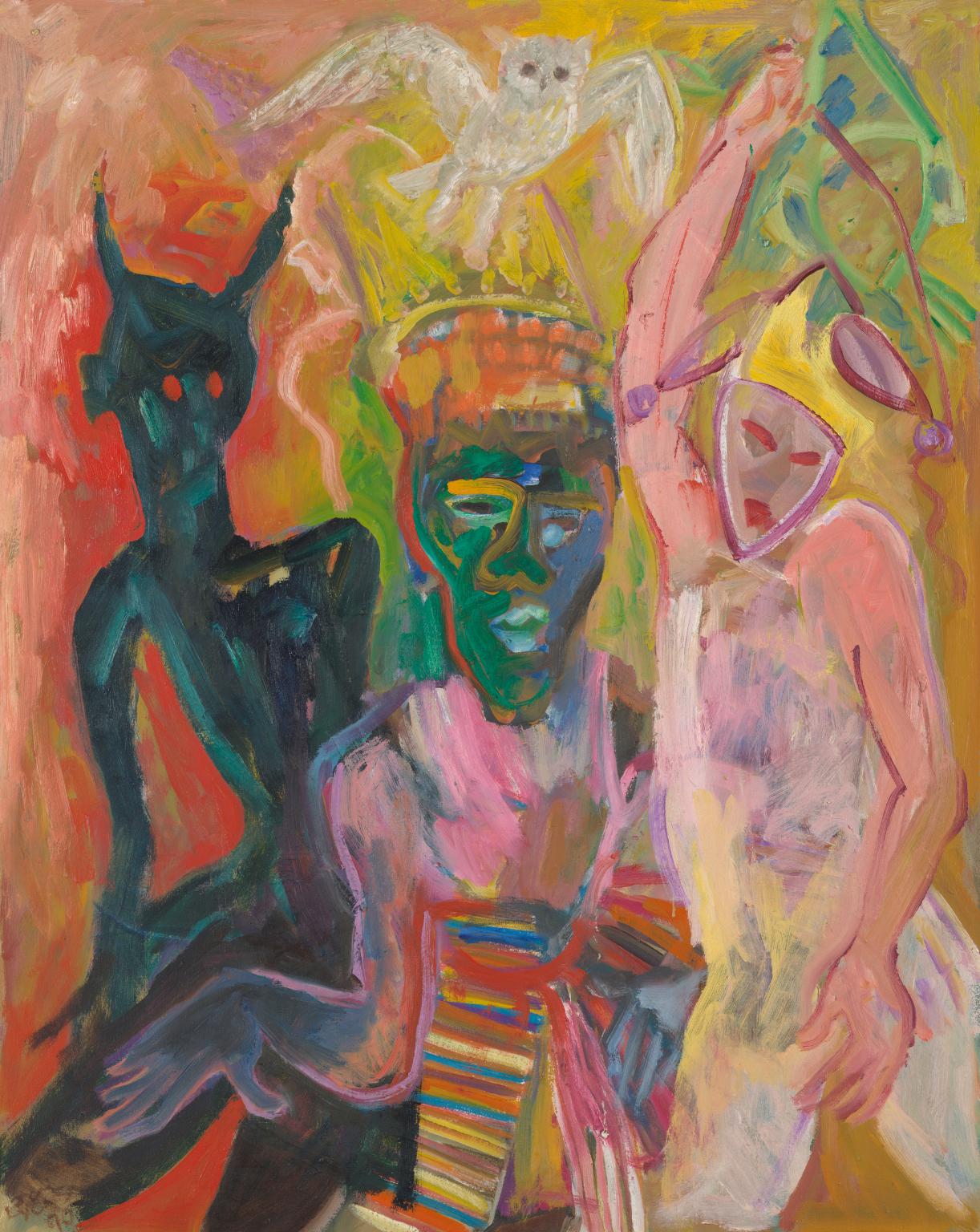
This is “Mama Look A Mas Passin” by John Lyons, painted in 1990 with oil on canvas. The canvas bursts with three towering masked figures, their costumes alive with the fiery colours and rhythmic energy that you’d expect from a Caribbean carnival parade. Those costumes have a history that’s both defiant and inventive—they’re made from the discarded garments of European plantation owners, a practice that turned mocking into celebration, turning the opulent masked parties of colonial elites into an annual act of resistance.
Lyons inserts himself into the scene as a mischievous green jab‑jab bird, a playful nod to his own presence amid the revelry. Hovering above, a white jumbie bird seems to symbolize creative intuition, watching over the dance. The painting feels both festive and charged with memory, capturing the paradox of joy built on a painful past.
It was acquired with funds from the Nicholas Themans Trust and Tate Patrons in 2025, and it now hangs in the Modern and Contemporary British Art: End of a Century gallery, where the bold, colourful work continues to speak to the complex layers of history and culture.
See it in person
Mama Look A Mas Passin is in the collection of Tate Britain on Millbank, London — free to enter. Point your phone at any artwork there and audioguide.london plays a free audio guide in six languages — no app download needed.