Madame de Pompadour at her Tambour Frame
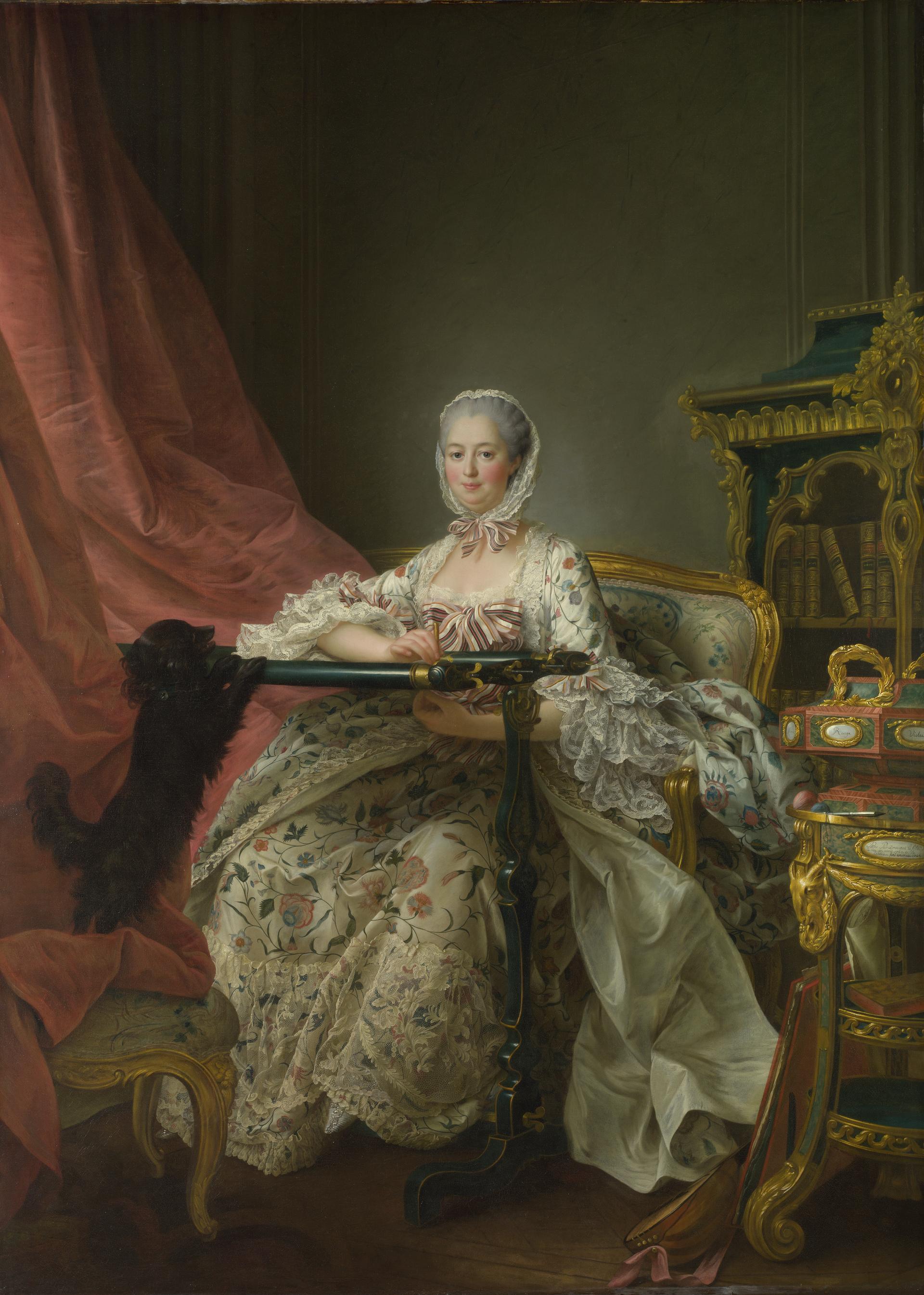
- Artist: François-Hubert Drouais
- Date: 1763-4
- Medium: oil on canvas
- Museum: The National Gallery
- Collection record: The National Gallery website
Listen to the free audio guide
About this artwork
Madame de Pompadour at her Tambour Frame by François-Hubert Drouais. Painted in the French Rococo style, this portrait of Madame de Pompadour is a remarkable example of naturalism in court portraiture. Created around 1763-64, it captures the former mistress of Louis XV as an almost matronly figure, embodying bourgeois virtue and industry, as she works on a tapestry accompanied by one of her dogs.
The portrait's composition is striking, with Madame de Pompadour seated in her salon at Versailles, surrounded by objects that testify to her interests in the arts. The elaborate worktable with Sèvres plaques, books in the bookcase, and mandolin all speak to her refined taste. However, it's the tambour frame that dominates the composition, creating a sense of domesticity and respectability.
What's particularly interesting is that this portrait was made up of two canvases: a smaller one with the head, shoulders, and right forearm, which was incorporated into the larger full-length painting. This technique was common in portraiture, especially for important sitters like Madame de Pompadour.
Drouais's use of materials and symbolism also adds depth to the portrait. The sumptuous fabric is likely a hand-painted floral pattern chintz, reflecting the thriving industry in France of printing on cotton cloth. This was a patriotic statement, supporting French manufacturing over English production.
The portrait was well-received upon its release, with commentators praising Drouais's skill in capturing the likeness and composition. It's clear that this painting offers more than just a representation of Madame de Pompadour; it's a reflection of her status as a patron of the arts and a leader of taste in 18th-century France.
See it in person
Madame de Pompadour at her Tambour Frame hangs in The National Gallery on Trafalgar Square, London — free to enter. Point your phone at any artwork there and audioguide.london plays a free audio guide in six languages — no app download needed.