Lord Howard de Walden
- Artist: Auguste Rodin
- Date: c.1905–6
- Medium: Bronze
- Dimensions: object: 525 x 521 x 273 mm, 17.5 kg
- Museum: Tate Britain
- Collection record: Tate Britain website
Listen to the free audio guide
About this artwork
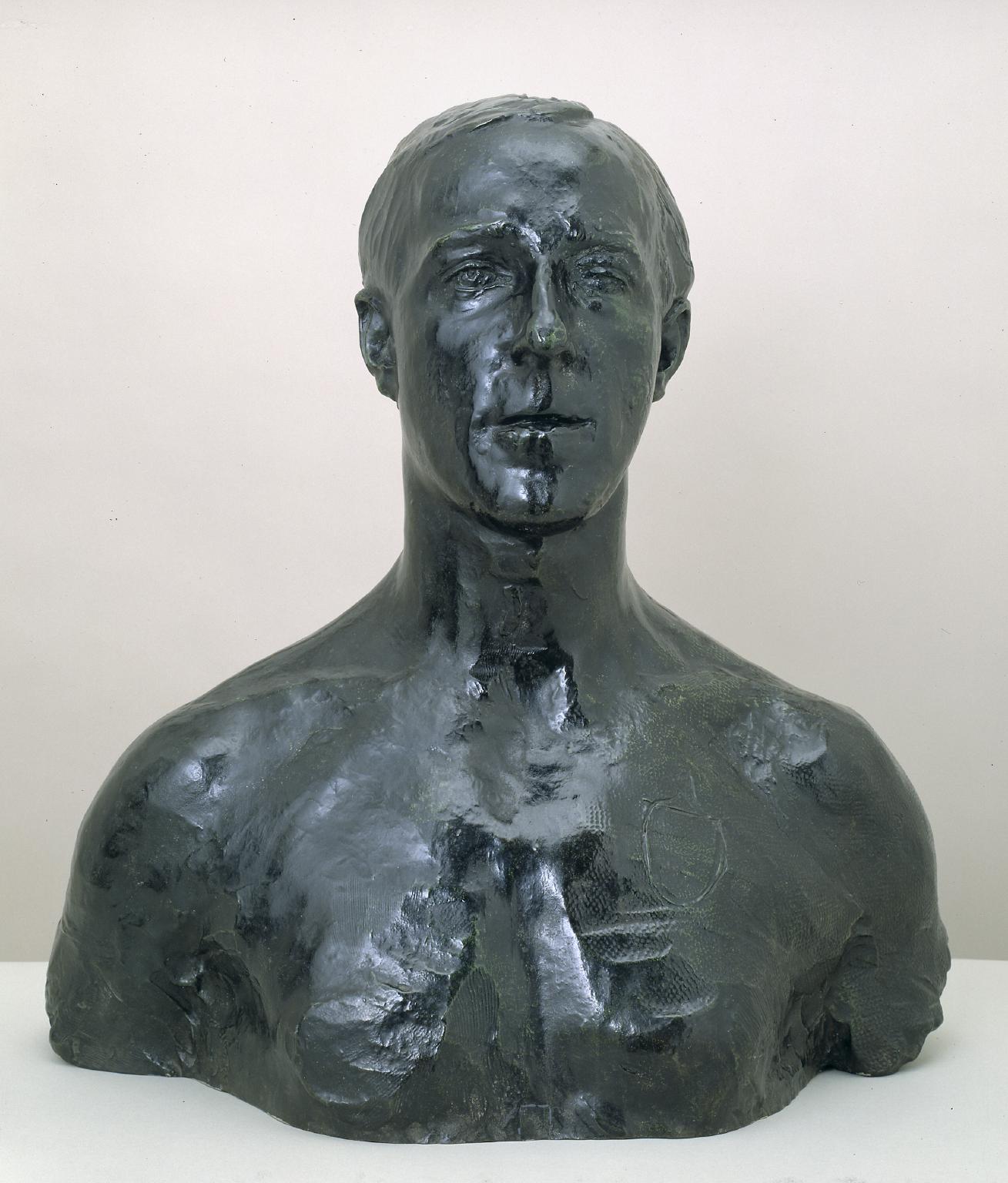
This is the “Lord Howard de Walden” by Auguste Rodin. It’s a bronze bust cast in 1905‑06, measuring about 525 × 521 × 273 mm and weighing roughly 17.5 kg. The portrait was commissioned by the eponymous subject himself: Lord Howard de Walden (1880–1946), a wealthy British landowner who loved art. He travelled to Rodin’s studio in Meudon, on the outskirts of Paris, to sit for the sculpture.
Rodin caught his likeness from a frontal pose; unusually for him, the sitter looks calm and passive. According to de Walden’s wife, the medal‑like marks on the chest were added during an interval between sittings, when they discussed heraldry.
Rodin was born in Paris in 1840 and died there in 1917, making this piece one of his late works created at the peak of his fame. It captures both a personal portrait and a moment where art and patronage intersected on the outskirts of early‑20th‑century Paris.
See it in person
Lord Howard de Walden is in the collection of Tate Britain on Millbank, London — free to enter. Point your phone at any artwork there and audioguide.london plays a free audio guide in six languages — no app download needed.