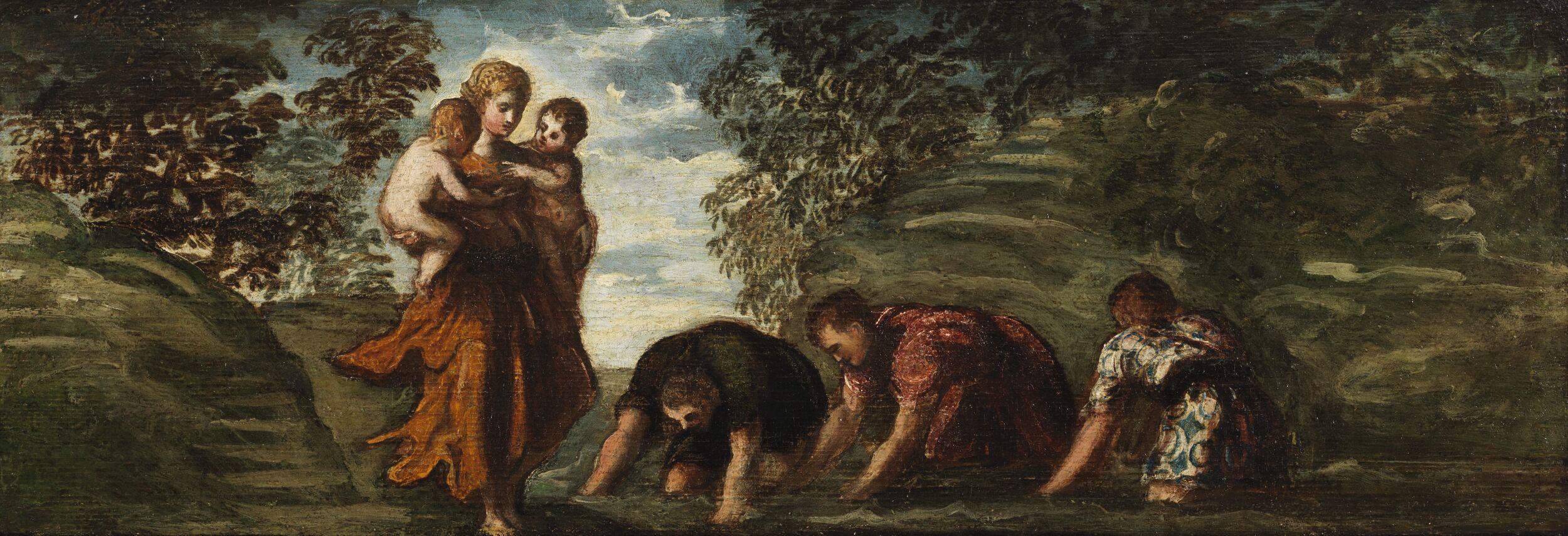
Latona Changing the Lycian Peasants into Frogs
- Artist: Johann König
- Date: c. 1610-13
- Medium: oil on copper
- Museum: The Courtauld Gallery
- Collection record: The Courtauld Gallery website
Listen to the free audio guide
About this artwork
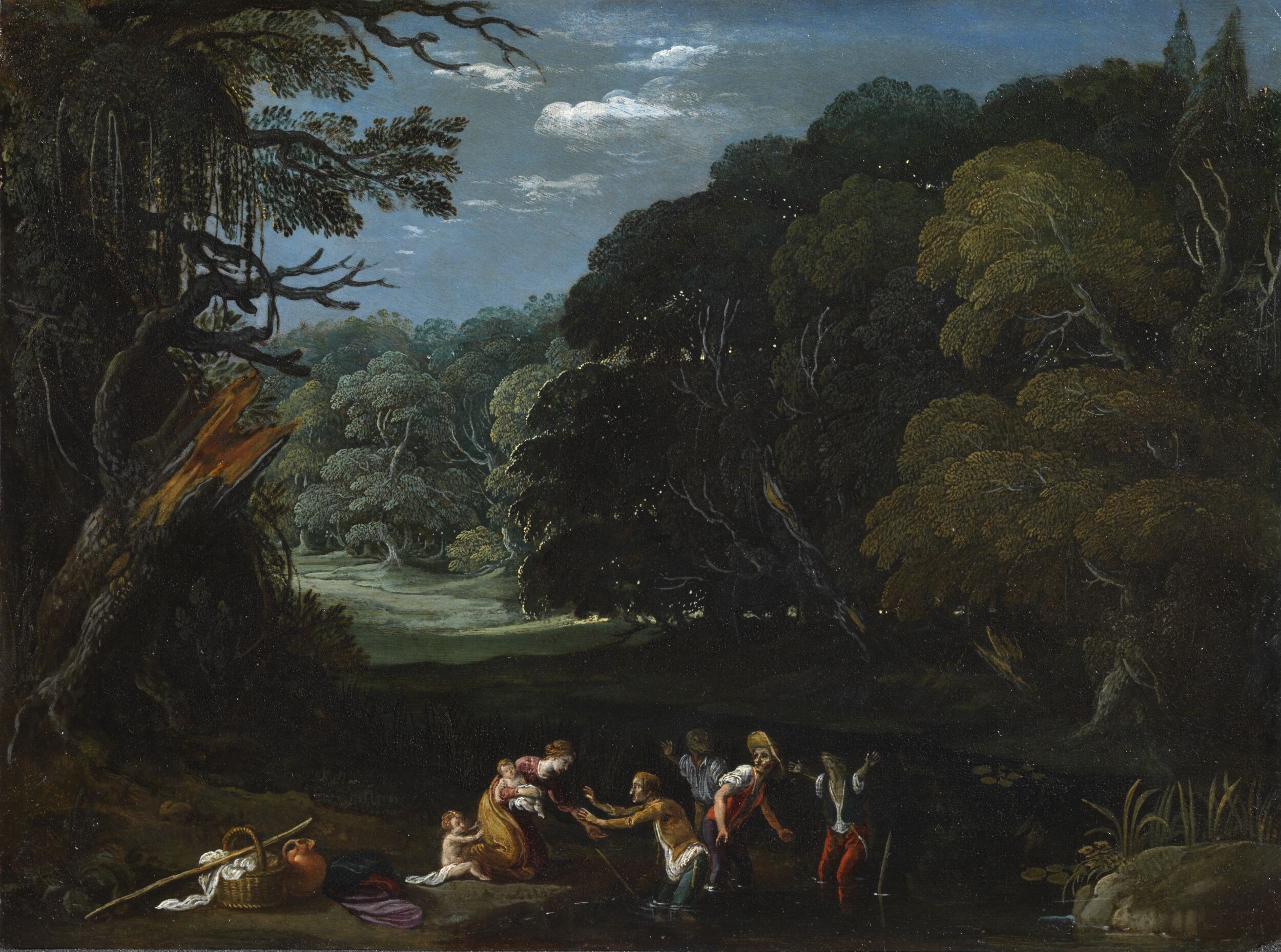
This is the painting titled “Latona Changing the Lycian Peasants into Frogs” by Johann König. It was painted around 1610‑13 with oil on a copper panel, a medium that gives the scene a luminous, almost translucent quality. The composition is drawn from a work by Adam Elsheimer, another German artist working in Rome, so you can see how König adapted the dynamic arrangement of figures to a slightly larger format.
The subject comes straight out of Ovid’s *Metamorphoses*: in Lycia, a region in Asia Minor, the goddess Latona – mother of Apollo and Diana – was angered when local peasants stirred up the mud in a pond to stop her from drinking. In revenge she turned them into frogs. The painting captures that moment of divine retribution with a dramatic sky and a cluster of frogs leaping into the water. The figures are rendered with a careful attention to light, a hallmark of König’s time spent in Italy, where he absorbed the chiaroscuro of the Baroque masters.
You’ll notice the careful use of color to differentiate the bright, almost iridescent skin of the frogs from the earthy tones of the peasants, which reinforces the moral of the myth – the peril of defying the divine. The copper support gives the surface a subtle sheen that makes the water look almost wet, adding to the immediacy of the scene.
See it in person
Latona Changing the Lycian Peasants into Frogs hangs in The Courtauld Gallery at Somerset House, London. Point your phone at any artwork there and audioguide.london plays a free audio guide in six languages — no app download needed.