Landscape by Moonlight
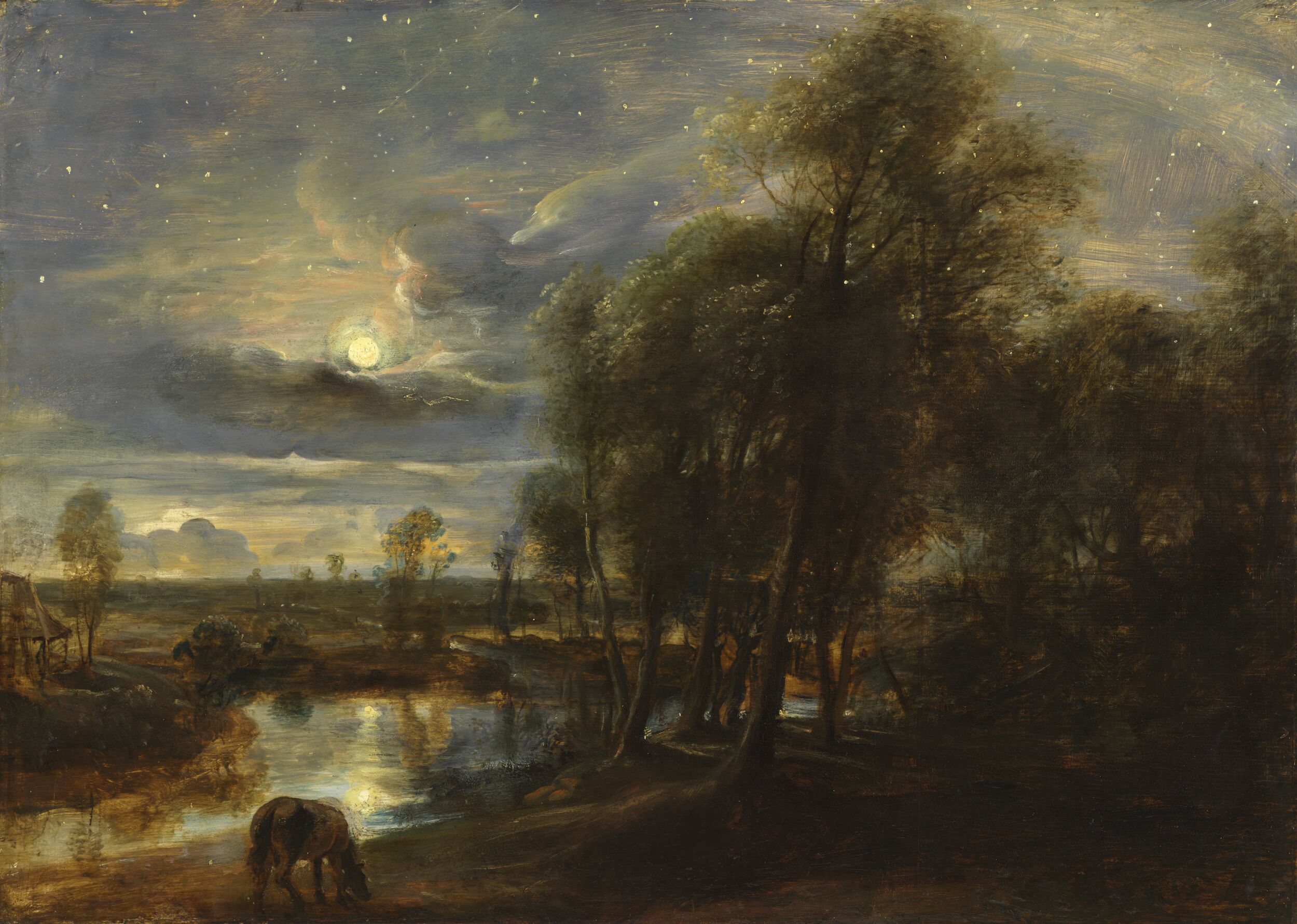
- Artist: Peter Paul Rubens
- Date: 1635-40
- Medium: oil on panel
- Museum: The Courtauld Gallery
- Collection record: The Courtauld Gallery website
Listen to the free audio guide
About this artwork
This is the Landscape by Moonlight by Peter Paul Rubens. It dates from about 1635‑40, a period when Rubens was winding down his career and spent most of his time at his country house outside Antwerp, working for sheer pleasure instead of for commissions. In that calm setting he set up a nocturnal scene that, while initially intended to include biblical figures, ultimately ends up devoid of people – the whole painting becomes a study in light, mood, and the natural world.
The oil on panel shows the moonlit sky throwing a silvery glow across the hills and water. Rubens’ mastery of chiaroscuro lets us feel the cool night air, while subtle brushwork gives texture to foliage and the surface of the river. The painting’s dramatic illumination and tranquil composition made it a favorite in the 18th‑century art world. Joshua Reynolds, the first president of the Royal Academy, owned it and used it as a teaching model in his lectures, and it went on to inspire British landscape painters such as John Constable.
So, as you stand before “Landscape by Moonlight,” notice how Rubens uses darkness not as a barrier but as a canvas for light, turning a simple countryside into a luminous, almost mystical tableau that continues to speak to artists and viewers centuries later.
See it in person
Landscape by Moonlight hangs in The Courtauld Gallery at Somerset House, London. Point your phone at any artwork there and audioguide.london plays a free audio guide in six languages — no app download needed.