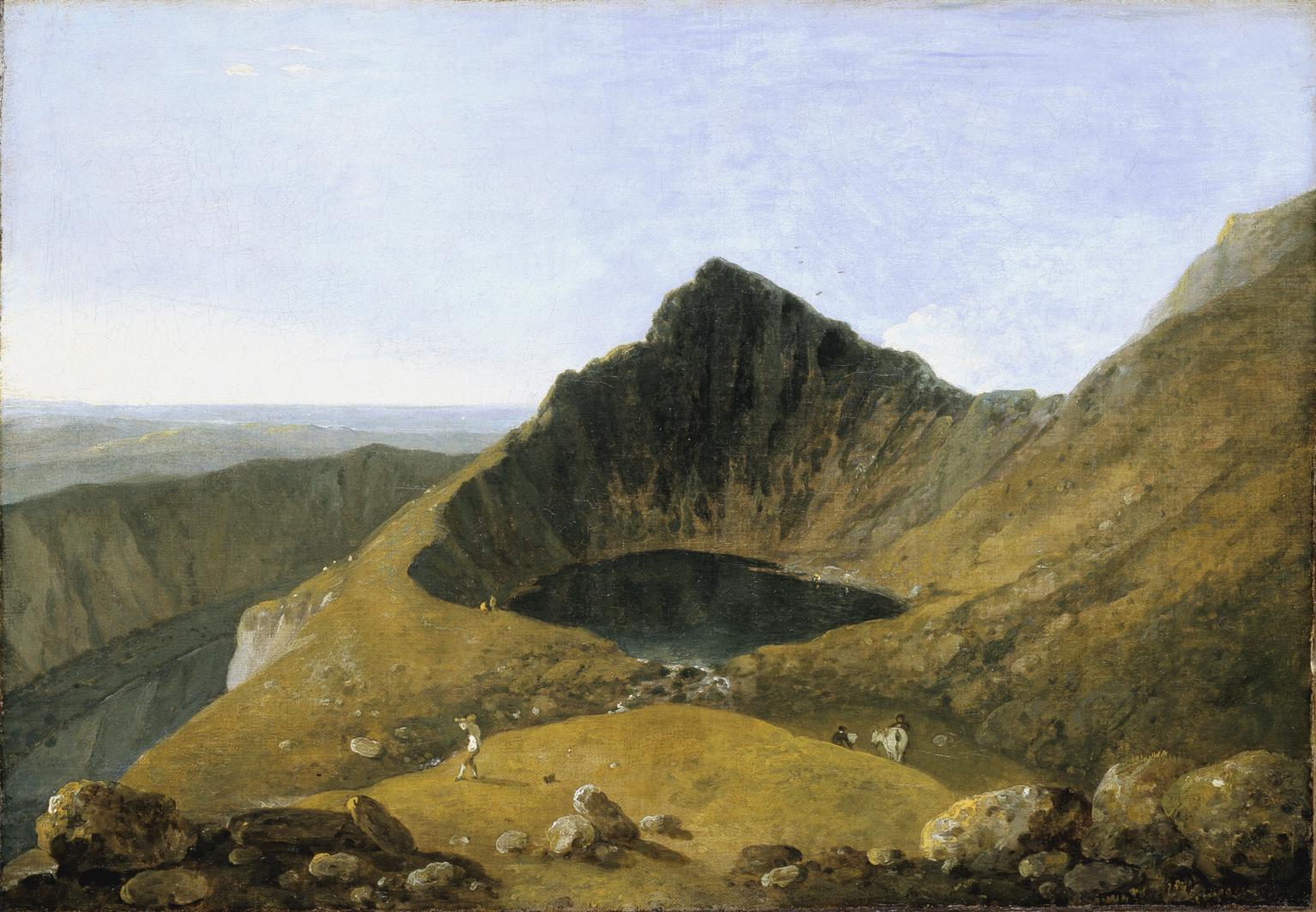
Lake Avernus and the Island of Capri
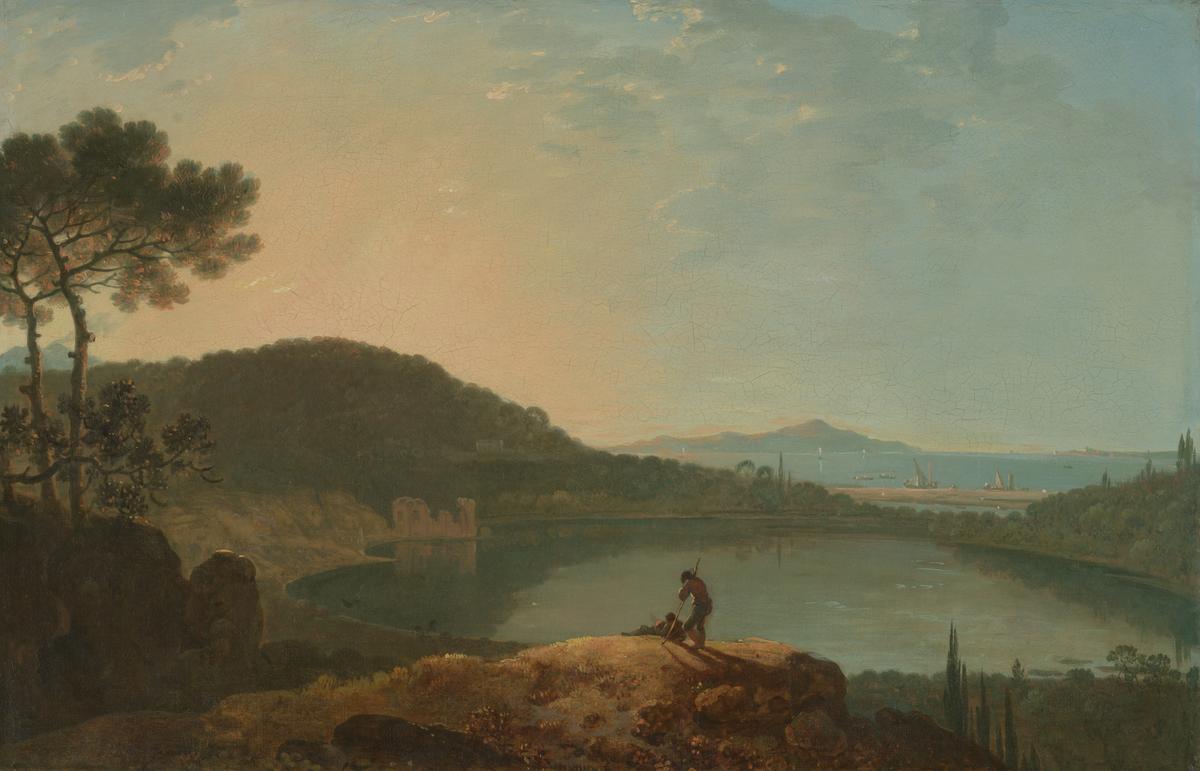
- Artist: Richard Wilson
- Date: c.1760
- Medium: Oil paint on canvas
- Dimensions: support: 470 x 724 mm
- Museum: Tate Britain
- Collection record: Tate Britain website
Listen to the free audio guide
About this artwork
This is the “Lake Avernus and the Island of Capri” by Richard Wilson. It’s an oil on canvas from around 1760, a classic example of the English landscape tradition painted from a view in southern Italy. Wilson, who travelled there in the 1750s, captures the volcanic lake of Avernus on the Phlegraean Fields. According to myth the lake was the gateway to Hades, and the nearby grotto housed the Cumaean Sibyl who guided Aeneas in Virgil’s *Aeneid*. Those legends made the spot a magnet for Grand Tour travelers and landscape painters, and Wilson’s painting reflects that fascination.
From the north shore, the canvas shows a ruined Roman bath—later thought to be the Temple of Apollo—on Monte Nuovo, with the sun setting behind it. Across the water the Gulf of Pozzuoli is dotted with sailboats, while on the horizon the island of Capri and the peninsula of Baiae appear. The composition balances dramatic volcanic terrain with tranquil water, a hallmark of Wilson’s style that blends realism with classical idealism.
The work passed from Sir John Pringle to Robert Vernon in 1843, and was donated in 1847. It was probably displayed in the gardens at Stourhead, a place where Wilson’s landscapes would have complemented the classical landscape wonderfully. Today you can stand before it and imagine the mythic water and the soft glow of a late‑afternoon sun.
See it in person
Lake Avernus and the Island of Capri is in the collection of Tate Britain on Millbank, London — free to enter. Point your phone at any artwork there and audioguide.london plays a free audio guide in six languages — no app download needed.