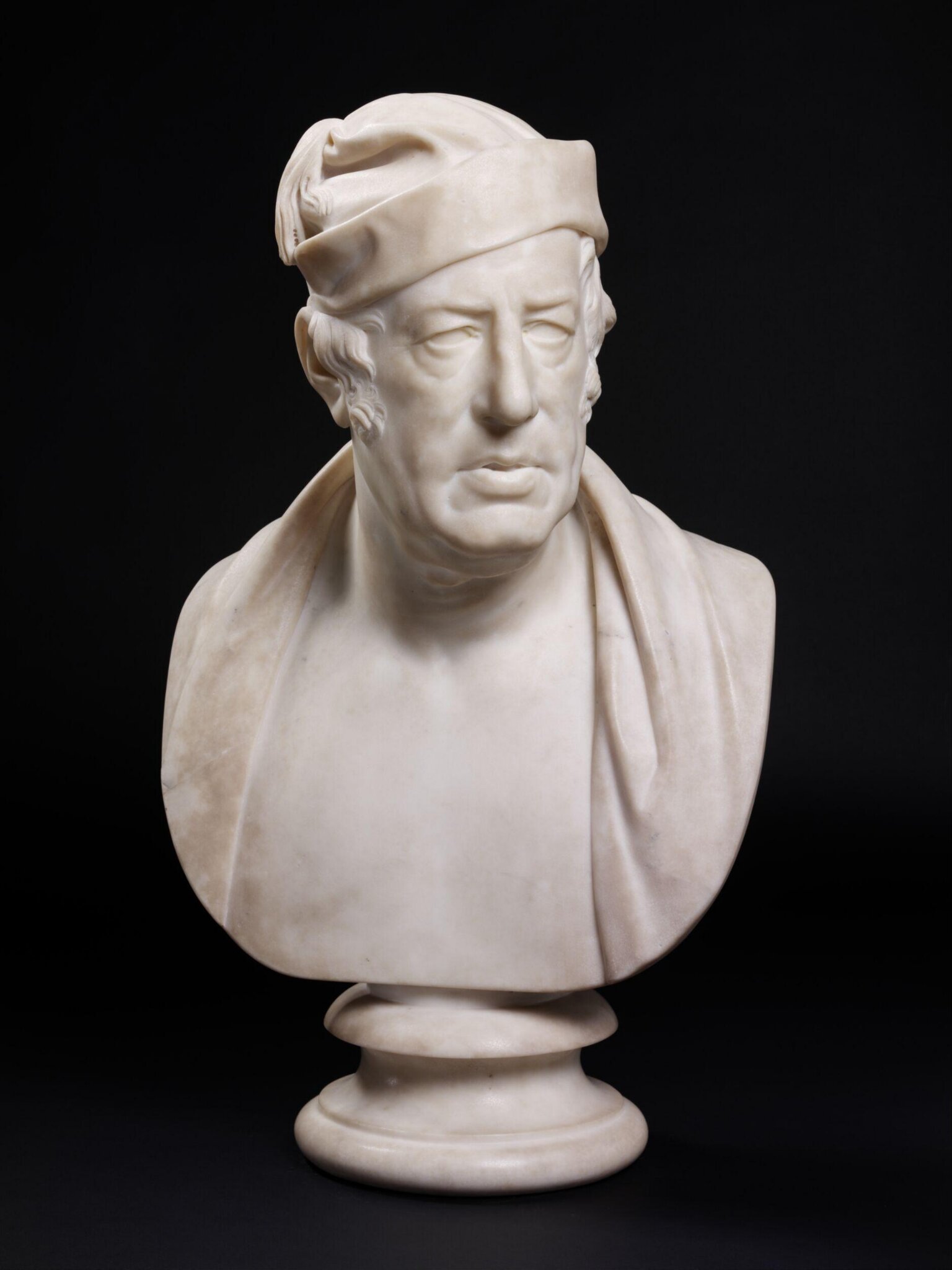
Lady Elizabeth Finch (1703-84)
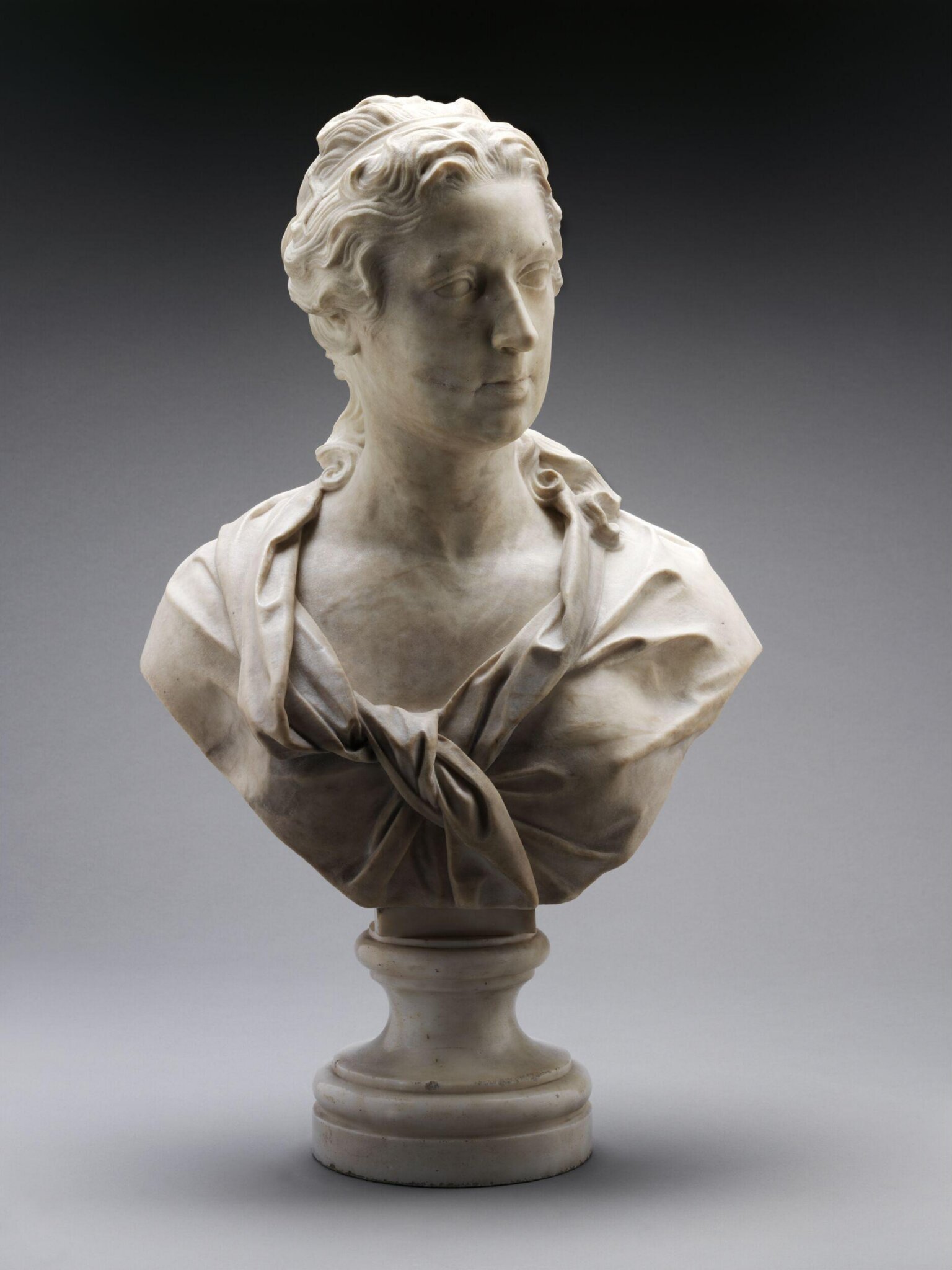
- Gallery: Sculpture, Room 22, The Dorothy and Michael Hintze Galleries
- Maker: Henrietta Finch (Sculptor)
- Object type: Marble bust
- Materials: Carved marble
- Dimensions: Height (Bust and socle) 70 cm; Height (Bust alone) 55 cm; Width 43 cm
- Museum: V&A South Kensington
- Collection record: V&A website
- Image © Victoria and Albert Museum, London.
Listen to the free audio guide
In the museum now? Point your phone at the next object and hear its guide.
About this object
Before you is this carved marble bust of Lady Elizabeth Finch. While the inscription on the base identifies her as Henrietta Finch, dated 1741, it is more likely that the inscription is actually a signature from the sculptor herself.
This work is a remarkable example of sculpture by an eighteenth-century female artist in Britain. It is believed to have been made by Henrietta Finch, the sister of the woman depicted. In a family portrait from the early 1730s, Henrietta is shown with sculpting tools, suggesting she was a practicing artist. While many women of her time learned to model clay, carving marble was a much more advanced skill.
This bust is a copy of a similar portrait by the famous sculptor Louis-Francois Roubiliac. It serves as an interesting example of how sculptures were often copied during this period. As you look at the fine details in the marble, you are seeing a rare piece of history created by a woman in an era when such work was quite uncommon.
See it in person
Lady Elizabeth Finch (1703-84) is on display in Sculpture, Room 22, The Dorothy and Michael Hintze Galleries at the V&A South Kensington on Cromwell Road, London — free to enter. Choose V&A South Kensington on audioguide.london and take a photo of it to hear this free audio guide in six languages — no app download needed.
New, in beta. V&A support has just launched and is still improving: 1,000 objects with audio so far, with more added all the time.