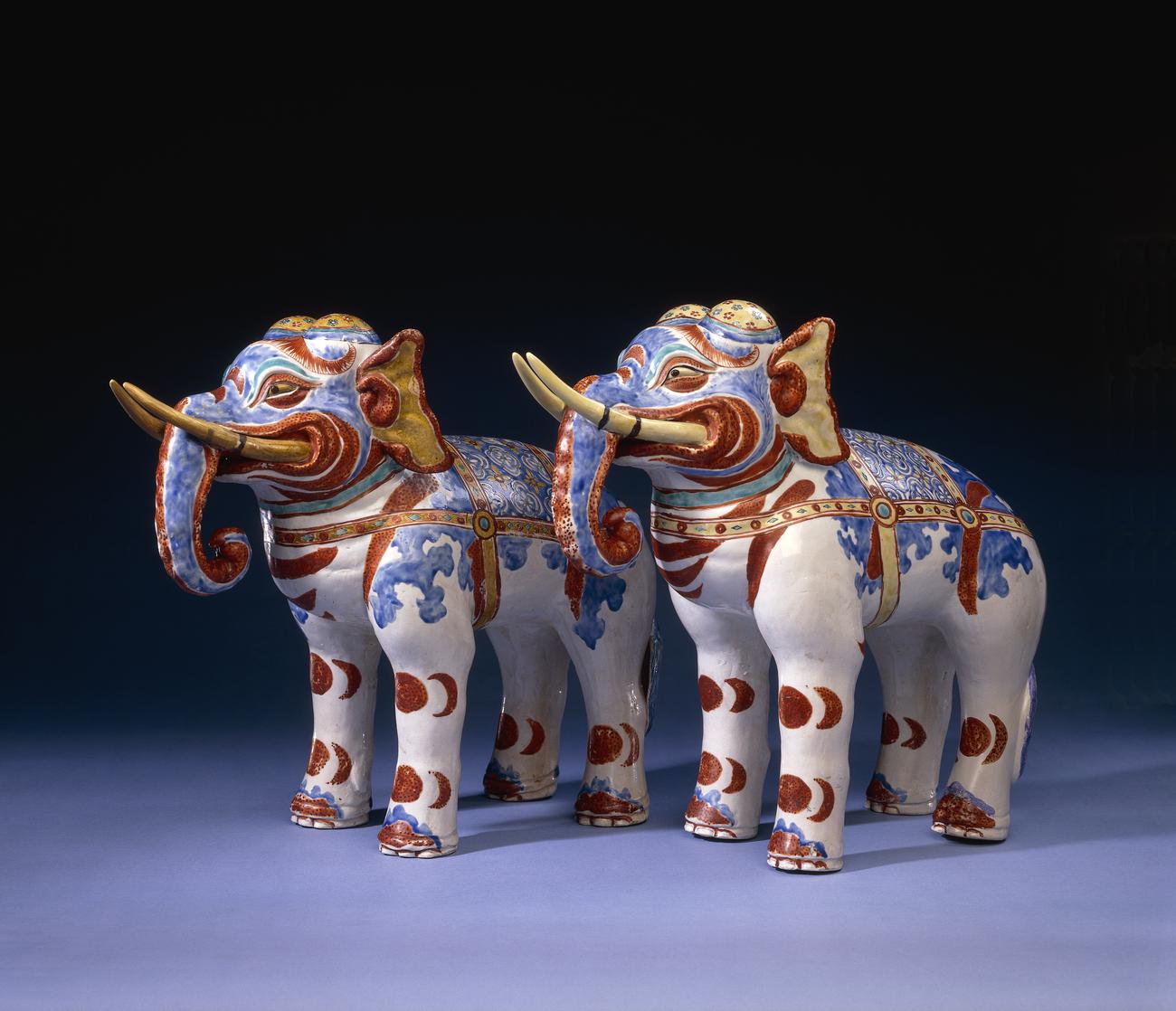
Kakiemon elephant
- Audio guide stop: 593
- Gallery: Room 93
- Culture: Edo Period
- Made in: Europe; Kakiemon Kiln
- Date: 1655-1670
- Object type: figure
- Materials: porcelain
- Museum number: 1980,0325.1-2
- Museum: The British Museum
- Collection record: British Museum website
- Image © The Trustees of the British Museum, shared under a CC BY-NC-SA 4.0 licence.
Listen to the free audio guide
About this object
Before you stands a porcelain elephant from the Edo Period, crafted around 1655 to 1670. This is one of a pair of figure elephants decorated with red, yellow, green, and blue overglaze enamels on a milky white porcelain base. The figures were made using a mold then painted by hand, a common method for Kakiemon-style ceramics.
These elephants were created in the famed Kakiemon kiln for European audiences, part of a rich trade of Japanese porcelain to the West. Similar examples are in collections like Burghley House and the V&A, though those differ in color. One of the British Museum’s elephants was examined in 2015 and noted for its early use of overglaze enamel, produced in Arita and decorated in the Akae-machi area.
This piece reflects Japan’s Edo Period craft traditions, showcasing vibrant decoration and the global reach of porcelain artistry.
See it in person
Kakiemon elephant is on display in Room 93 at the British Museum on Great Russell Street, Bloomsbury, London — free to enter. Choose British Museum on audioguide.london and type its audio guide stop number, 593, from the gallery label, or take a photo of it, to hear this free audio guide in six languages — no app download needed.
New, in beta. British Museum support has just launched and is still improving: over 1,000 objects so far, with more added all the time.