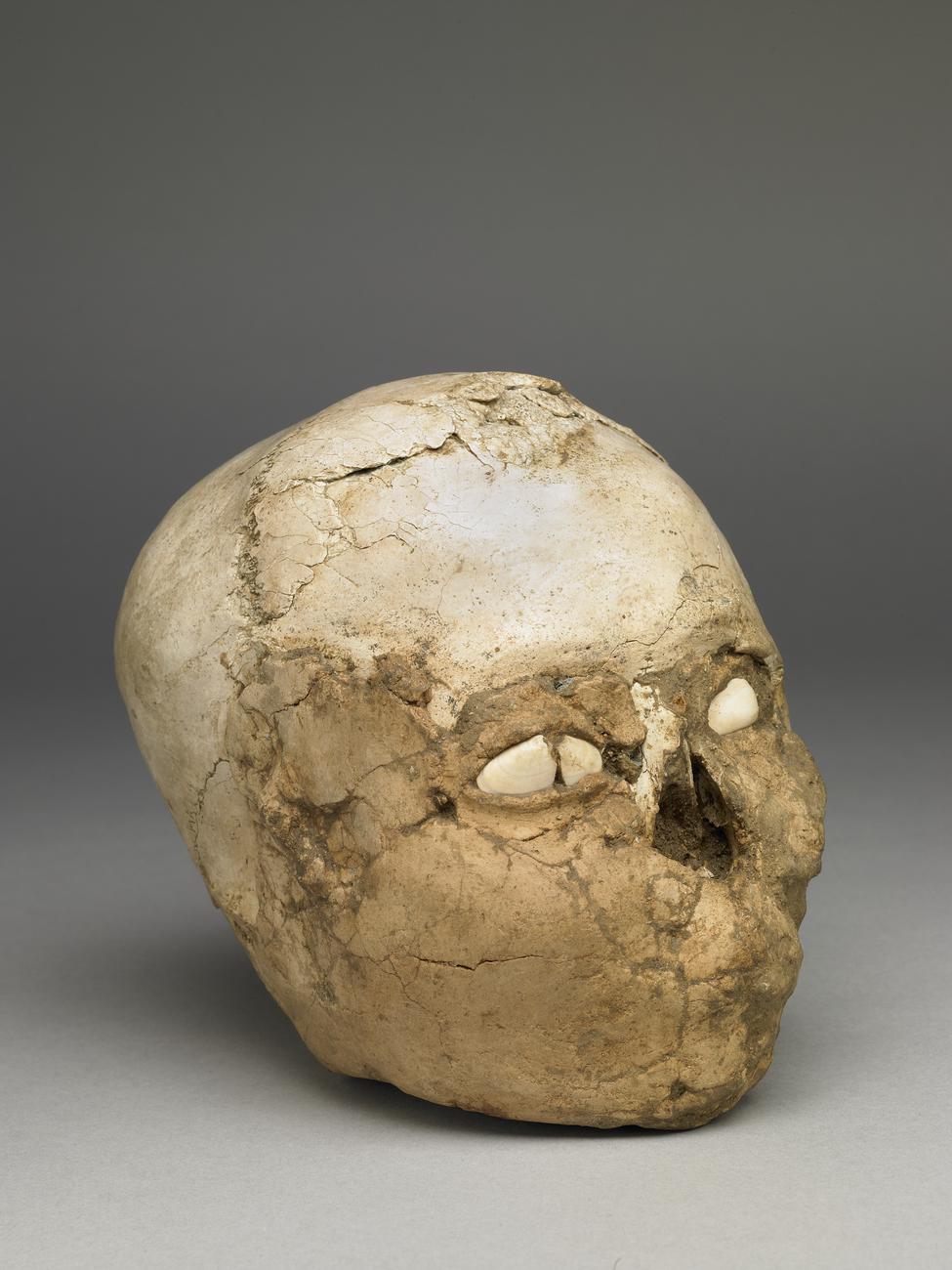
Jericho skull
- Audio guide stop: 381
- Gallery: Room 59
- Culture: Pre-Pottery Neolithic B
- Date: 8500BC-6000BC; 8200BC-7500BC (Middle Pre-Pottery Neolithic B)
- Object type: human skeletal remains, religious/ritual equipment
- Materials: human bone; plaster; shell
- Museum number: 127414
- Museum: The British Museum
- Collection record: British Museum website
- Image © The Trustees of the British Museum, shared under a CC BY-NC-SA 4.0 licence.
Listen to the free audio guide
About this object
Before you is the "Jericho skull," an ancient human cranium carefully shaped into a face using plaster. One eye is made from a split bivalve shell, while the other features a single, smaller shell—its matching piece is missing. This artifact dates to the Pre-Pottery Neolithic B period, around 8500 to 6000 BC, and was discovered in Jericho.
What makes this skull remarkable is not just its age, but its carefully crafted appearance, suggesting it was used in ritual or religious contexts. Headless burials from this time often had skulls like this one, likely for ceremonial purposes, possibly tied to ancestor worship.
Made from human bone, enhanced with plaster and shell, it reflects early humans' deep engagement with both material and spiritual worlds.
See it in person
Jericho skull is on display in Room 59 at the British Museum on Great Russell Street, Bloomsbury, London — free to enter. Choose British Museum on audioguide.london and type its audio guide stop number, 381, from the gallery label, or take a photo of it, to hear this free audio guide in six languages — no app download needed.
New, in beta. British Museum support has just launched and is still improving: over 1,000 objects so far, with more added all the time.