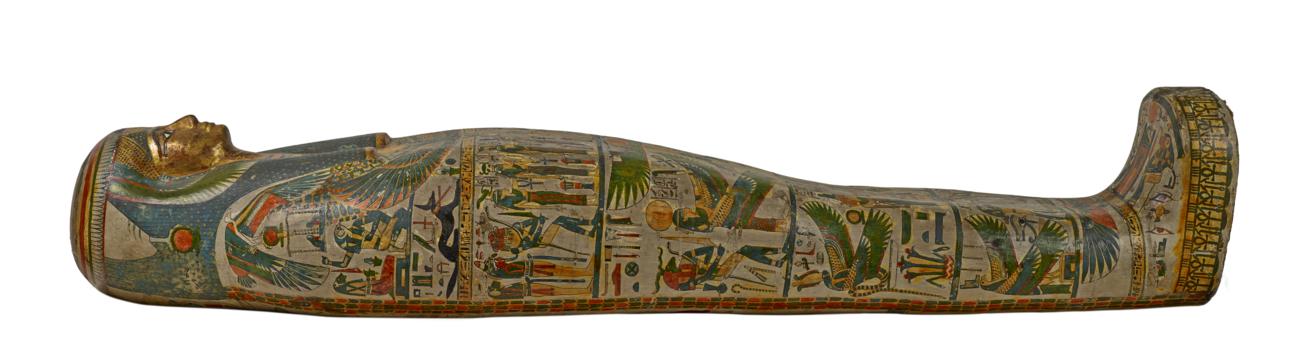
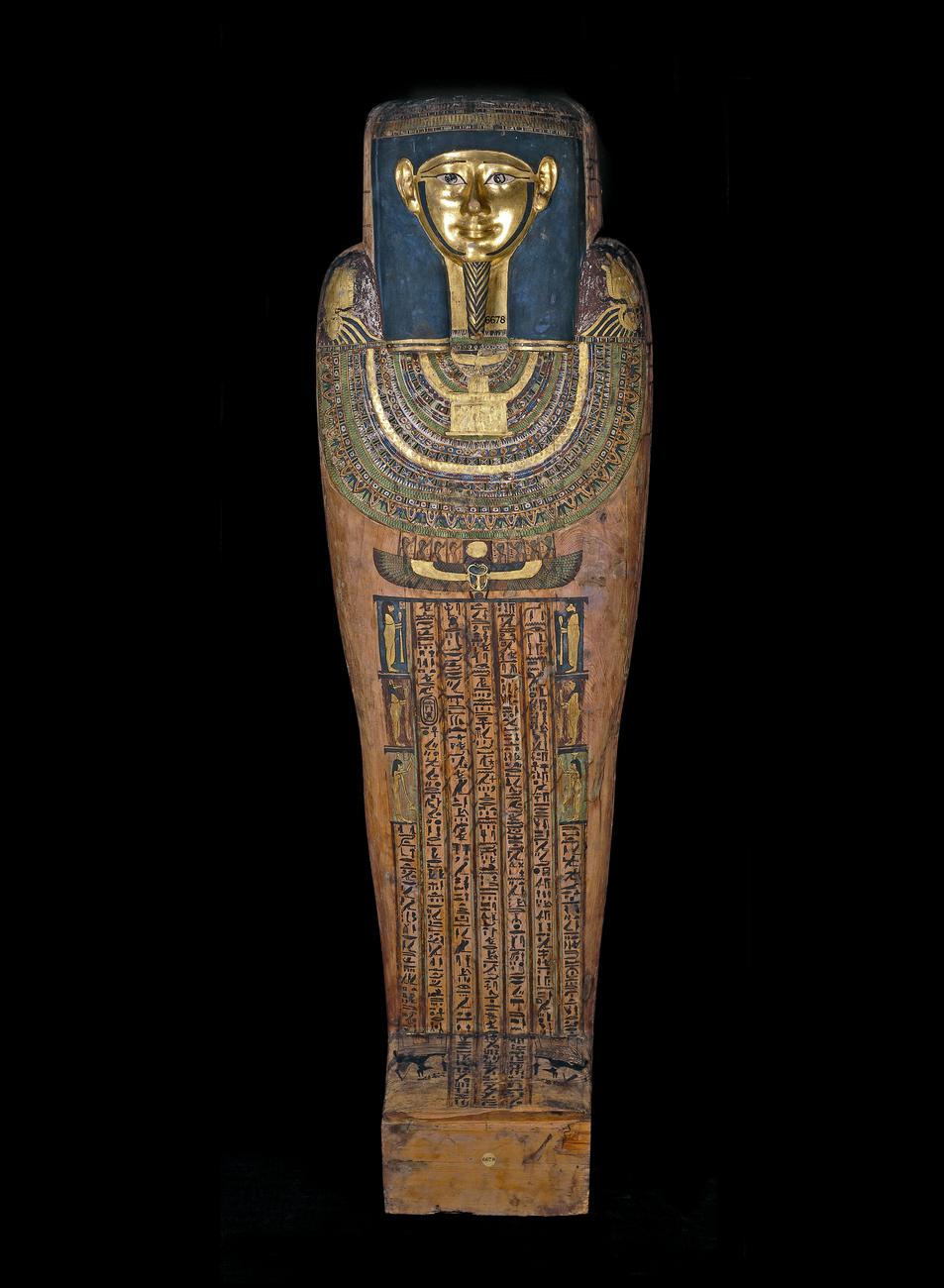
Inner coffin of Hornedjitef
- Audio guide stop: 364
- Gallery: Room 62
- Culture: Ptolemaic
- Made in: Luxor (Thebes) (?)
- Date: 240BC (circa)
- Object type: coffin
- Materials: wood; gold; gesso
- Museum number: EA6678
- Museum: The British Museum
- Collection record: British Museum website
- Image © The Trustees of the British Museum, shared under a CC BY-NC-SA 4.0 licence.
Listen to the free audio guide
About this object
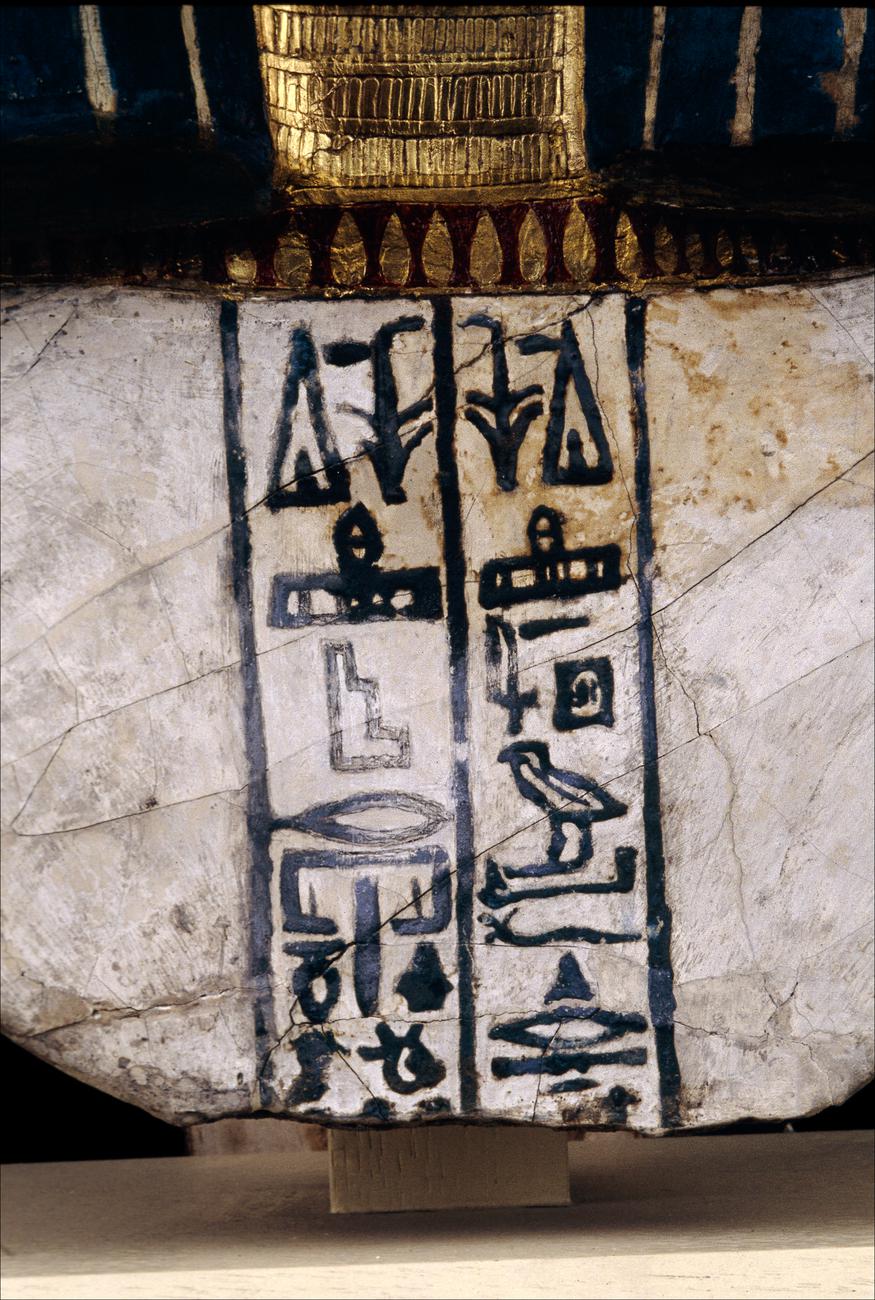
This is the inner coffin of Hornedjitef, one of many funerary items that reflect ancient Egyptian beliefs about the afterlife. The base and lid are made of wood and feature a richly painted and gilded face, wig, and symbolic decorations. A winged scarab spans the chest—an emblem of rebirth. Along the body, painted hieroglyphs appear in vertical registers, flanked by images of deities.
Inside the lid, an important celestial scene shows the goddess Nut, framed by astronomical images of decan stars and constellations. These helped measure night-time hours in ancient times, appearing about 2100 BC inside coffins like this one.
The coffin is beautifully painted using techniques passed down through generations. It was made around 240 BC in what is thought to be Thebes, and it was purchased in 1835 by the museum through a famous collector, Henry Salt.
See it in person
Inner coffin of Hornedjitef is on display in Room 62 at the British Museum on Great Russell Street, Bloomsbury, London — free to enter. Choose British Museum on audioguide.london and type its audio guide stop number, 364, from the gallery label, or take a photo of it, to hear this free audio guide in six languages — no app download needed.
New, in beta. British Museum support has just launched and is still improving: over 1,000 objects so far, with more added all the time.