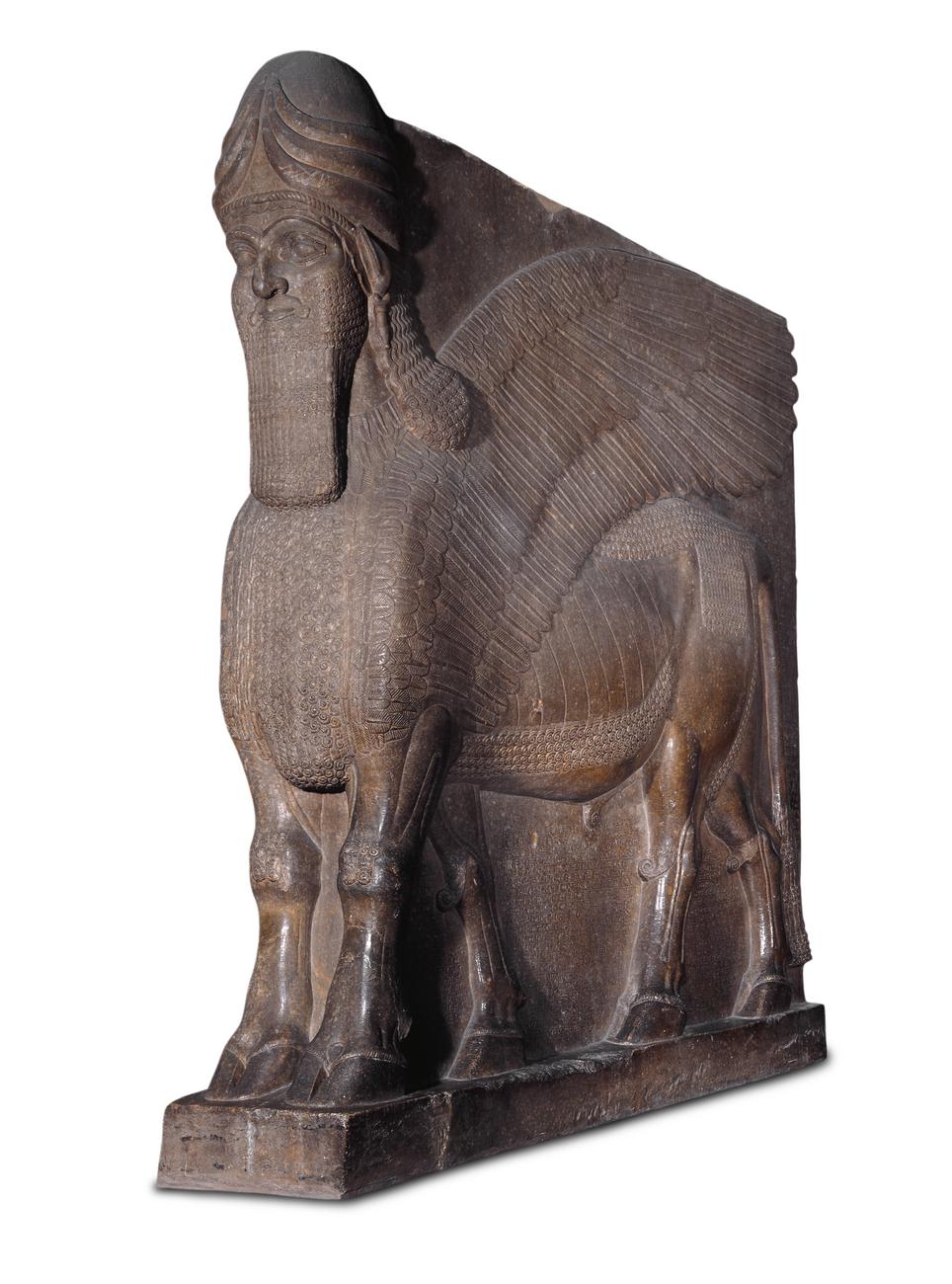
Human-headed winged bull
- Audio guide stop: 218
- Gallery: Room 8
- Culture: Neo-Assyrian
- Date: 865BC-860BC
- Object type: wall panel, relief
- Materials: gypsum
- Museum number: 118872
- Museum: The British Museum
- Collection record: British Museum website
- Image © The Trustees of the British Museum, shared under a CC BY-NC-SA 4.0 licence.
Listen to the free audio guide
About this object
Before you stands a striking example of Neo-Assyrian artistry: a human-headed winged bull, carved into a gypsum wall panel. The creature looks to the left, its powerful wings stretched wide. This is a protective spirit, a guardian of a doorway that may have led to the private living quarters of the king.
The panel is covered in cuneiform writing, an ancient script that records the name, titles, and military achievements of King Ashurnasirpal II. Created around 865–860 BC, this relief was uncovered at Nimrud in the North West Palace. Another matching piece can be found in New York’s Metropolitan Museum.
Carved from soft gypsum, the relief’s grand scale — over three meters wide — captures the Assyrian rulers' devotion to strength, divinity, and control over their domain.
See it in person
Human-headed winged bull is on display in Room 8 at the British Museum on Great Russell Street, Bloomsbury, London — free to enter. Choose British Museum on audioguide.london and type its audio guide stop number, 218, from the gallery label, or take a photo of it, to hear this free audio guide in six languages — no app download needed.
New, in beta. British Museum support has just launched and is still improving: over 1,000 objects so far, with more added all the time.