Holyday
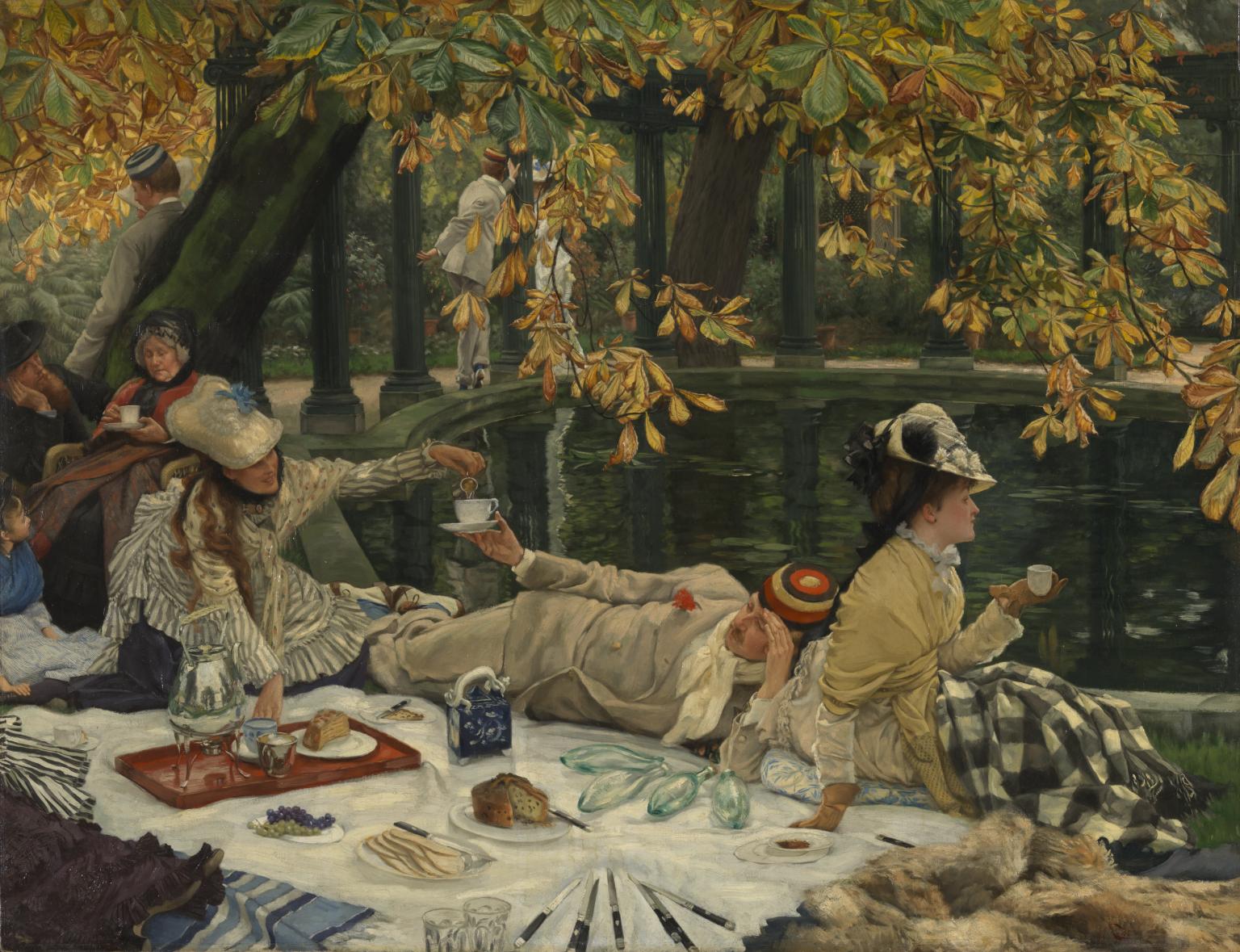
- Artist: James Tissot
- Date: c.1876
- Medium: Oil paint on canvas
- Dimensions: support: 762 x 994 x 20 mm
- Museum: Tate Britain
- Collection record: Tate Britain website
Listen to the free audio guide
About this artwork
This is the “Holyday” by James Tissot. The canvas, painted around 1876, shows Tissot’s own garden on Grove End Road in St John’s Wood, a fashionable north‑London suburb just a few streets from Lord’s cricket ground. In the foreground, a cast‑iron colonnade frames a lush fishpond, its surface rippling under the warm autumn sun. The scene is a leisurely afternoon picnic: a group of young men and women mingle, flirting under the trees, while a sleeping chaperone lies nearby, oblivious to the courting chaos.
What makes this painting especially interesting is the detail of the cricket caps—red, yellow, and blue—donning the I Zingari emblem. Tissot, who had settled in London after the fall of the Paris Commune, captured the everyday life of the fashionable elite he observed. Critics of the time found the scene somewhat vulgar, with the flirtatious young men and their unsupervised ladies. It was first exhibited at the Grosvenor Gallery in 1877, titled “Holyday”, and later became known informally as “The Picnic”.
Tissot’s technique blends careful draftsmanship with a subtle painterly touch. The autumn light filtering through chestnut leaves adds a golden glow, while the precise rendering of the pool, the tea set, and the clothing hints at his meticulous attention to everyday details. The painting was purchased by the gallery in 1928, and it has since become a charming example of late‑Victorian social realism, offering a snapshot of leisure, class, and the cultural currents of the era.
See it in person
Holyday is in the collection of Tate Britain on Millbank, London — free to enter. Point your phone at any artwork there and audioguide.london plays a free audio guide in six languages — no app download needed.