Hercules Killing the Hydra
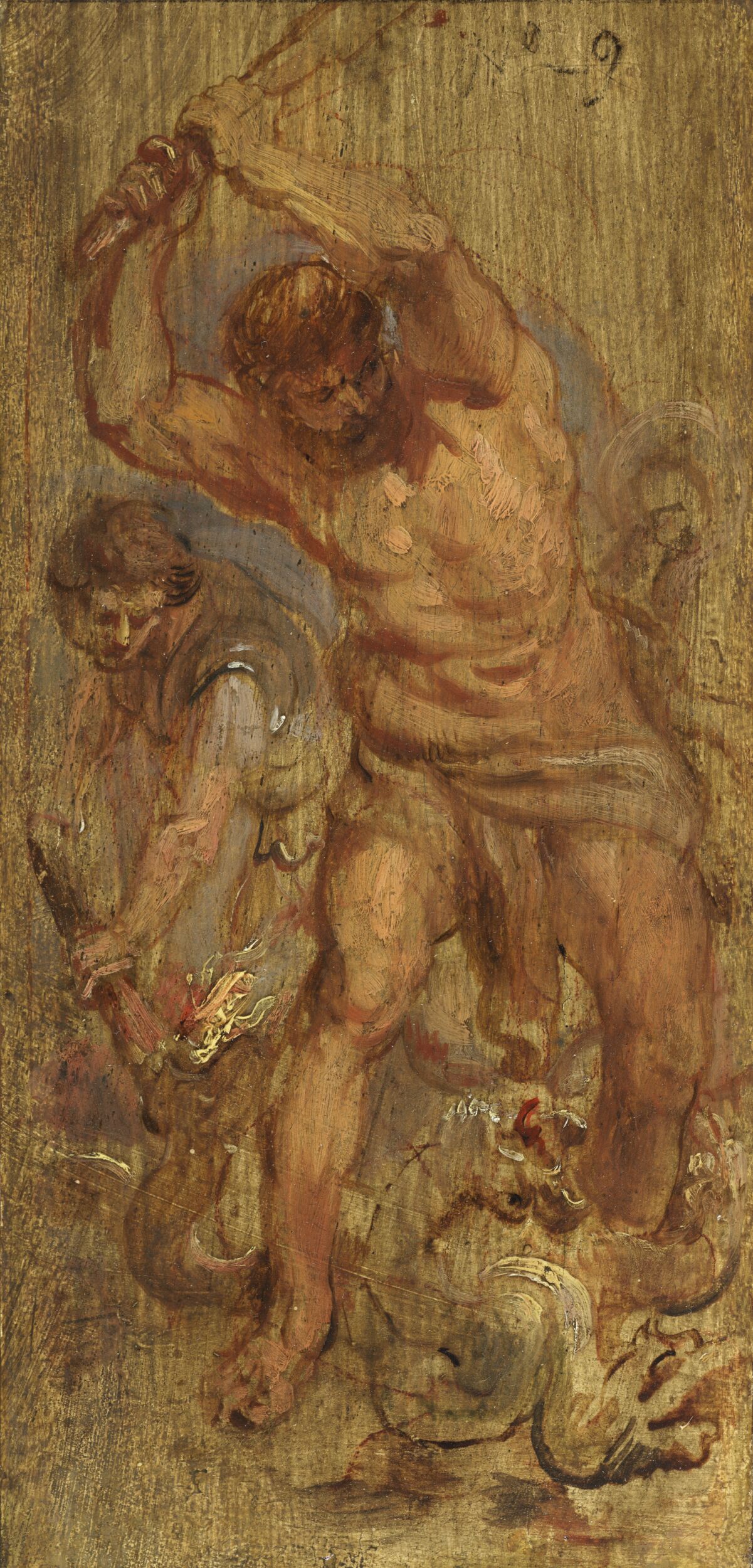
- Artist: Peter Paul Rubens
- Date: (circa) 1639
- Medium: oil on panel
- Museum: The Courtauld Gallery
- Collection record: The Courtauld Gallery website
Listen to the free audio guide
About this artwork
This is the “Hercules Killing the Hydra” by Peter Paul Rubens. In 1636, King Philip IV of Spain commissioned Rubens to design the decoration for his new hunting lodge outside Madrid, the Torre de la Parada. Rubens responded with a series of lively sketches—about fifty in total—capturing mythological scenes that would later adorn the lodge’s walls.
This particular study shows the Greek hero Hercules in the midst of slaying the multi‑headed hydra, a water monster that bursts forth from the river Styx. The dynamic composition places Hercules in the foreground, his muscular form tense, as he lunges forward with a club while the hydra’s heads recoil and snap behind him. Rubens’ use of dramatic lighting and vigorous brushwork highlights the chaos of the battle and the heroic bravado of Hercules.
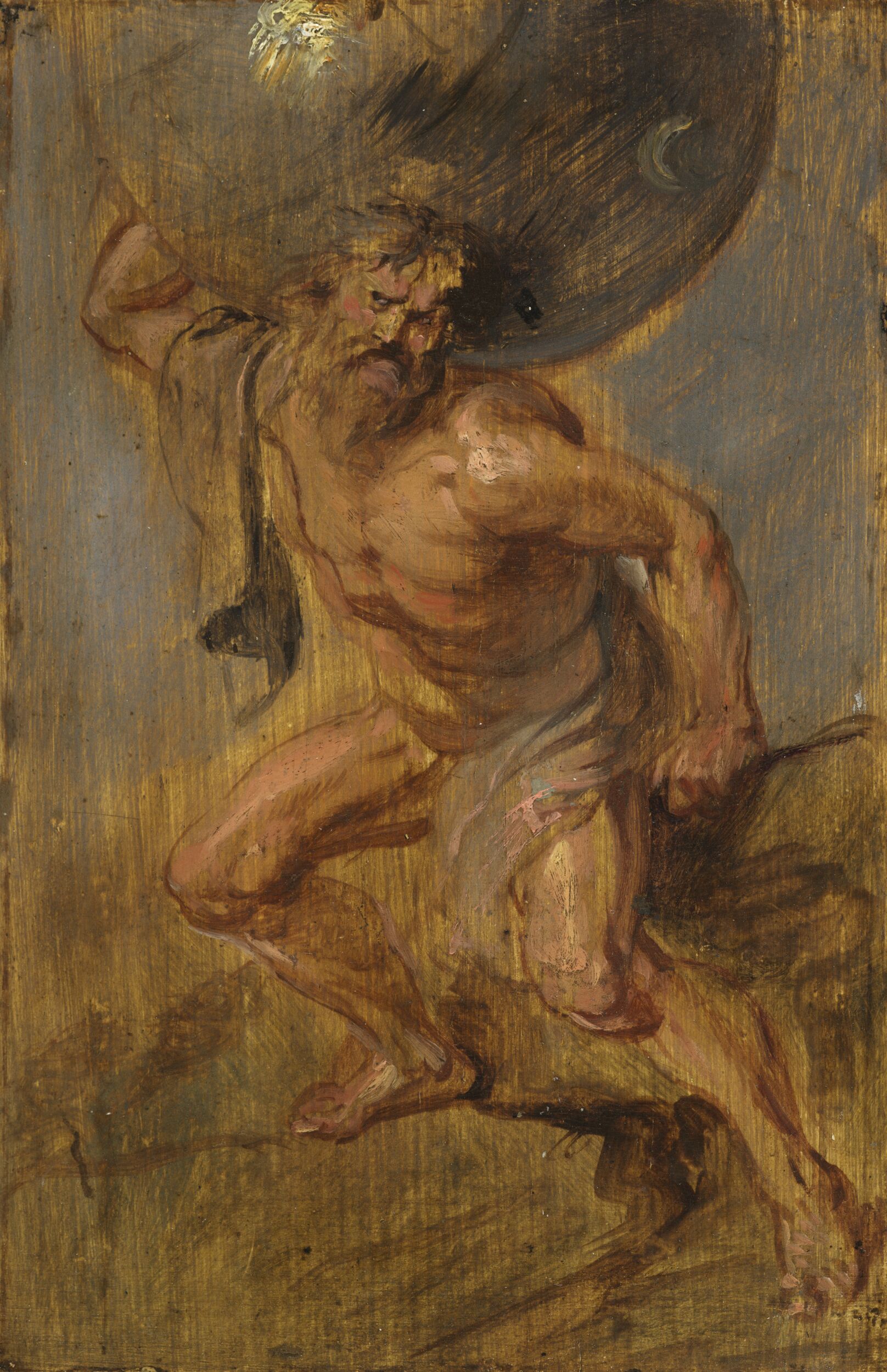
Interestingly, another sketch from the same set depicts Atlas, condemned by the gods to bear the heavens on his shoulders. Together, these studies reveal Rubens’ fascination with both divine punishment and heroic triumph, themes that would resonate throughout his career.
Painted around 1639 in oil on panel, this work showcases Rubens’ masterful handling of anatomy and motion, giving us a glimpse into the visual narrative he intended for the royal hunting lodge.
See it in person
Hercules Killing the Hydra hangs in The Courtauld Gallery at Somerset House, London. Point your phone at any artwork there and audioguide.london plays a free audio guide in six languages — no app download needed.