Heraclitus
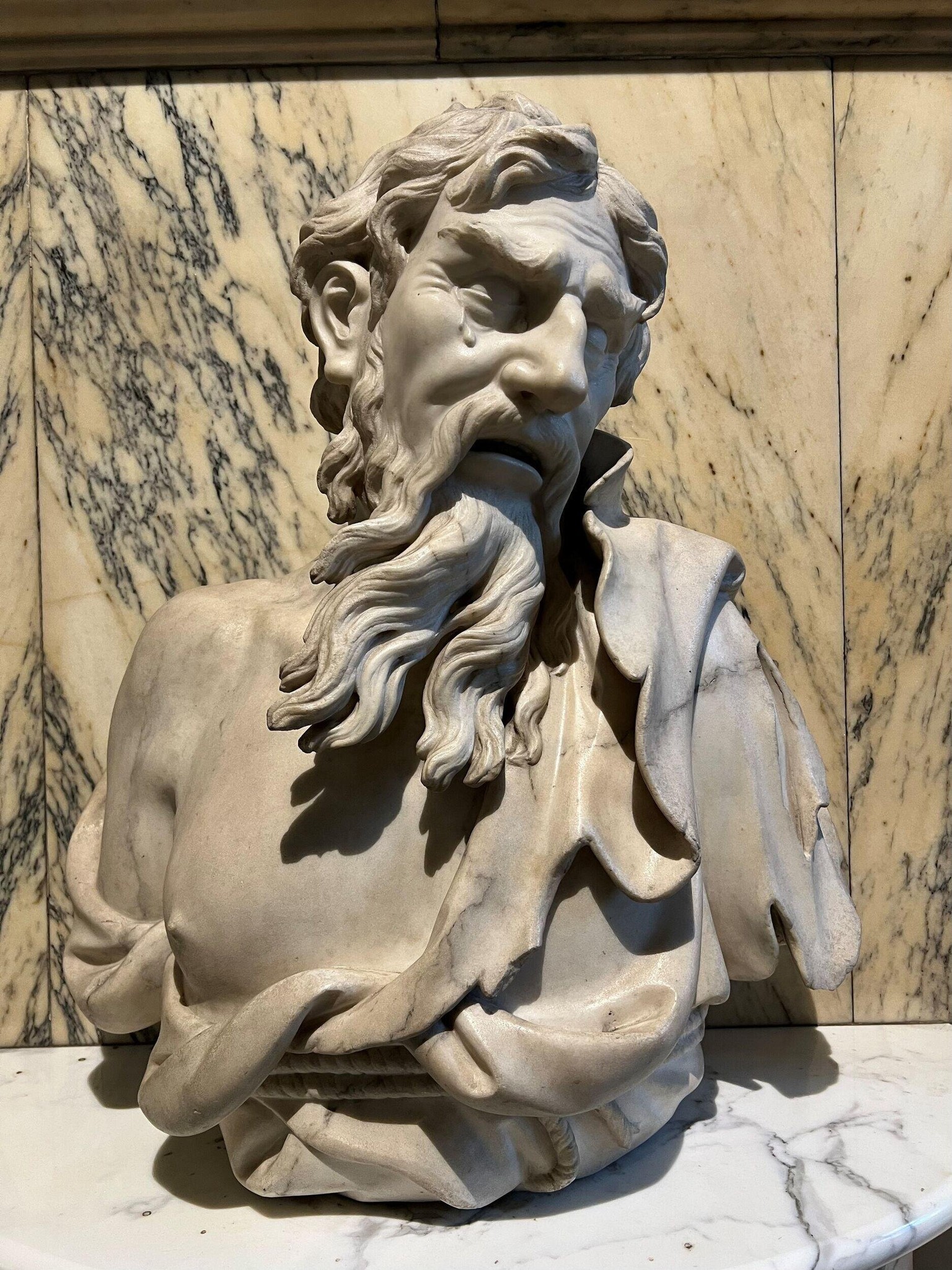
- Gallery: Display area east of Grand Entrance at base of stairs to room 62
- Maker: Alvise Tagliapietra (probably)
- Made in: Venice
- Date: early 18th century
- Object type: Bust
- Materials: carved marble
- Dimensions: Height 67 cm
- Museum: V&A South Kensington
- Collection record: V&A website
- Image © Victoria and Albert Museum, London.
Listen to the free audio guide
In the museum now? Point your phone at the next object and hear its guide.
About this object
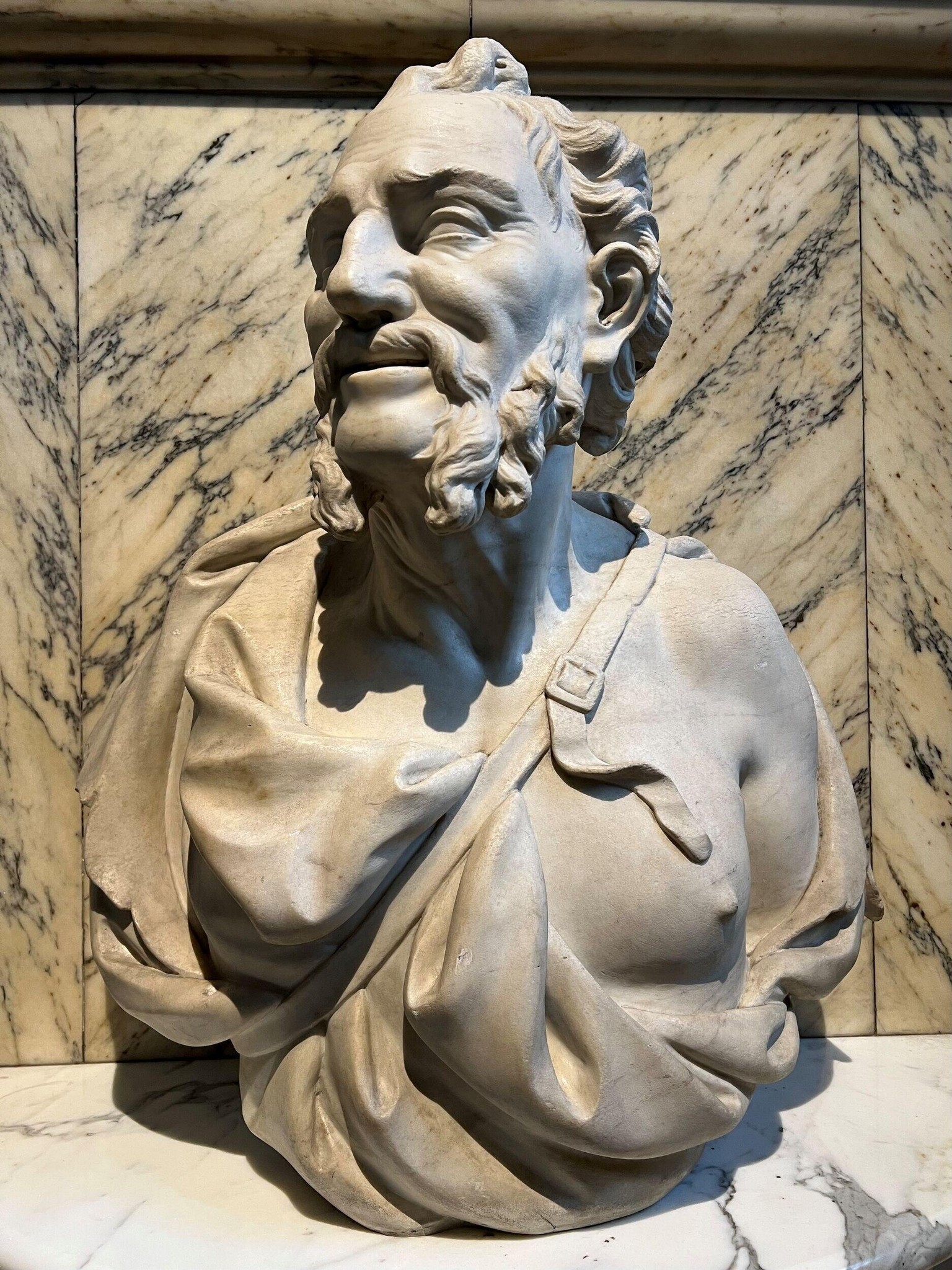
Before you is a carved marble bust of the ancient Greek philosopher Heraclitus. Created in Venice during the early 18th century, this work is attributed to Alvise Tagliapietra.
As you look closely, notice the details of this bearded old man. His head is turned slightly to the right and cast downward, with visible tears flowing from his eyes. He wears a cloak of rough skin over his left shoulder, which is secured under his breast with a rope, leaving his right shoulder exposed.
Because of these tears, Heraclitus was often known as the weeping philosopher. During this period, such busts were popular in Venice as symbols of introspective thinking, inviting viewers to reflect on the fragility of life. He was frequently paired with another philosopher, Democritus, who was depicted as a laughing younger man. This contrast between the weeping and the laughing served as a moral lesson on the vanity of the human condition.
See it in person
Heraclitus is on display in Display area east of Grand Entrance at base of stairs to room 62 at the V&A South Kensington on Cromwell Road, London — free to enter. Choose V&A South Kensington on audioguide.london and take a photo of it to hear this free audio guide in six languages — no app download needed.
New, in beta. V&A support has just launched and is still improving: 1,000 objects with audio so far, with more added all the time.