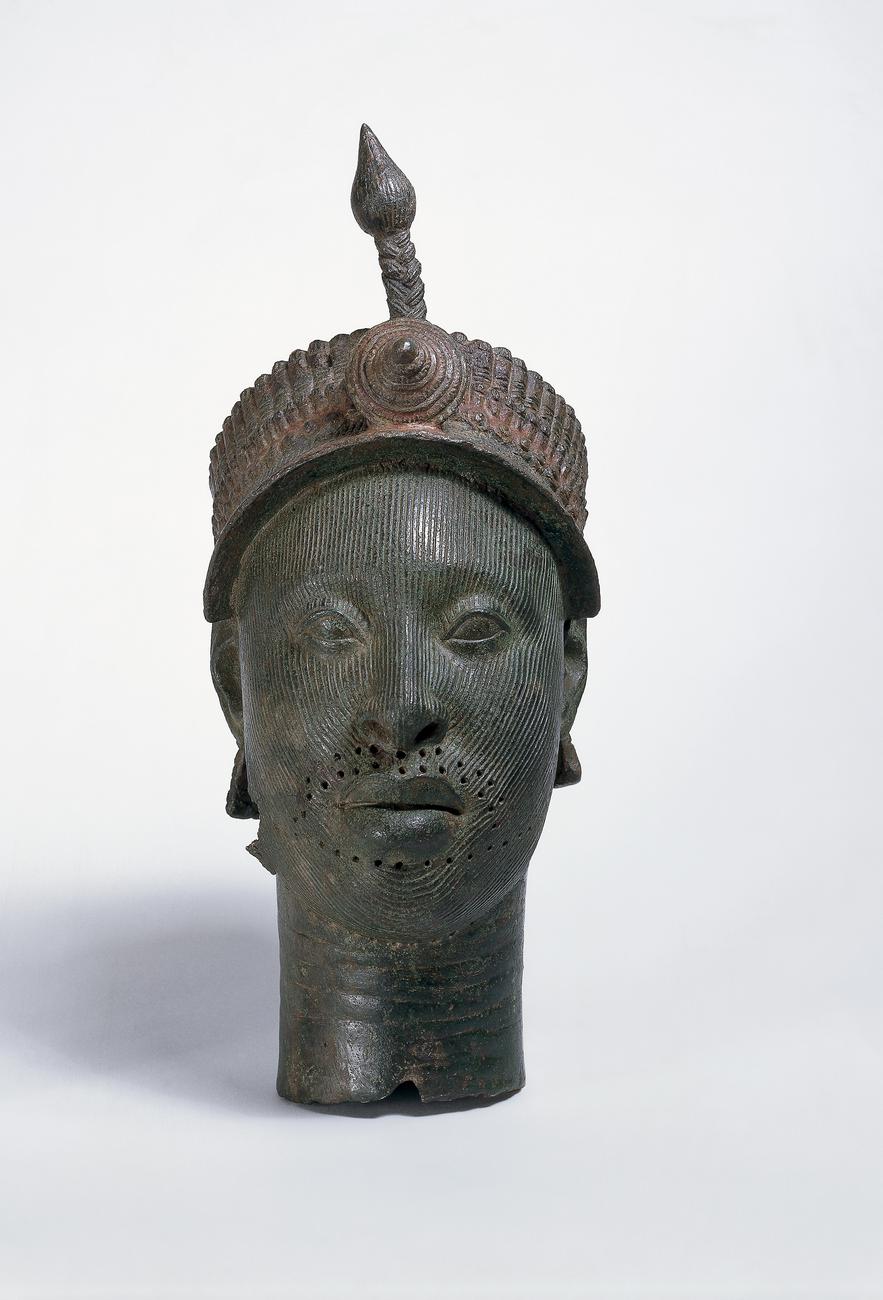
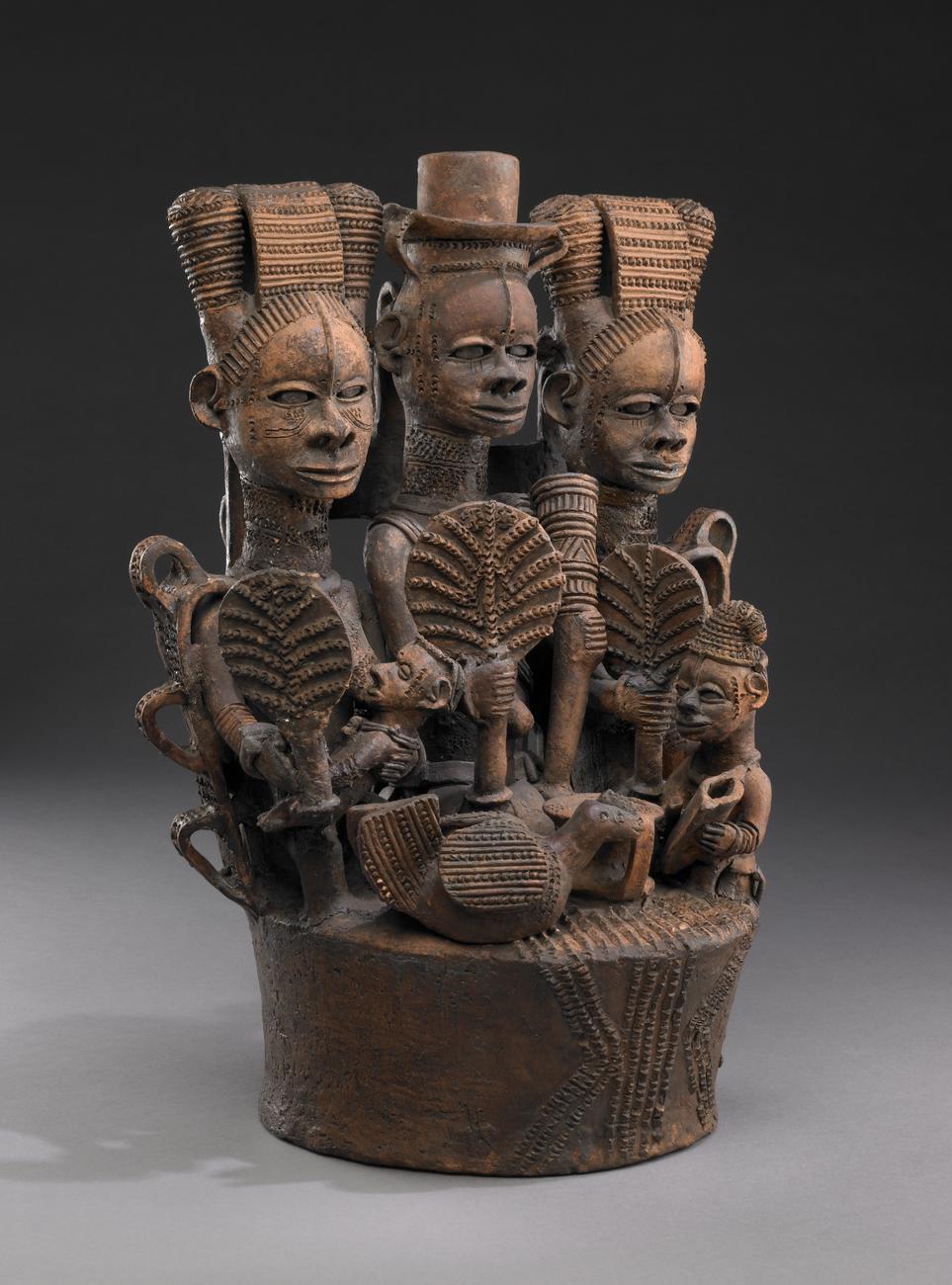
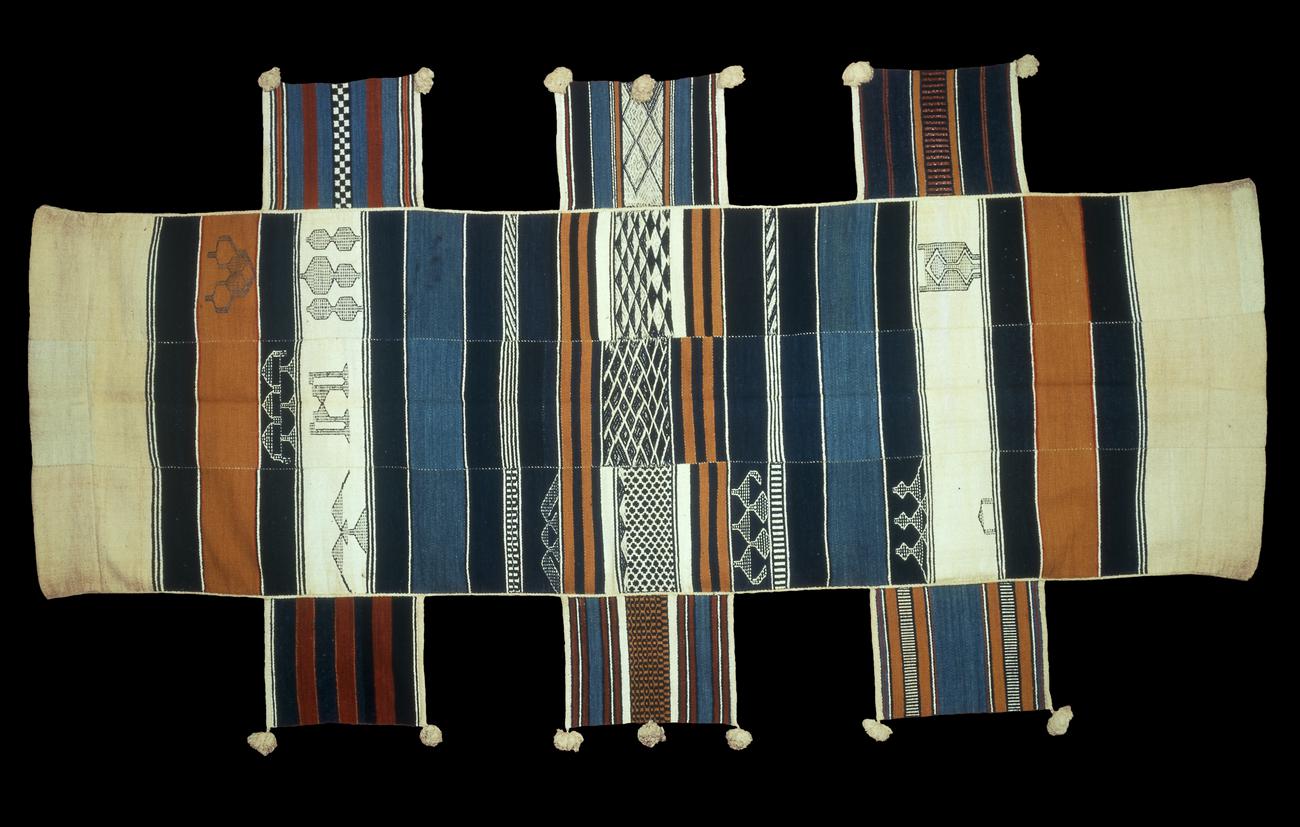
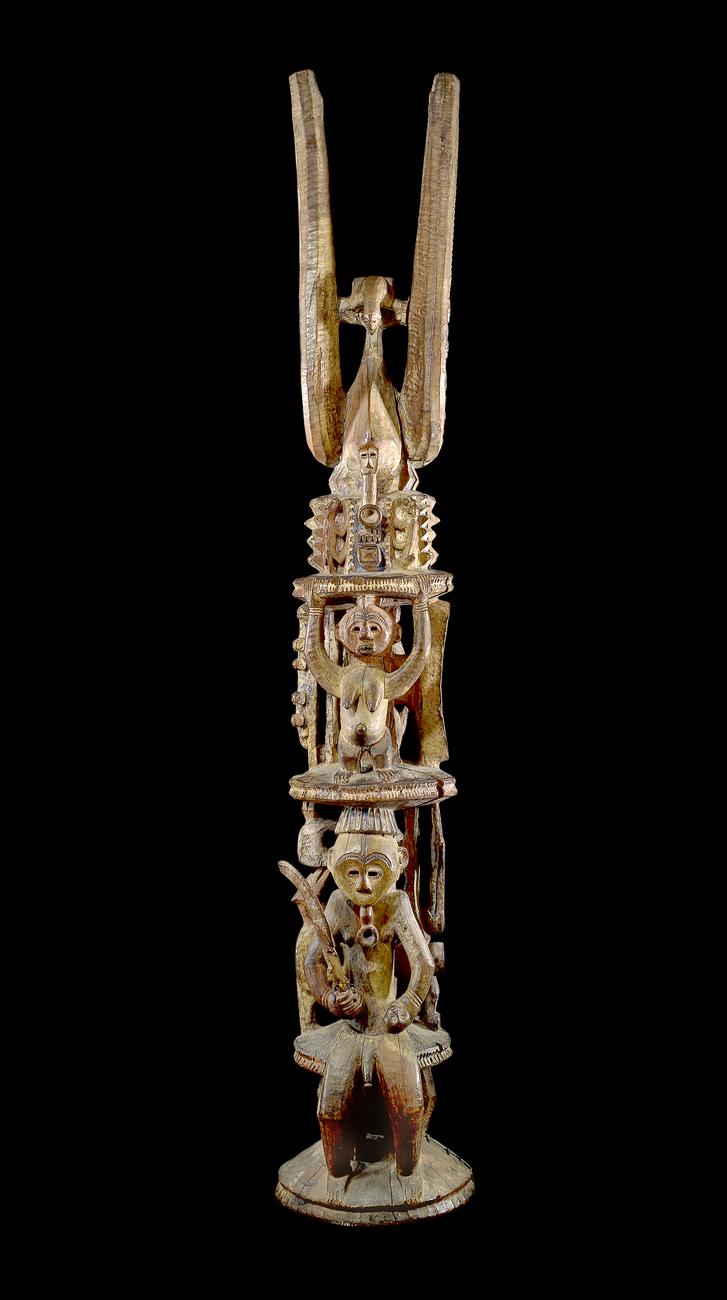
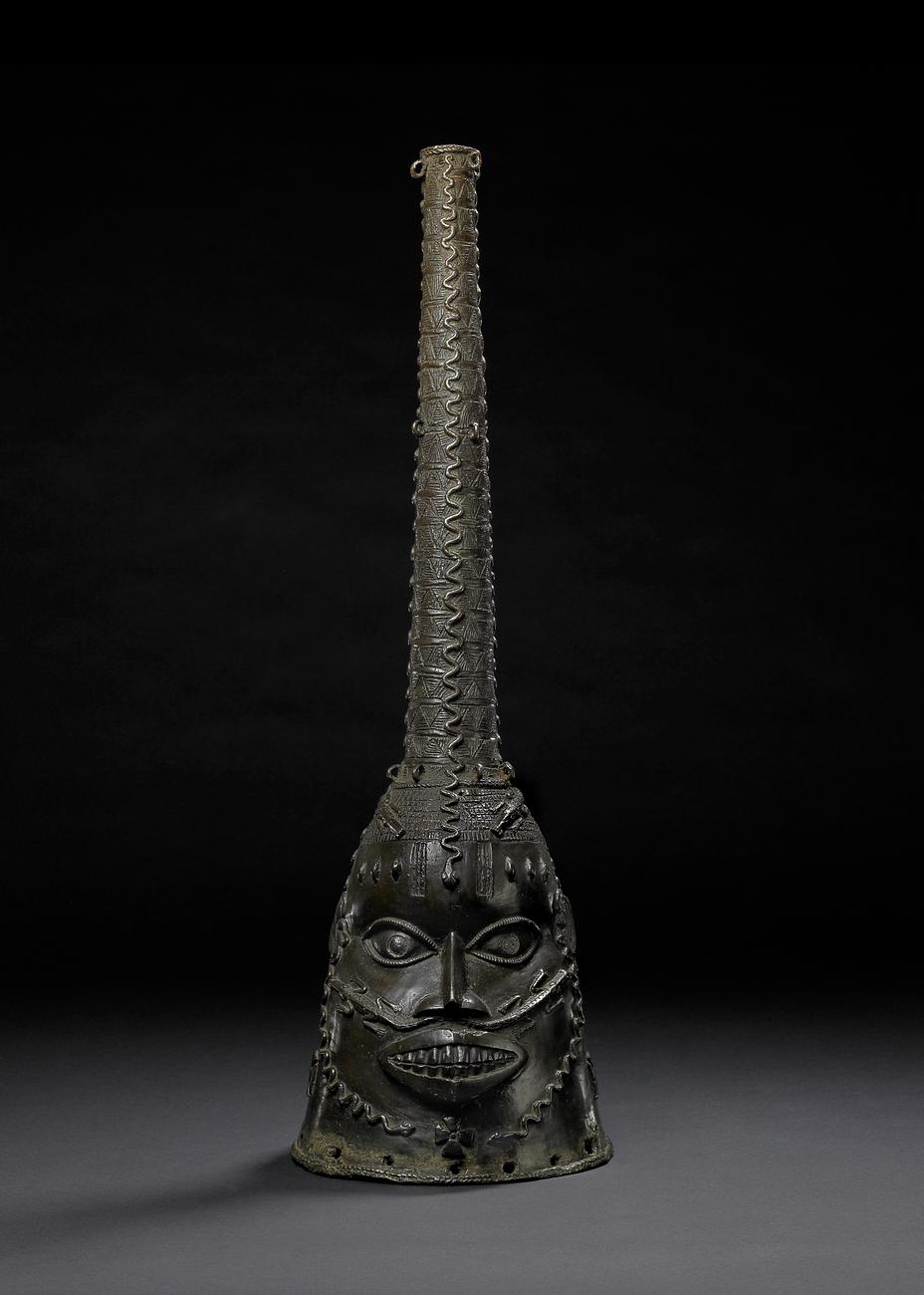
Helmet mask
- Gallery: Room 25
- Made in: Benin City
- Date: 18thC(late) (circa)
- Object type: helmet mask
- Materials: brass
- Museum number: Af1944,04.12
- Museum: The British Museum
- Collection record: British Museum website
- Image © The Trustees of the British Museum, shared under a CC BY-NC-SA 4.0 licence.
Listen to the free audio guide
About this object
This is a helmet mask from Benin City. The mask is made of brass using the ancient lost-wax casting method. It shows a human face with a tall, tapering projection rising from the top of the head. On the face are three vertical marks above each eyebrow—these represent traditional scarification patterns. Serpents and long-nosed crocodiles wind around the projection and adorn the cap. More reptiles appear around the chin, while crosses are carved beneath and along the sides of the neck. Small holes are pierced at the bottom.
This male Odudua mask is associated with royal masquerades in the New Yam festival—an important cultural event. It honors Ododua, a key figure in Yoruba tradition. The mask's reptiles and powerful iconography reflect themes of nature’s balance and leadership. The piece may date to the late eighteenth century and was donated in 1944 by Irene Beasley of the Beasley collection.
See it in person
Helmet mask is on display in Room 25 at the British Museum on Great Russell Street, Bloomsbury, London — free to enter. Choose British Museum on audioguide.london and take a photo of it to hear this free audio guide in six languages — no app download needed.
New, in beta. British Museum support has just launched and is still improving: over 1,000 objects so far, with more added all the time.