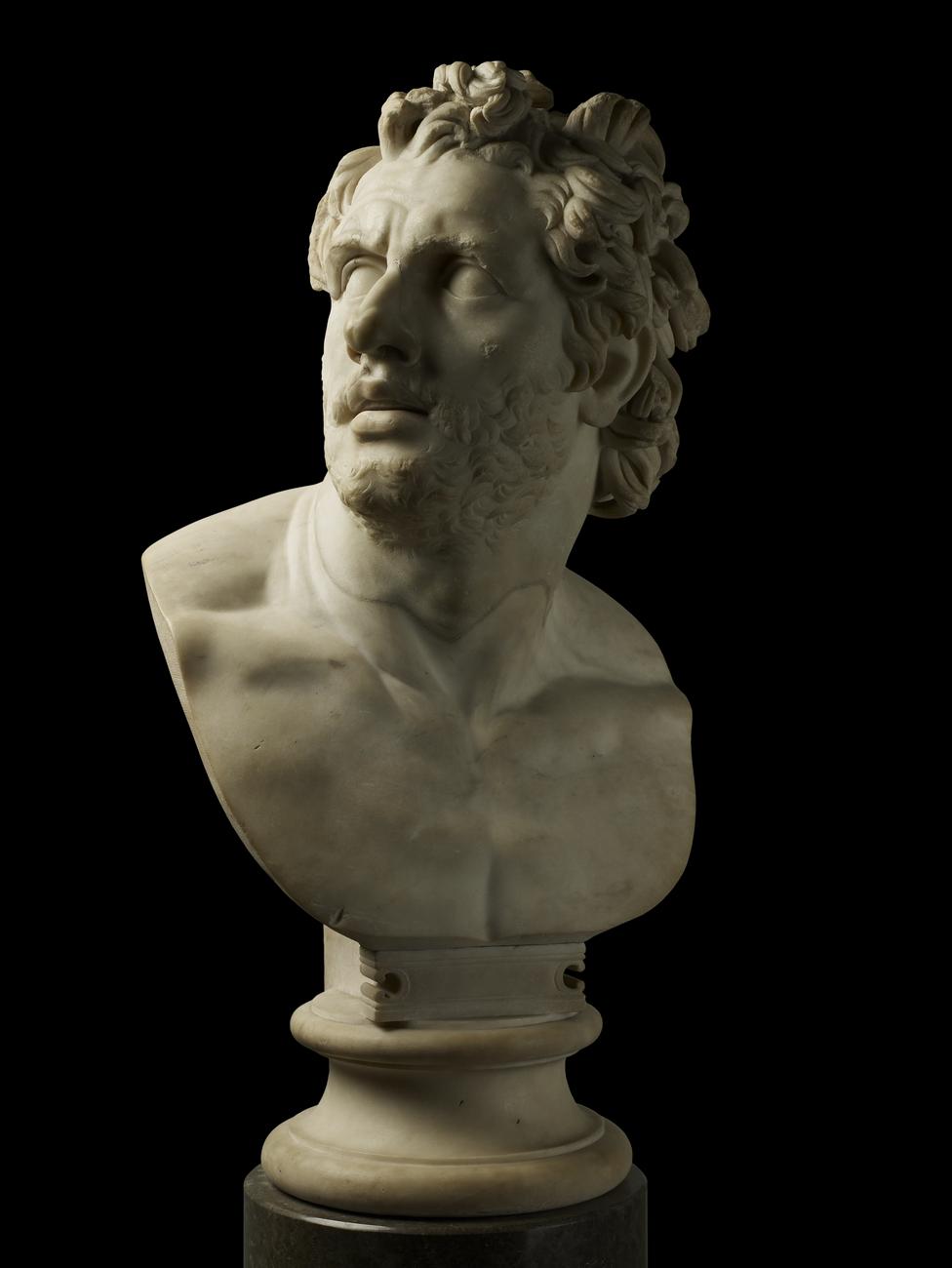
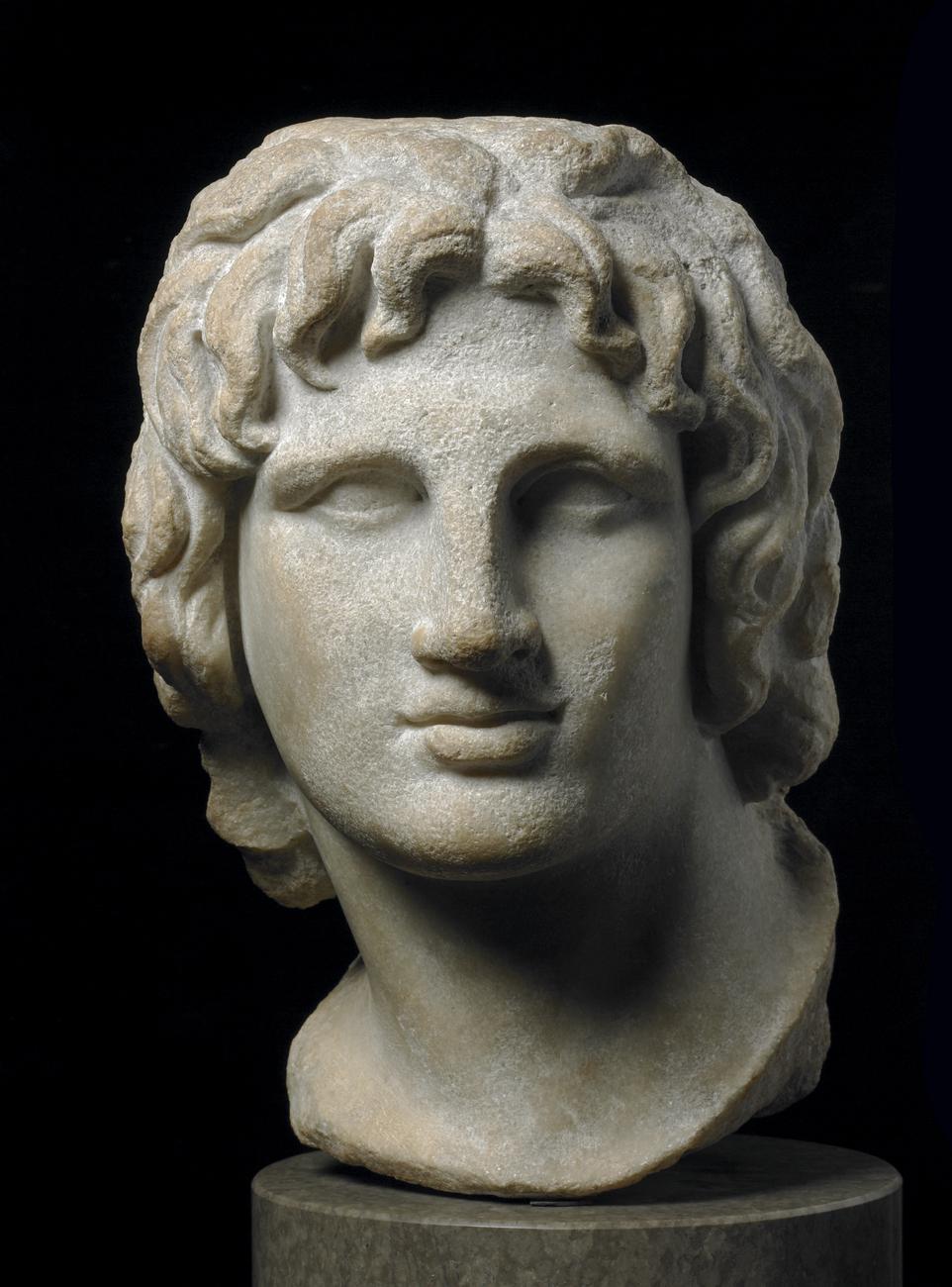
Hellenistic portrait head
- Gallery: Room 22
- Culture: Hellenistic
- Date: 300 BC - 150 BC
- Object type: portrait head
- Materials: marble
- Museum number: 1872,0515.1
- Museum: The British Museum
- Collection record: British Museum website
- Image © The Trustees of the British Museum, shared under a CC BY-NC-SA 4.0 licence.
Listen to the free audio guide
About this object
Before you is a Hellenistic portrait head of Alexander the Great. Carved from marble, it shows Alexander with long, carefully styled hair, a youthful appearance, and an upward gaze that gives him a divine, almost godlike presence. The artist split the head and body into separate pieces, a common practice of the time. The head’s back has been shaped to connect with a detachable hairpiece, likely made of stucco or plaster.
This work dates to between 300 and 150 BCE, reflecting how Alexander was portrayed long after his death. Sculptors created images honoring him, often adapting styles over time. Alexander introduced a clean-shaven look and the royal diadem—symbols later adopted by many kings.
The head was discovered in Alexandria, a city Alexander himself founded after conquering Egypt in 332 BCE. Over centuries, he became a divine figure for the Ptolemaic rulers who followed. This example shows how his image was preserved and reinvented, capturing both power and immortality.
See it in person
Hellenistic portrait head is on display in Room 22 at the British Museum on Great Russell Street, Bloomsbury, London — free to enter. Choose British Museum on audioguide.london and take a photo of it to hear this free audio guide in six languages — no app download needed.
New, in beta. British Museum support has just launched and is still improving: over 1,000 objects so far, with more added all the time.