Heian Period figure
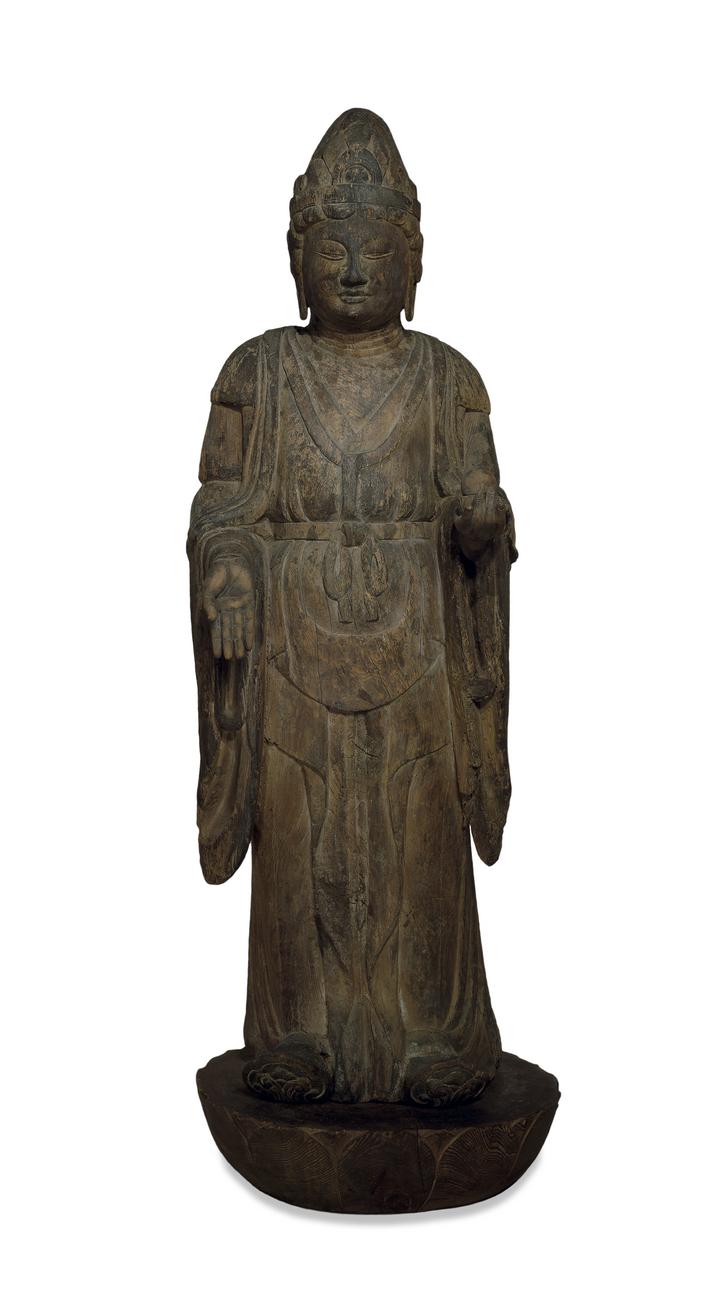
- Gallery: Room 93
- Culture: Heian Period
- Made in: Japan
- Date: 11thC
- Object type: figure
- Materials: wood
- Museum number: 1965,0415.1
- Museum: The British Museum
- Collection record: British Museum website
- Image © The Trustees of the British Museum, shared under a CC BY-NC-SA 4.0 licence.
Listen to the free audio guide
About this object
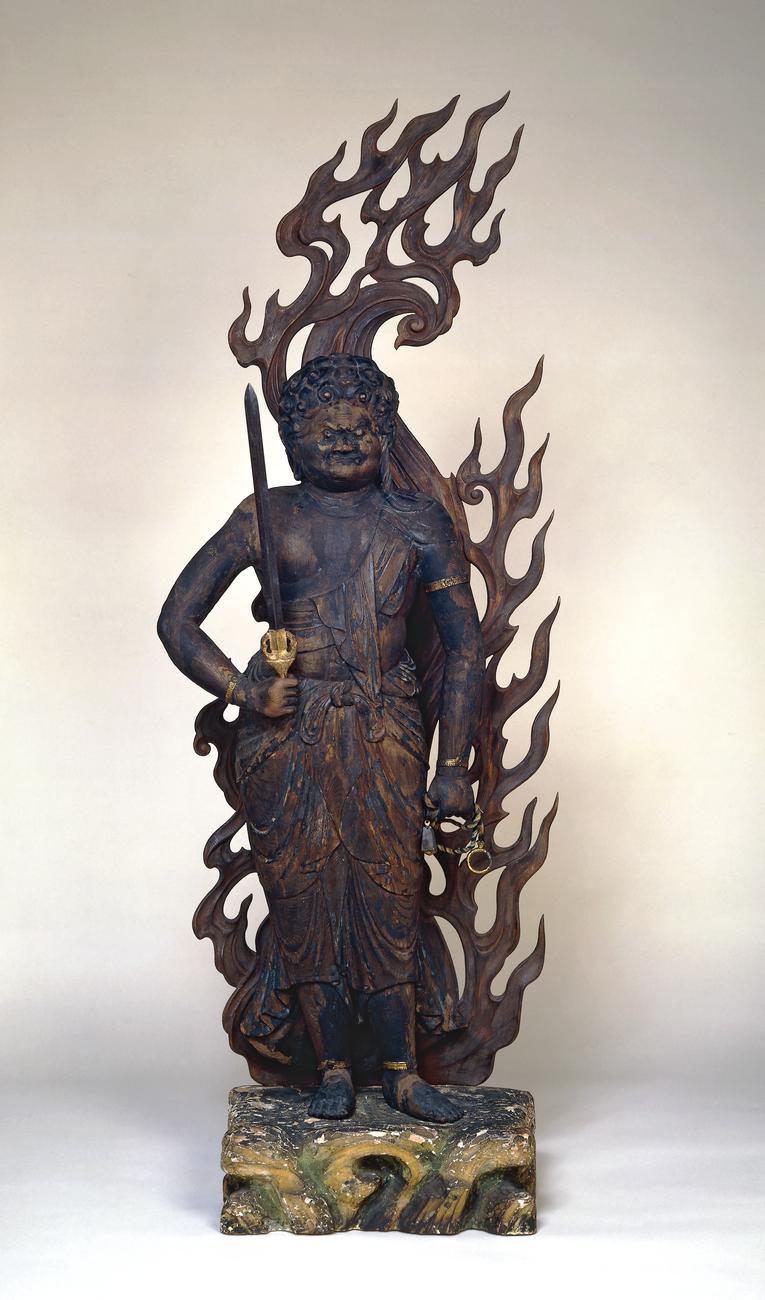
Before you stands a figure of Kichijoten, a female Buddhist deity from the Heian Period in Japan. Wearing elegant robes influenced by Tang-dynasty China, she sits on a lotus base and wears a crown. In one hand is a wishing jewel and in the other, she makes a gesture of granting desires.
This statue is carved entirely from a single block of wood—a style known as ichiboku-zukuri. Though originally crafted in the 11th century, the figure shows signs of later restoration. The hands and feet, for example, were replaced during later conservation work.
Kichijoten was worshipped for good fortune, harvests, and fertility. She originally came from India as the goddess Lakshmi, part of the Hindu pantheon. Over time, she became a widely venerated figure in Japan, often paired with the guardian deity Bishamon.
Notice the serene expression and the flowing lines of her robes—details that reflect the refined artistic traditions of the Heian era.
See it in person
Heian Period figure is on display in Room 93 at the British Museum on Great Russell Street, Bloomsbury, London — free to enter. Choose British Museum on audioguide.london and take a photo of it to hear this free audio guide in six languages — no app download needed.
New, in beta. British Museum support has just launched and is still improving: over 1,000 objects so far, with more added all the time.