Hammersmith Bridge on Boat-race Day
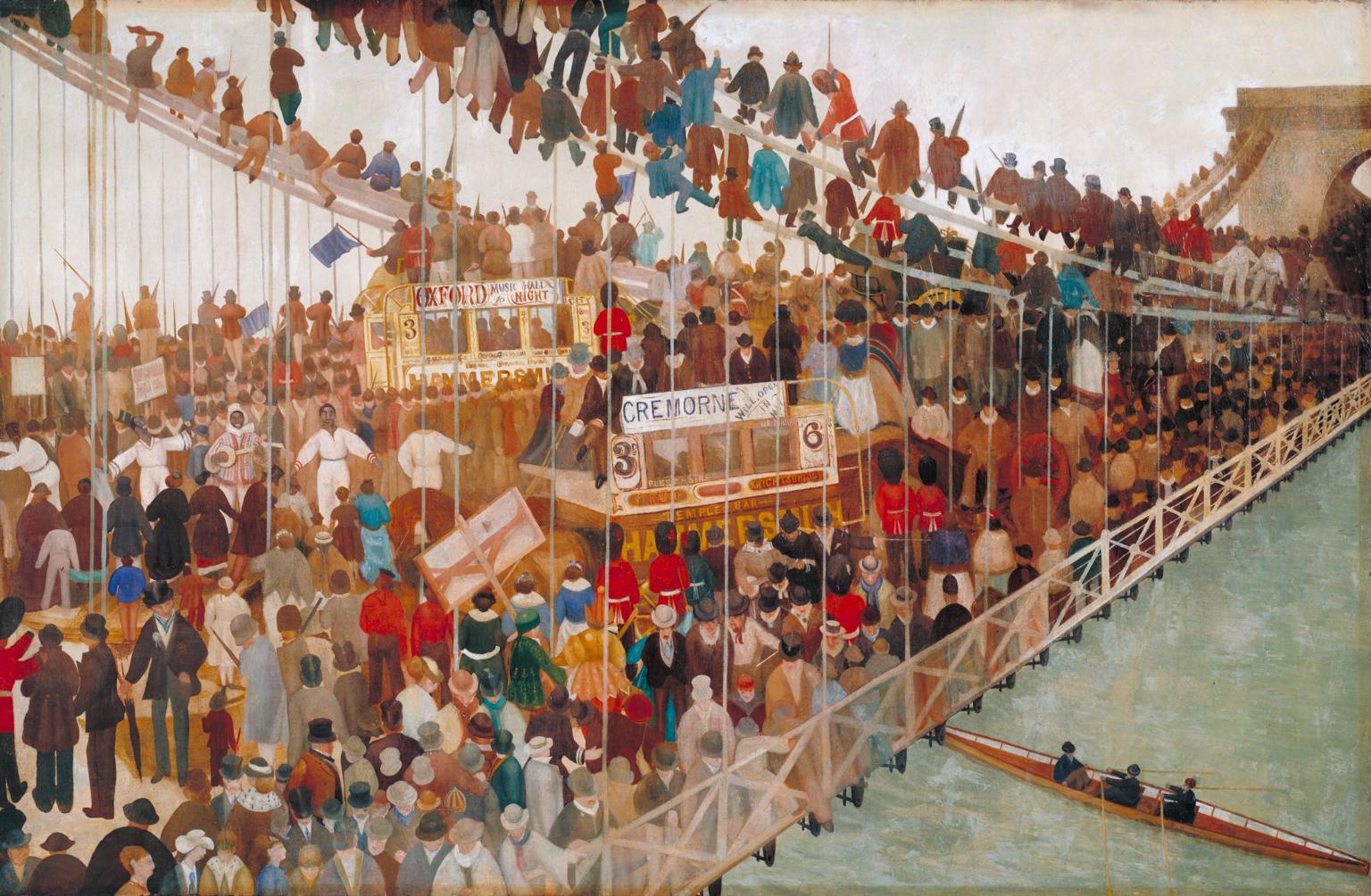
- Artist: Walter Greaves
- Date: c.1862
- Medium: Oil paint on canvas
- Dimensions: support: 914 x 1397 mm
- Museum: Tate Britain
- Collection record: Tate Britain website
Listen to the free audio guide
About this artwork
This is the “Hammersmith Bridge on Boat‑race Day” by Walter Greaves. Picture a bustling London morning in the 1860s: the Thames is alive with rowers and the crowds that have gathered on Hammersmith Bridge to watch the famed university boat race. Greaves, a self‑taught artist and the son of a Thames boatman, brings that scene to life with his lively, slightly caricatured figures. He shows us the mix of people—men in tweed, women in skirts, a few travelers in hansom cabs—all packed together, their faces turned toward the water. The bridge itself, a suspension structure, is depicted in tension, a reminder of the real fears of 1870 when about 12,000 people flooded the bridge and its strength was questioned.
The painting is an oil on canvas from around 1862, showing Greaves’ early style: bold outlines, simplified details, and a touch of humor. It captures the vibrancy of London’s public life, the thrill of sport, and the everyday drama of a city in motion. The work feels like a snapshot of a city’s pulse—energy, diversity, and a hint of civic pride all wrapped into a single, vibrant scene.
See it in person
Hammersmith Bridge on Boat-race Day is in the collection of Tate Britain on Millbank, London — free to enter. Point your phone at any artwork there and audioguide.london plays a free audio guide in six languages — no app download needed.