Gebelein Man
- Audio guide stop: 352
- Gallery: Room 64
- Culture: Late Predynastic; Naqada II
- Date: 3400BC (C14 dating in 2017 gave a date of 3341-3017BC (Cal BC 95.4%))
- Object type: human mummy
- Materials: human tissue
- Museum number: EA32751
- Museum: The British Museum
- Collection record: British Museum website
- Image © The Trustees of the British Museum, shared under a CC BY-NC-SA 4.0 licence.
Listen to the free audio guide
About this object
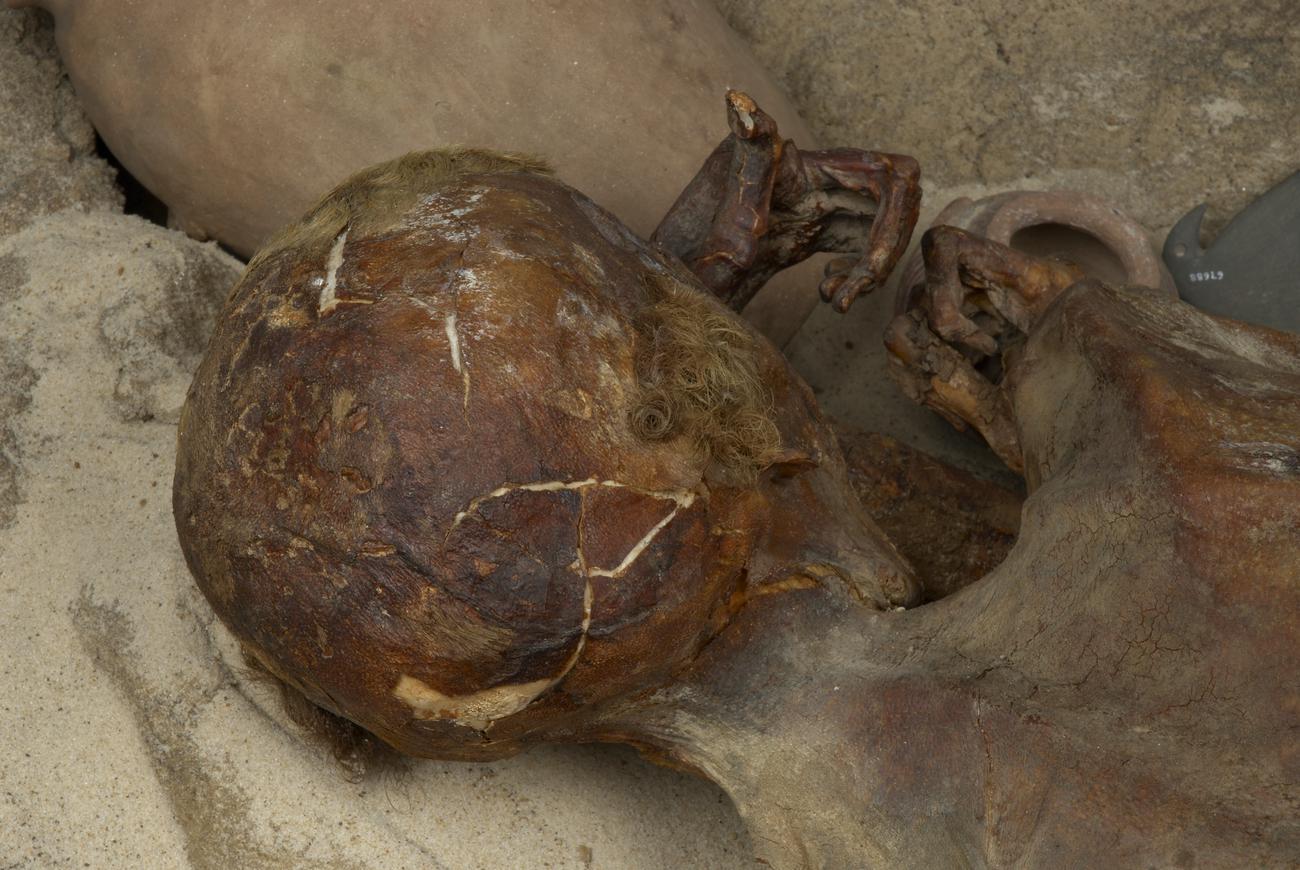
Before you is the naturally mummified remains of a young adult male known as the Gebelein Man. Dating to around 3400 BC, he was discovered in Gebelein and is one of the best-preserved prehistoric human remains in the British Museum. His body is in a flexed position, as if curled, suggesting early burial customs before extended burials became common.
His most noticeable feature is his preserved ginger-coloured hair, which still covers parts of his scalp. The skin on his face is cracked, yet his mouth is slightly open, and all his teeth appear healthy. A tattoo of a bull and sheep marks his upper right arm, and behind his left knee lie three preserved shells—perhaps carried as meaningful objects in life.
A sharp wound near his left shoulder and ribs suggests he may have died from injury. The excellent condition of his body gives archaeologists a rare insight into Predynastic life, death, and cultural practices.
See it in person
Gebelein Man is on display in Room 64 at the British Museum on Great Russell Street, Bloomsbury, London — free to enter. Choose British Museum on audioguide.london and type its audio guide stop number, 352, from the gallery label, or take a photo of it, to hear this free audio guide in six languages — no app download needed.
New, in beta. British Museum support has just launched and is still improving: over 1,000 objects so far, with more added all the time.