Elaine with the Armour of Launcelot
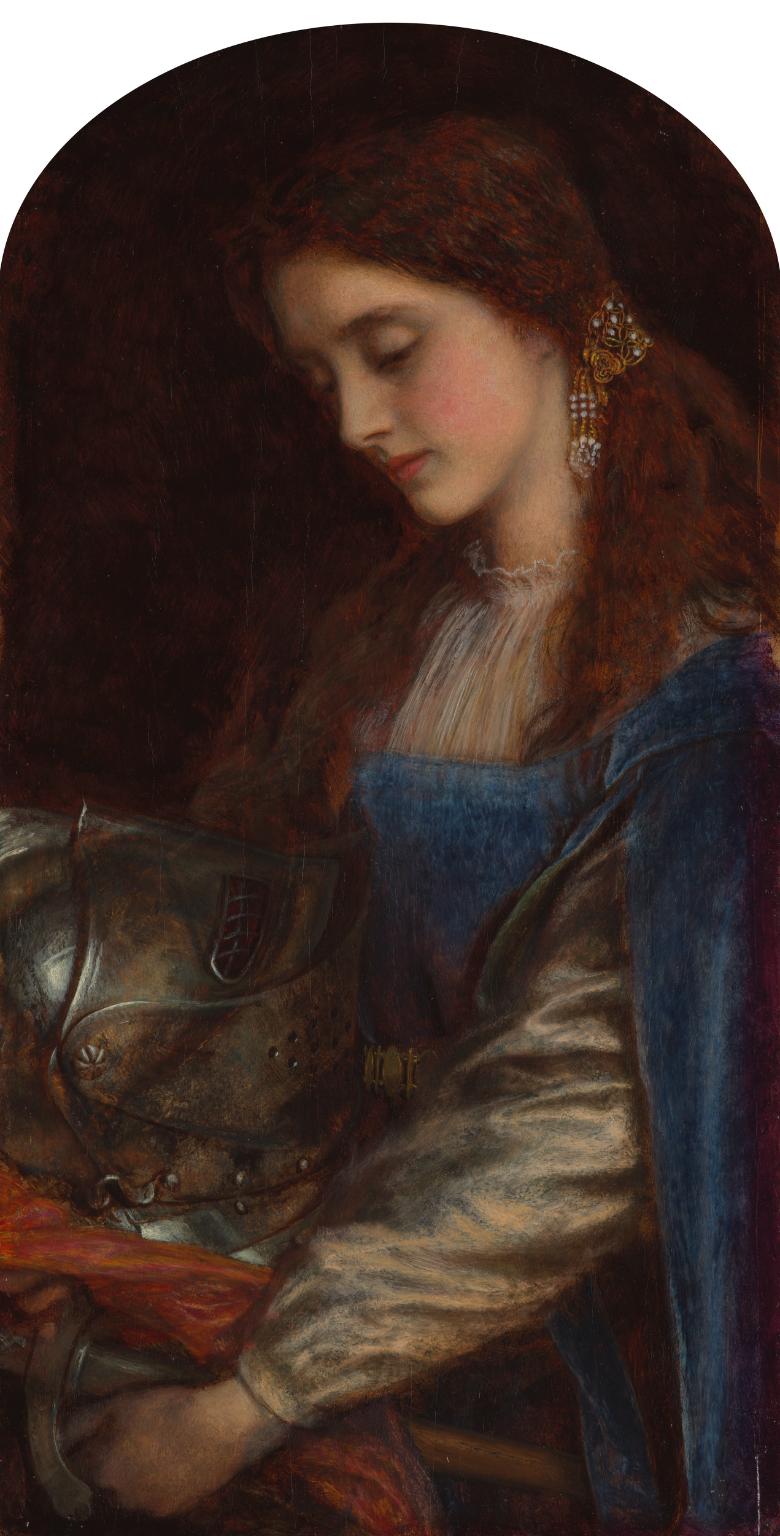
- Artist: Arthur Hughes
- Date: 1867
- Medium: Oil paint on panel
- Dimensions: support: 439 x 227 mm
- Museum: Tate Britain
- Collection record: Tate Britain website
Listen to the free audio guide
In the museum now? Point your phone at the next artwork and hear its guide.
About this artwork
This is the “Elaine with the Armour of Launcelot” by Arthur Hughes, painted in 1867. Hughes channels a quiet, almost aching love through a scene that feels like a whisper from the past. In the painting, a woman sits alone, her gaze fixed on a suit of armor—Lancelot’s armour—just as the knight’s chivalric armor would have glinted on a tournament day. Her posture is serene, but her hands, wrapped in delicate jewelry, hint at a deeper sorrow.
The artist draws heavily from the medieval romance world. He’s inspired by Alfred Lord Tennyson’s retelling of the story of Elaine of Astolat, a lady who fell hopelessly for Lancelot, only to be left in heartbreak. In some versions of the legend, her spirit is said to drift downstream, a haunting image that Waterhouse later captured in his own work. Hughes, however, chooses to focus on the moment of dreaming, where the armor becomes a symbol of longing and the isolation of love.
The painting’s oil-on-panel technique gives the textures—clothing, metal, and the soft glow of candlelight—rich depth. The old-fashioned attire and the intricate details of the jewelry echo the romanticized medieval era, while the subtle sadness in Elaine’s expression invites viewers to feel the quiet ache of a love unrequited.
See it in person
Elaine with the Armour of Launcelot is in the collection of Tate Britain on Millbank, London — free to enter. Point your phone at any artwork there and audioguide.london plays a free audio guide in six languages — no app download needed.