Edo Period wakizashi
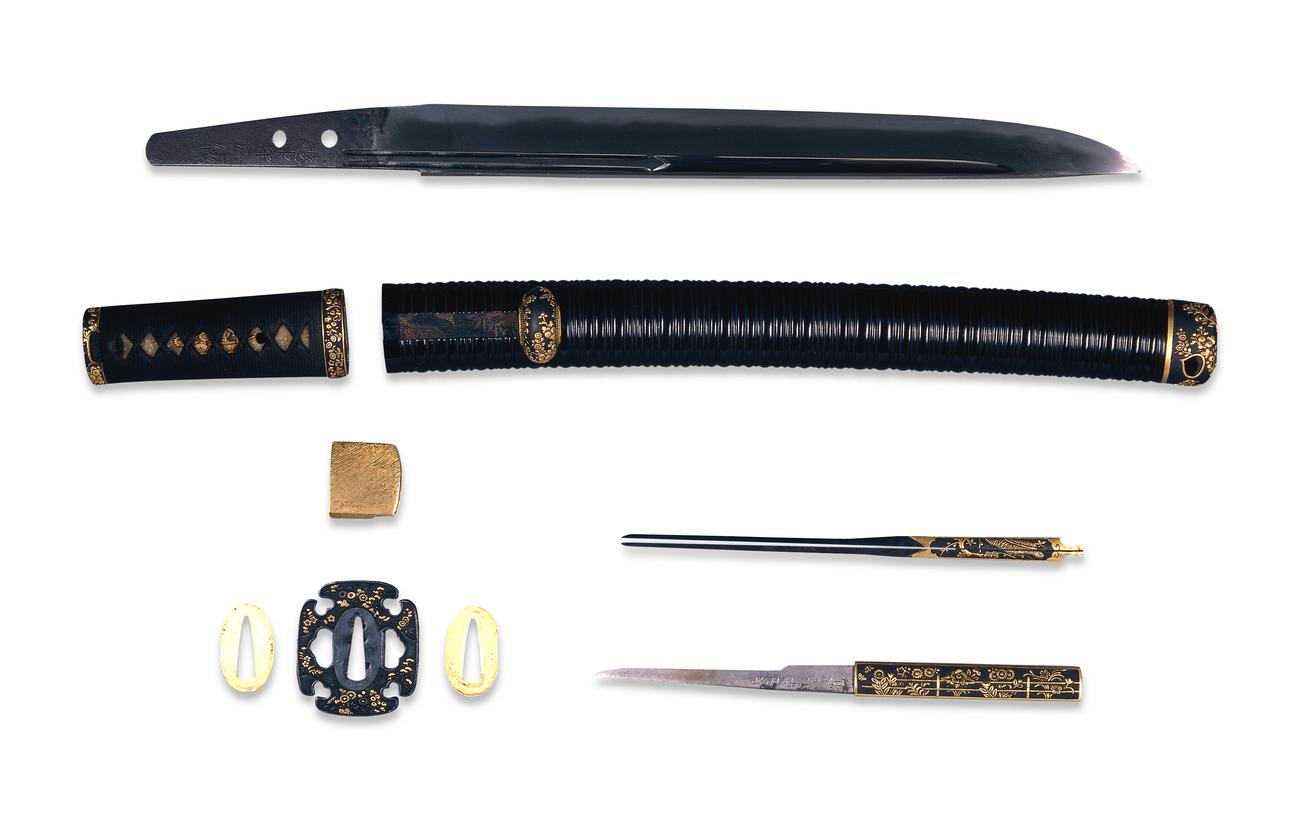
- Gallery: Room 93
- Maker: Sanpin Masatoshi
- Culture: Edo Period
- Made in: Kyoto-shi
- Date: 17thC(early)
- Object type: wakizashi, blade, shirazaya
- Materials: steel
- Museum number: 1958,0730.46.a
- Museum: The British Museum
- Collection record: British Museum website
- Image © The Trustees of the British Museum, shared under a CC BY-NC-SA 4.0 licence.
Listen to the free audio guide
In the museum now? Point your phone at the next object and hear its guide.
About this object
In front of you is a "wakizashi," a small sword worn by samurai in the Edo Period. The blade was made of steel by Sanpin Masatoshi around the early 1600s and displays a delicate "hamon," or wave pattern, along the cutting edge. On the back of the blade is an engraving of a stylized double-edged sword, a symbol from Esoteric Buddhism. The sword comes with a decorated mounting and a lacquered scabbard.
The mounting includes many carefully crafted pieces like the tsuba (sword guard) and a kogai (a small metal tool that can open into chopsticks). These were made in the Mino school style and feature gold inlaid flowers on a dark shakudo metal. Look closely, and you'll see chrysanthemums and other autumn flowers etched into the scabbard fittings.
This blade is signed by its maker, Sanpin Masatoshi, on the tang. Etched in Japanese, the signature reads: "Etchu-no-kami Masatoshi," meaning "Masatoshi, honorary lord of Etchu Province."
See it in person
Edo Period wakizashi is on display in Room 93 at the British Museum on Great Russell Street, Bloomsbury, London — free to enter. Choose British Museum on audioguide.london and take a photo of it to hear this free audio guide in six languages — no app download needed.
New, in beta. British Museum support has just launched and is still improving: over 1,000 objects so far, with more added all the time.