Ecce Homo
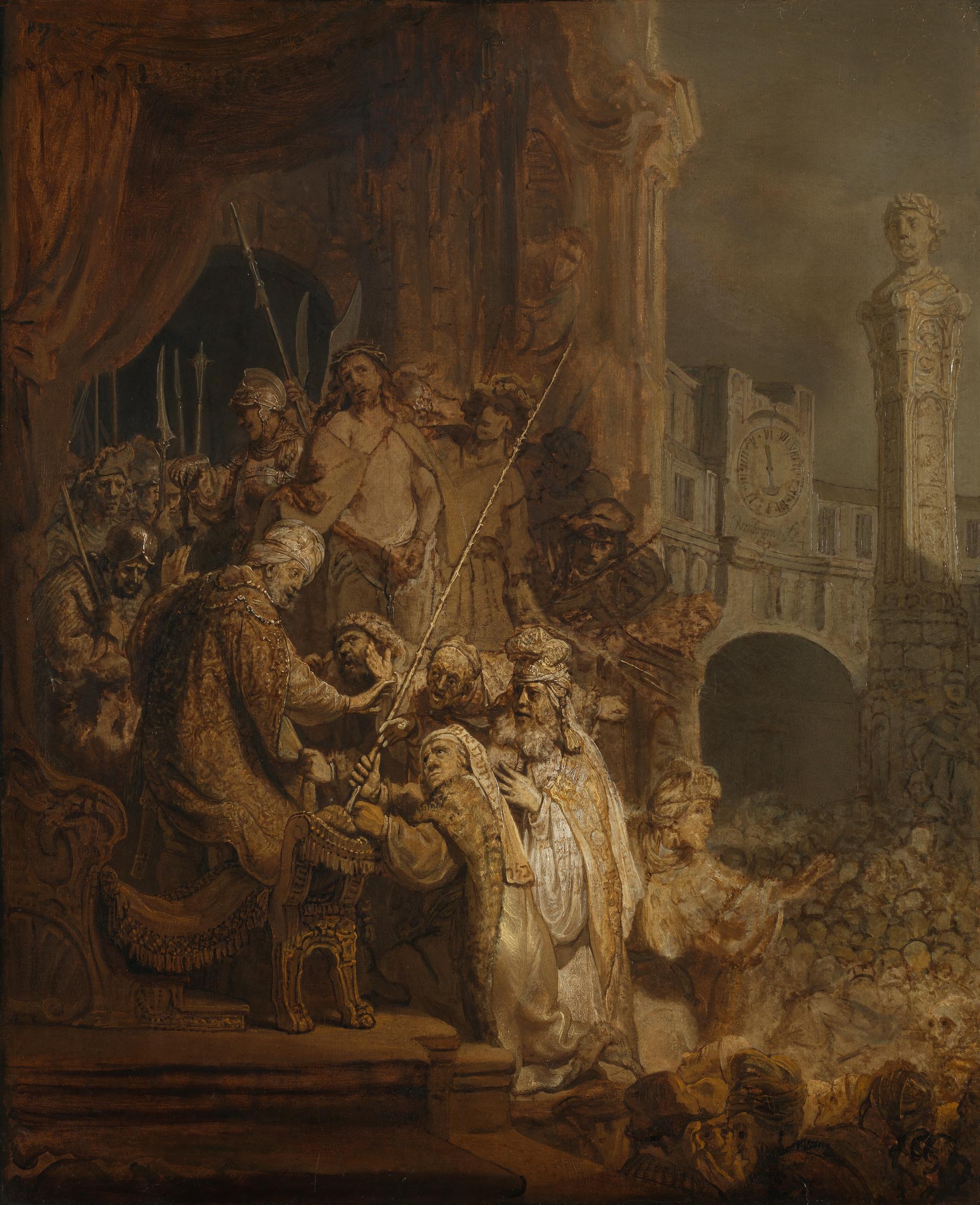
- Artist: Rembrandt
- Date: 1634
- Medium: oil on paper, mounted on canvas
- Museum: The National Gallery
- Collection record: The National Gallery website
Listen to the free audio guide
About this artwork
This is the "Ecce Homo" by Rembrandt. The Latin title of this painting means 'Behold the man!' and it's taken from the Bible. It was a critical point in the story of Christ's crucifixion - the moment when he was left alone and isolated, spurned and condemned by his own people.
The scene shows Pontius Pilate, the Roman governor of Judea, presenting Christ to the crowd. He rejects the rod of justice offered by the Jewish elders, indicating that there's no fault for which he can find Christ guilty. The priests clamour at his feet, accusing Jesus of claiming to be 'King of the Jews', while the crowd demands his crucifixion.
The picture evokes the fevered atmosphere of this show trial and is dominated by images of earthly power and authority: soldiers, priests, judges, the emperor, and the mob. But Christ has an air of detachment, despite the bindings and crown of thorns on his head.
This small black and white painting was not made for sale. It's a full-scale preparatory study for one of Rembrandt's etchings - the only known example of such a work. The attention to detail is remarkable, especially in Pilate and the priests in the foreground.
See it in person
Ecce Homo hangs in The National Gallery on Trafalgar Square, London — free to enter. Point your phone at any artwork there and audioguide.london plays a free audio guide in six languages — no app download needed.