Early Sasanian rhyton
- Gallery: Room 52
- Culture: Early Sasanian
- Date: 3rdC
- Object type: rhyton
- Materials: pottery
- Museum number: E37452
- Museum: The British Museum
- Collection record: British Museum website
- Image © The Trustees of the British Museum, shared under a CC BY-NC-SA 4.0 licence.
Listen to the free audio guide
In the museum now? Point your phone at the next object and hear its guide.
About this object
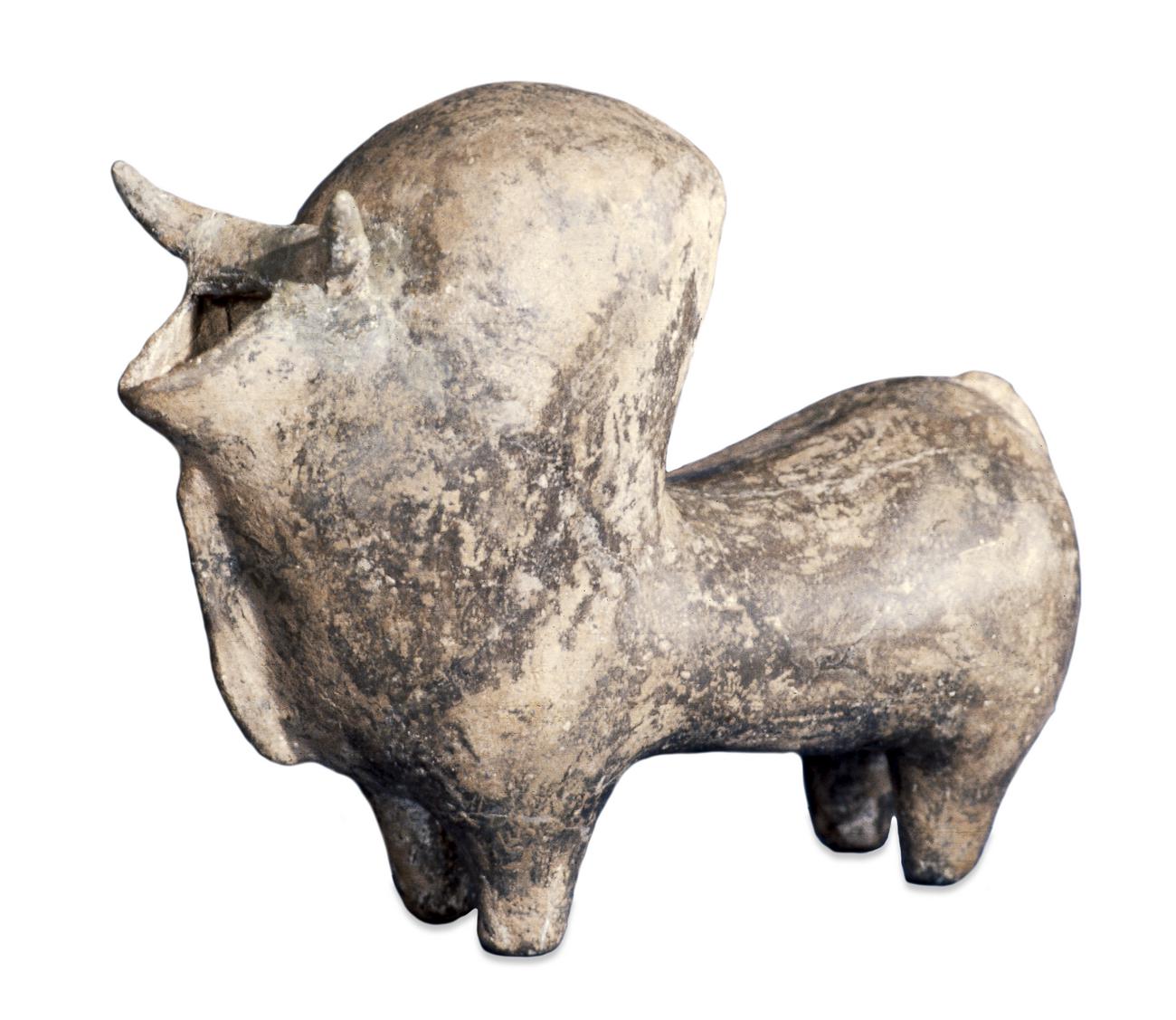
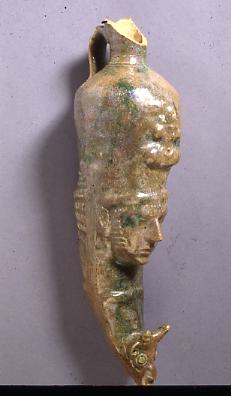
This is an Early Sasanian rhyton, a type of pottery used for pouring wine. It’s beautifully crafted in a rich glaze, yet inside it is left unglazed. If you look closely, you’ll notice a join running along one side—this tells us the vessel was built in separate parts and then assembled. The upper part, which resembles a bust, may represent King Shapur I, known for ruling between 241 and 271 AD. The figure wears an elaborate crown and a distinctive beaded beard ring.
The rhyton’s form seems slightly uneven because it dried while resting on its side. The crown-like motif was formed with a pressed mold, leaving visible cracks beneath the surface that xeroradiography revealed. The handle was added using strips of clay, probably at a key stage in the drying process.
Though rare, similar rhyta have occasionally appeared in collections and sales, and their complex design suggests they mimic metal prototypes—most likely crafted in an elite workshop during the early Sasanian period in what is now Iraq.
See it in person
Early Sasanian rhyton is on display in Room 52 at the British Museum on Great Russell Street, Bloomsbury, London — free to enter. Choose British Museum on audioguide.london and take a photo of it to hear this free audio guide in six languages — no app download needed.
New, in beta. British Museum support has just launched and is still improving: over 1,000 objects so far, with more added all the time.