Early Dynastic III harp
- Gallery: Room 56
- Culture: Early Dynastic III
- Date: 2600BC
- Object type: harp
- Materials: gold; lapis lazuli; bitumen
- Museum number: 121198,b
- Museum: The British Museum
- Collection record: British Museum website
- Image © The Trustees of the British Museum, shared under a CC BY-NC-SA 4.0 licence.
Listen to the free audio guide
In the museum now? Point your phone at the next object and hear its guide.
About this object
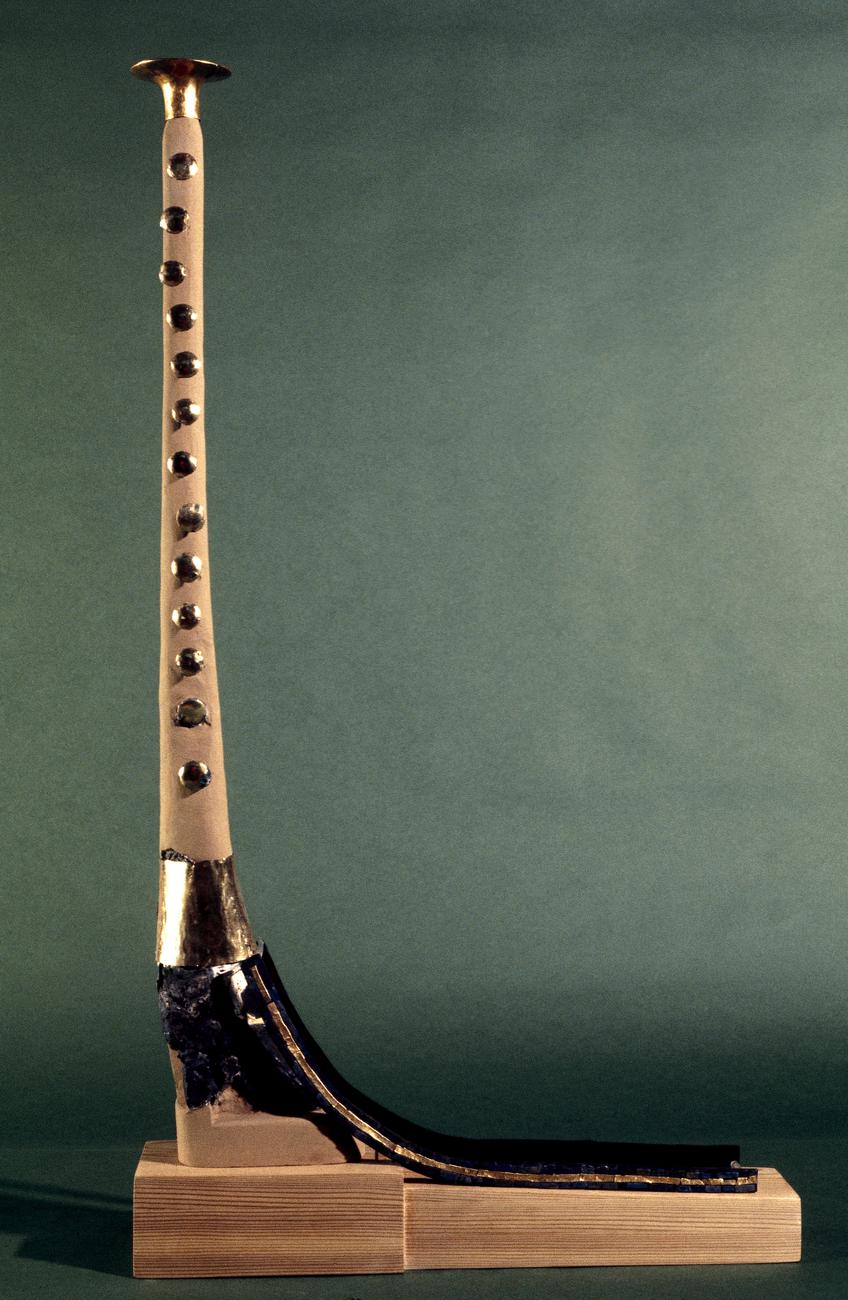
This is the original remains of the "Early Dynastic III Harp," a priceless artifact from around 2600 BCE. Before you, you see the gold cap and thirteen gold-headed tuning pegs that once adorned a boat-shaped harp from Queen Puabi’s tomb in Ur. Tiny fragments of gold and lapis lazuli inlay offer a glimpse into its luxurious decoration.
The wooden frame had long since rotted away by the time archaeologist Charles Woolley uncovered it. Using wax and plaster, Woolley captured the impressions left behind by the long-decayed materials. These techniques helped reveal the shape and intricate design of the instrument. The harp's reconstruction is based on these finds and images from cylinder seals of the same era.
This instrument, made with materials like gold, lapis lazuli, and bitumen, reflects the skill and artistry of early Mesopotamian craftsmanship. It was part of a larger ensemble of musical instruments found in Queen Puabi’s tomb, highlighting music’s important role in ancient rituals and celebrations.
See it in person
Early Dynastic III harp is on display in Room 56 at the British Museum on Great Russell Street, Bloomsbury, London — free to enter. Choose British Museum on audioguide.london and take a photo of it to hear this free audio guide in six languages — no app download needed.
New, in beta. British Museum support has just launched and is still improving: over 1,000 objects so far, with more added all the time.