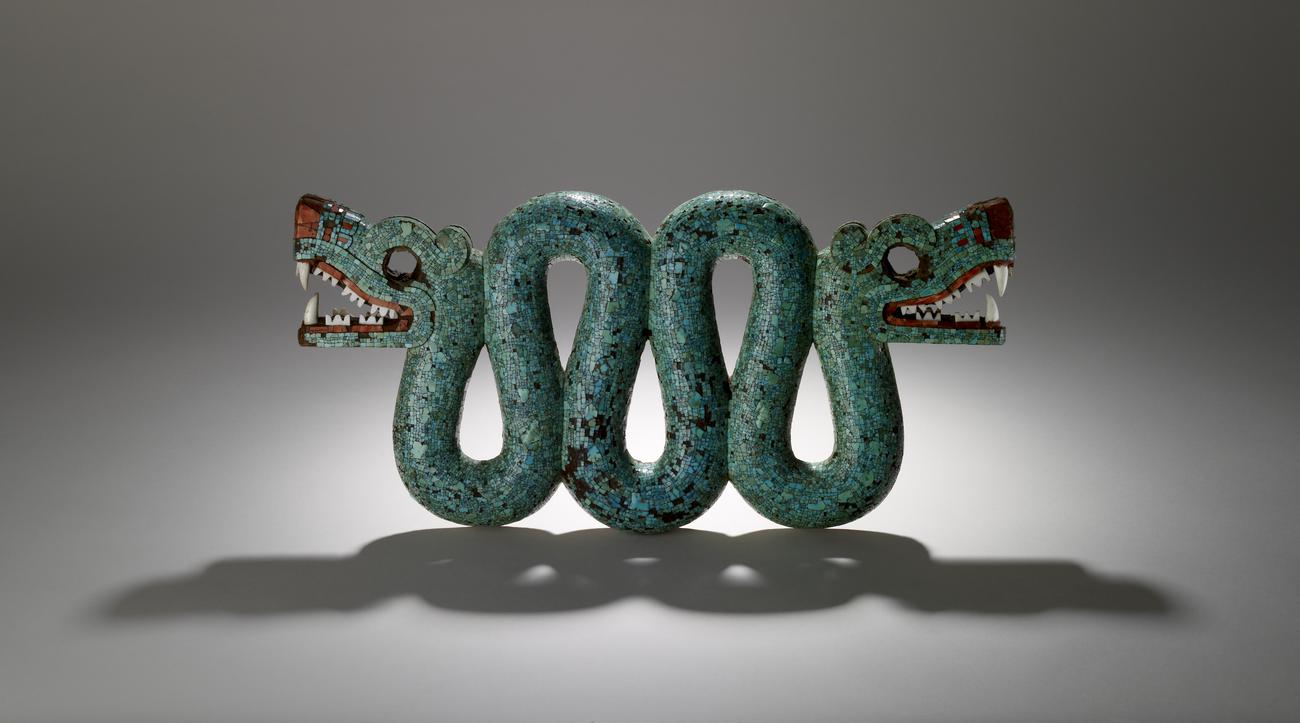
Double-headed serpent mosaic
- Audio guide stop: 141
- Gallery: Room 27
- Culture: Aztec; Mixtec
- Made in: Mexico
- Date: 1400-1521
- Object type: pectoral, mosaic
- Materials: turquoise; cedrela wood; oyster shell; conch shell; pine resin; copal; beeswax; hematite
- Museum number: Am1894,-.634
- Museum: The British Museum
- Collection record: British Museum website
- Image © The Trustees of the British Museum, shared under a CC BY-NC-SA 4.0 licence.
Listen to the free audio guide
About this object
This is a stunning pectoral known as "The Turquoise Mosaics," created by the Aztec or Mixtec culture around 1400 to 1521. What you're looking at is a pectoral in the shape of a double-headed serpent, a form with deep symbolic meaning.
The serpent is carved from a single piece of cedarwood and covered in turquoise mosaic, a material highly prized in Mesoamerica. Tiny, polished turquoise pieces are carefully arranged to mimic the scale pattern of the snake. The open mouths display fangs made of conch shell, with red oyster shell used for the gums and nostrils. Tiny black and red bands add a dramatic touch around the snouts.
The double-headed design may symbolize the celestial realm and was likely connected with power and ritual. Small holes at the top suggest it could be worn across the chest as a pectoral, perhaps during important ceremonies.
See it in person
Double-headed serpent mosaic is on display in Room 27 at the British Museum on Great Russell Street, Bloomsbury, London — free to enter. Choose British Museum on audioguide.london and type its audio guide stop number, 141, from the gallery label, or take a photo of it, to hear this free audio guide in six languages — no app download needed.
New, in beta. British Museum support has just launched and is still improving: over 1,000 objects so far, with more added all the time.