David slaying Goliath
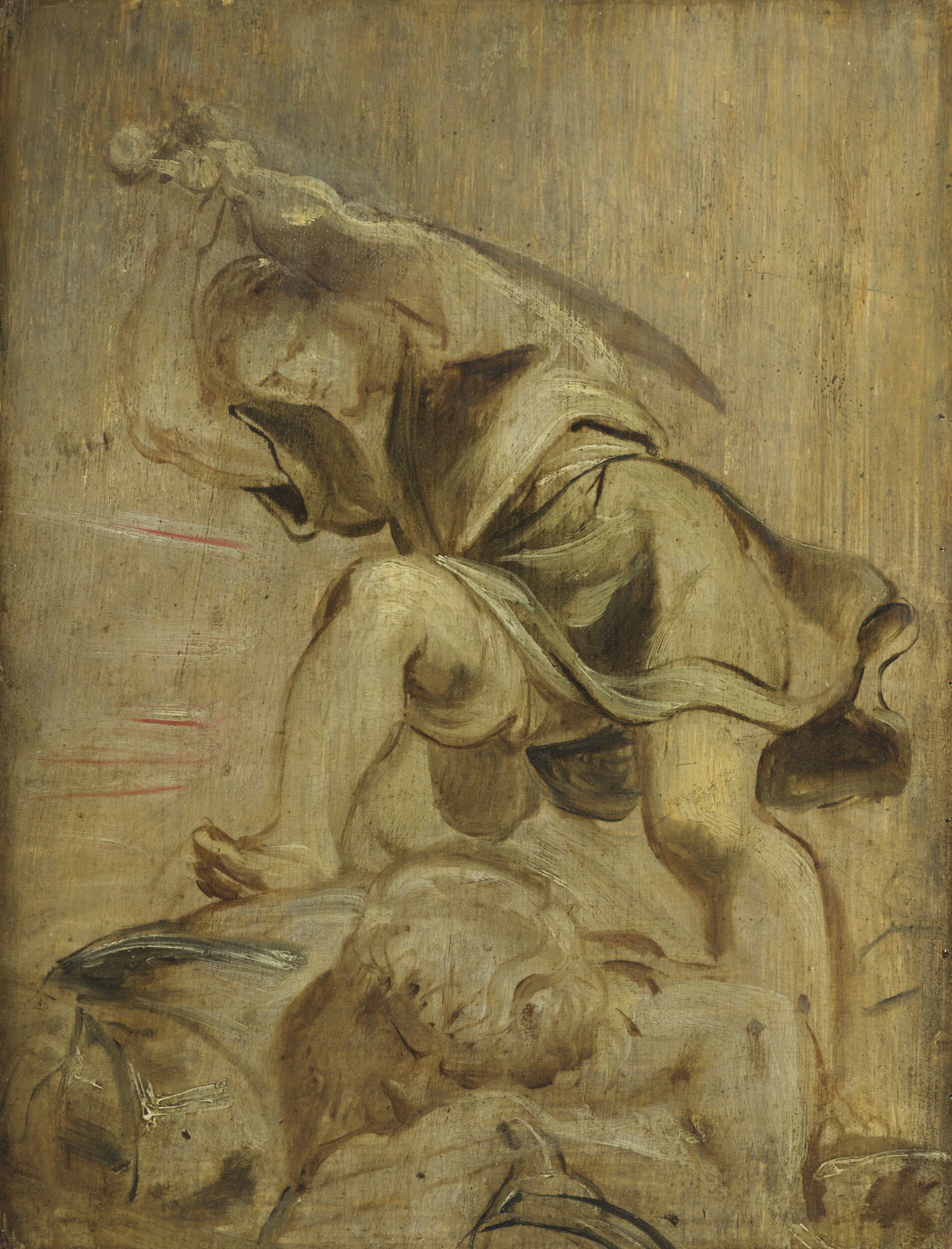
- Artist: Peter Paul Rubens
- Date: 1620
- Medium: oil on panel
- Museum: The Courtauld Gallery
- Collection record: The Courtauld Gallery website
Listen to the free audio guide
About this artwork
This is the David slaying Goliath by Peter Paul Rubens. The piece is a quick, preparatory sketch from 1620, executed in oil on panel but rendered almost entirely in shades of grey. Rubens used it to map out one of the 39 ceiling compositions for the Jesuit church in Antwerp. Notice how the young David is captured mid‑pose, sword raised, ready to strike Goliath’s neck. The composition is dynamic yet restrained, a study of balance and tension before the final, colourful version is added. Rubens’ hand moves swiftly, laying out musculature and dramatic gesture, while the background remains minimal—just enough to hint at the looming giant. This sketch gives us a rare glimpse into the creative process of a master, showing how he experimented with gesture and form before committing to the finished, polychromatic masterpiece. The work is a testament to Rubens’ skill in planning large-scale ceiling panels and his ability to convey drama even in a monochrome study.
See it in person
David slaying Goliath hangs in The Courtauld Gallery at Somerset House, London. Point your phone at any artwork there and audioguide.london plays a free audio guide in six languages — no app download needed.