Cowrie shells
- Audio guide stop: 133
- Gallery: Room 1
- Audio guide: one commentary for a group of objects shown together
- Museum: The British Museum
- Image © The Trustees of the British Museum, shared under a CC BY-NC-SA 4.0 licence.
Listen to the free audio guide
About these objects
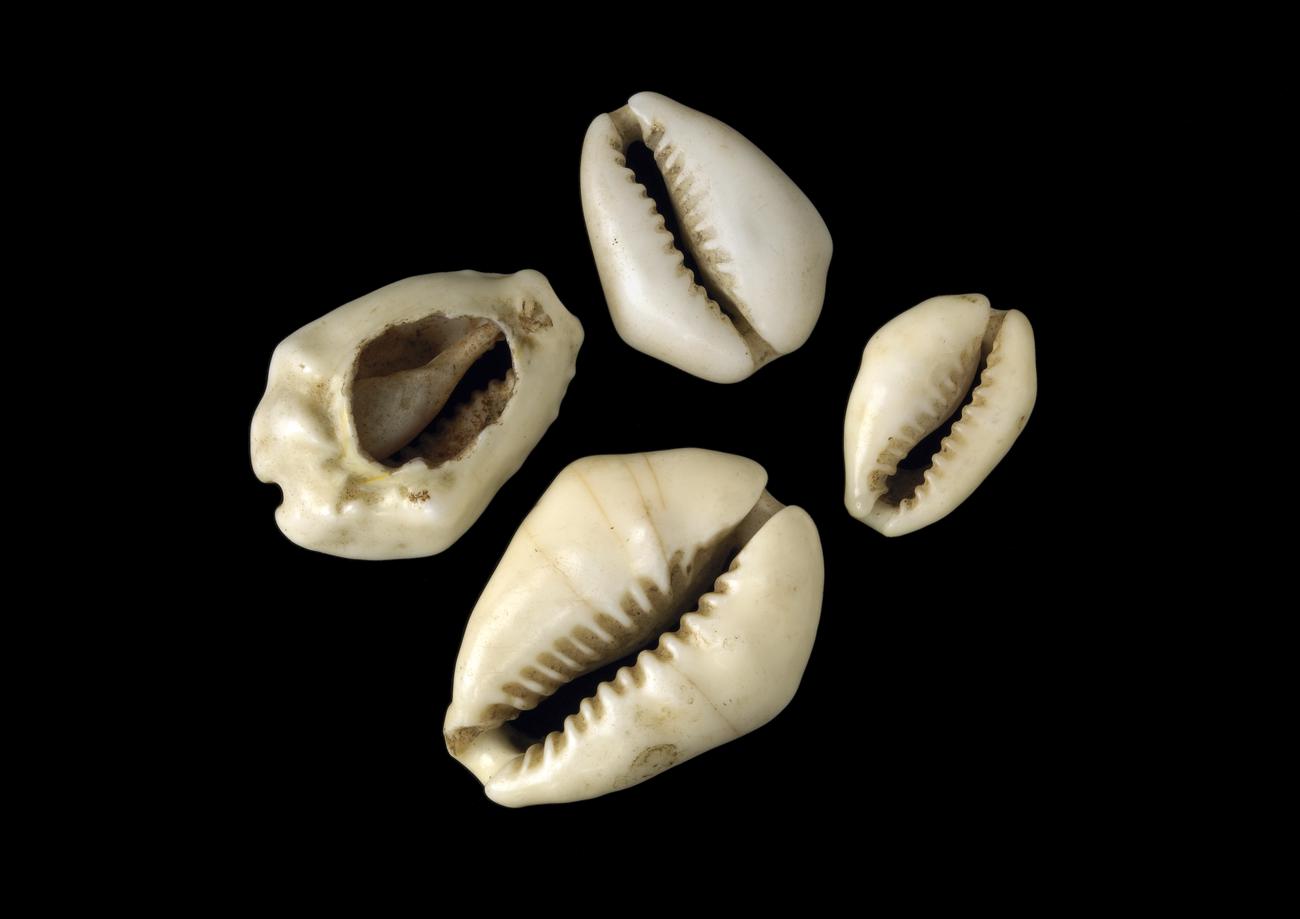
In front of you is a collection of cowrie shells, used as money in the Kingdom of Bambara in West Africa. These shells were collected in 1796 and come from an area now part of modern-day Mali. Small, with a distinct natural hole on their backs, cowrie shells were widely used as currency in various parts of Africa and Asia. Each shell represents not only a form of exchange but also a link to the wider trade networks of the time.
These shells were not just random objects; they played a role in the economic life of the people who used them. Look closely at the largest one, with a length of 24 millimeters and a heft of nearly 3 grams—its size and shape make it easy to spot. Alongside it, notice the variety: some are larger, some smaller, but all show the smooth, curved surface typical of cowrie shells from the region.
As you look at them, consider how far these shells may have traveled before arriving in Bambara—symbolizing connections between cultures, economies, and histories across oceans and continents.
See it in person
Cowrie shells is on display in Room 1 at the British Museum on Great Russell Street, Bloomsbury, London — free to enter. Choose British Museum on audioguide.london and type its audio guide stop number, 133, from the gallery label, or take a photo of it, to hear this free audio guide in six languages — no app download needed.
New, in beta. British Museum support has just launched and is still improving: over 1,000 objects so far, with more added all the time.