Chest
- Gallery: Room 26
- Date: 1850-1864
- Object type: chest, box
- Materials: cedar wood
- Museum number: Am1944,02.197
- Museum: The British Museum
- Collection record: British Museum website
- Image © The Trustees of the British Museum, shared under a CC BY-NC-SA 4.0 licence.
Listen to the free audio guide
In the museum now? Point your phone at the next object and hear its guide.
About this object
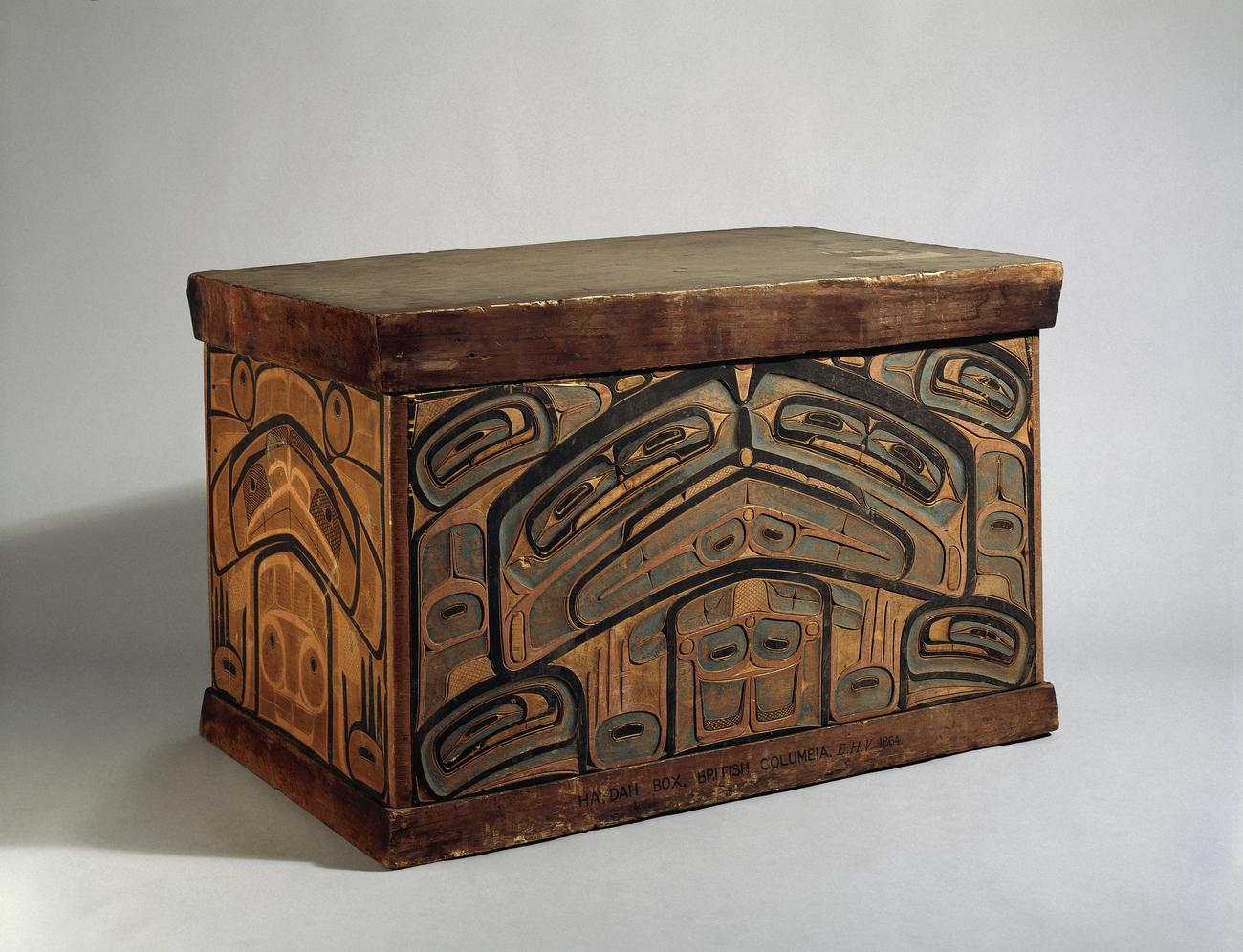
Before you stands a beautifully crafted chest, carved and painted from cedar wood. Its lid is adorned with traditional imagery, reflecting the intricate motifs often seen in northern coastal art. The rich craftsmanship suggests a blend of form and function, likely once used for storage, perhaps in a home or a ceremonial setting.
The chest originally belonged to Captain Edmund H. Verney, a Royal Navy officer stationed on the Northwest Coast in the 1860s. Verney collected items from the region—pieces like these helped shape European understanding of Indigenous art. This particular chest may have come from Haida or Heiltsuk hands, and while its artist is not confirmed, it shares stylistic qualities with work attributed to Captain Carpenter.
Carved in the mid-19th century, this chest carries a mark on its base, reading “HAYDAH BOX, BRITISH COLUMBIA, E.H.V. 1864.” It entered the British Museum’s collection decades later, part of a legacy of curiosity and exchange between cultures.
See it in person
Chest is on display in Room 26 at the British Museum on Great Russell Street, Bloomsbury, London — free to enter. Choose British Museum on audioguide.london and take a photo of it to hear this free audio guide in six languages — no app download needed.
New, in beta. British Museum support has just launched and is still improving: over 1,000 objects so far, with more added all the time.