Carpet
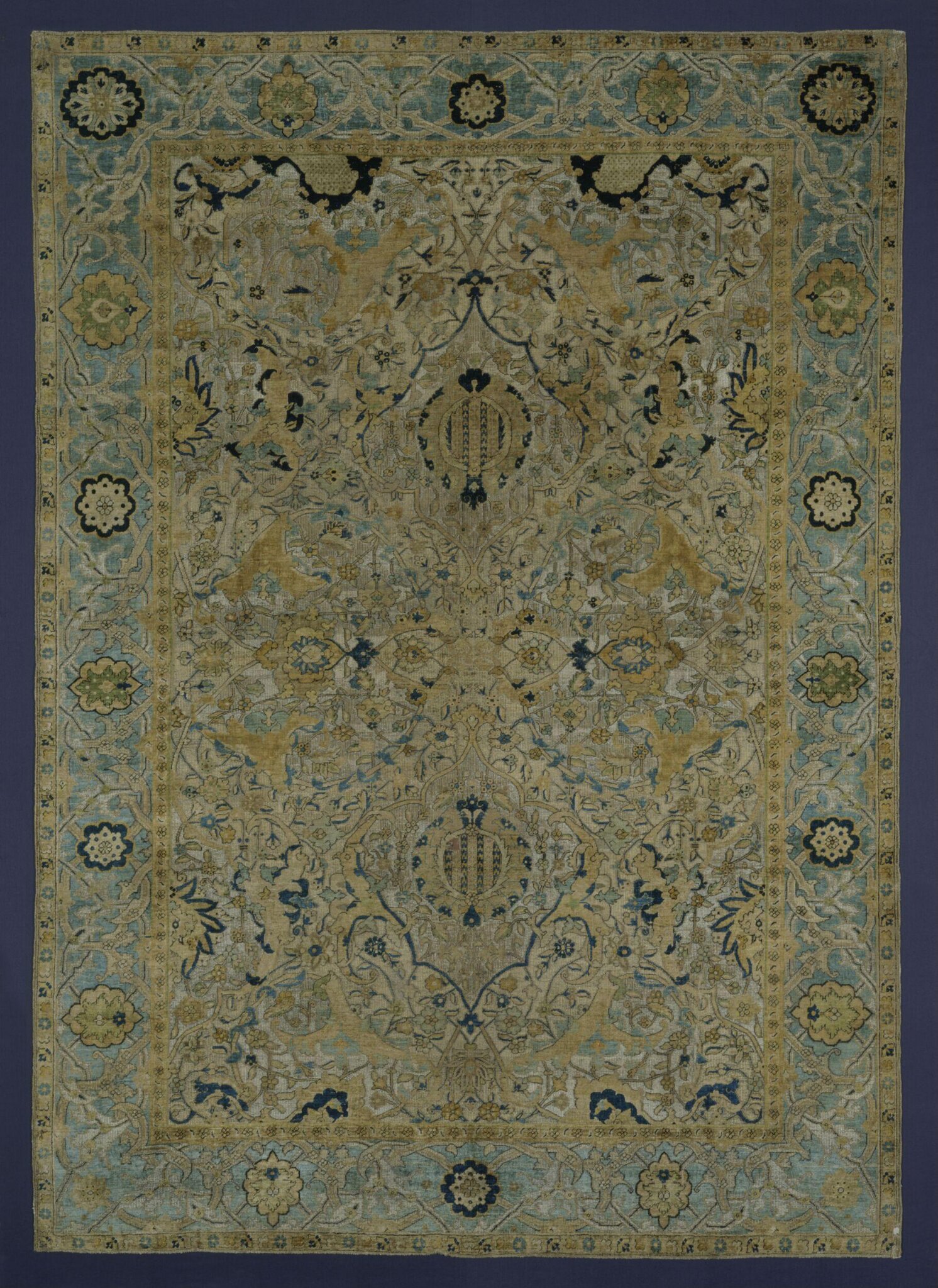
- Gallery: Islamic Middle East, Room 42, The Jameel Gallery
- Made in: Iran; Isfahan
- Date: 1600-1625
- Object type: Carpet
- Style: Safavid
- Dimensions: Weight 13 kg; Width (Top edge) 1484 mm; Width (Bottom edge) 1485 mm
- Museum: V&A South Kensington
- Collection record: V&A website
- Image © Victoria and Albert Museum, London.
Listen to the free audio guide
In the museum now? Point your phone at the next object and hear its guide.
About this object
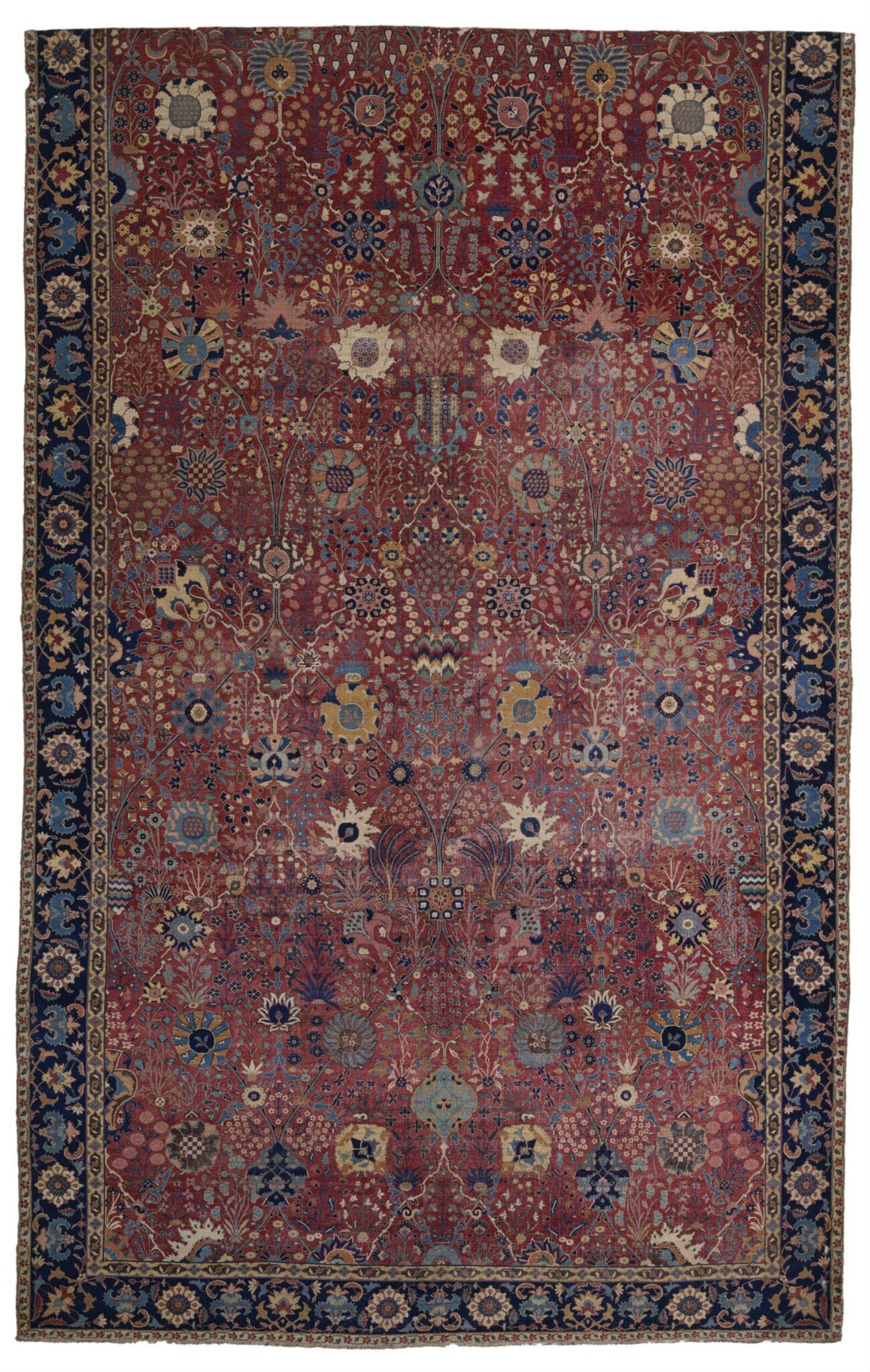
Before you is a luxurious silk carpet from Isfahan, created during the Safavid dynasty between 1600 and 1625. This relatively small work features a shimmering combination of a silk knotted pile set against a background of metal brocade. While the colors have faded over the centuries into light blues, pale greens, and creams, the design remains incredibly refined.
If you look closely, you can see a calculated, symmetrical pattern. Two large, lobed medallions are arranged along a central axis, each containing a striped roundel surrounded by delicate floral scrollwork. These shapes meet the edges of the carpet as large, bisected lotus flowers.
In the seventeenth century, Isfahan was a major center for silk production. Such opulent carpets, brocaded with precious metal thread, were highly sought after by international traders. They were often used as impressive diplomatic gifts or valuable trading goods, sent to royal courts and major trading centers across Europe and Asia.
See it in person
Carpet is on display in Islamic Middle East, Room 42, The Jameel Gallery at the V&A South Kensington on Cromwell Road, London — free to enter. Choose V&A South Kensington on audioguide.london and take a photo of it to hear this free audio guide in six languages — no app download needed.
New, in beta. V&A support has just launched and is still improving: 1,000 objects with audio so far, with more added all the time.