Bodhisattva
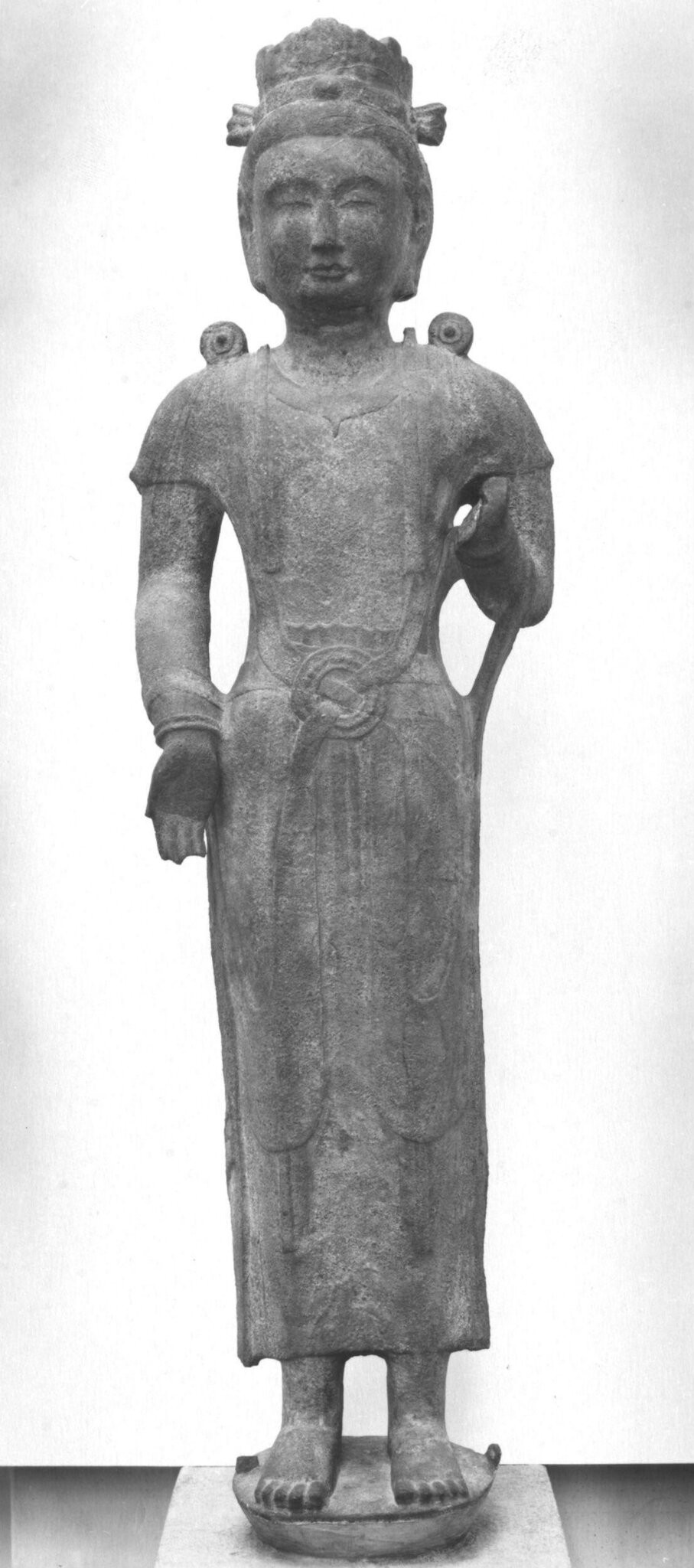
- Gallery: China, Room 47e
- Made in: China
- Date: ca. 550 - ca. 575
- Object type: Figure of Bodhisattva
- Materials: Limestone
- Style: Northern Qi
- Dimensions: Height 100 cm; Width 27 cm; Depth 16 cm
- Museum: V&A South Kensington
- Collection record: V&A website
- Image © Victoria and Albert Museum, London.
Listen to the free audio guide
In the museum now? Point your phone at the next object and hear its guide.
About this object
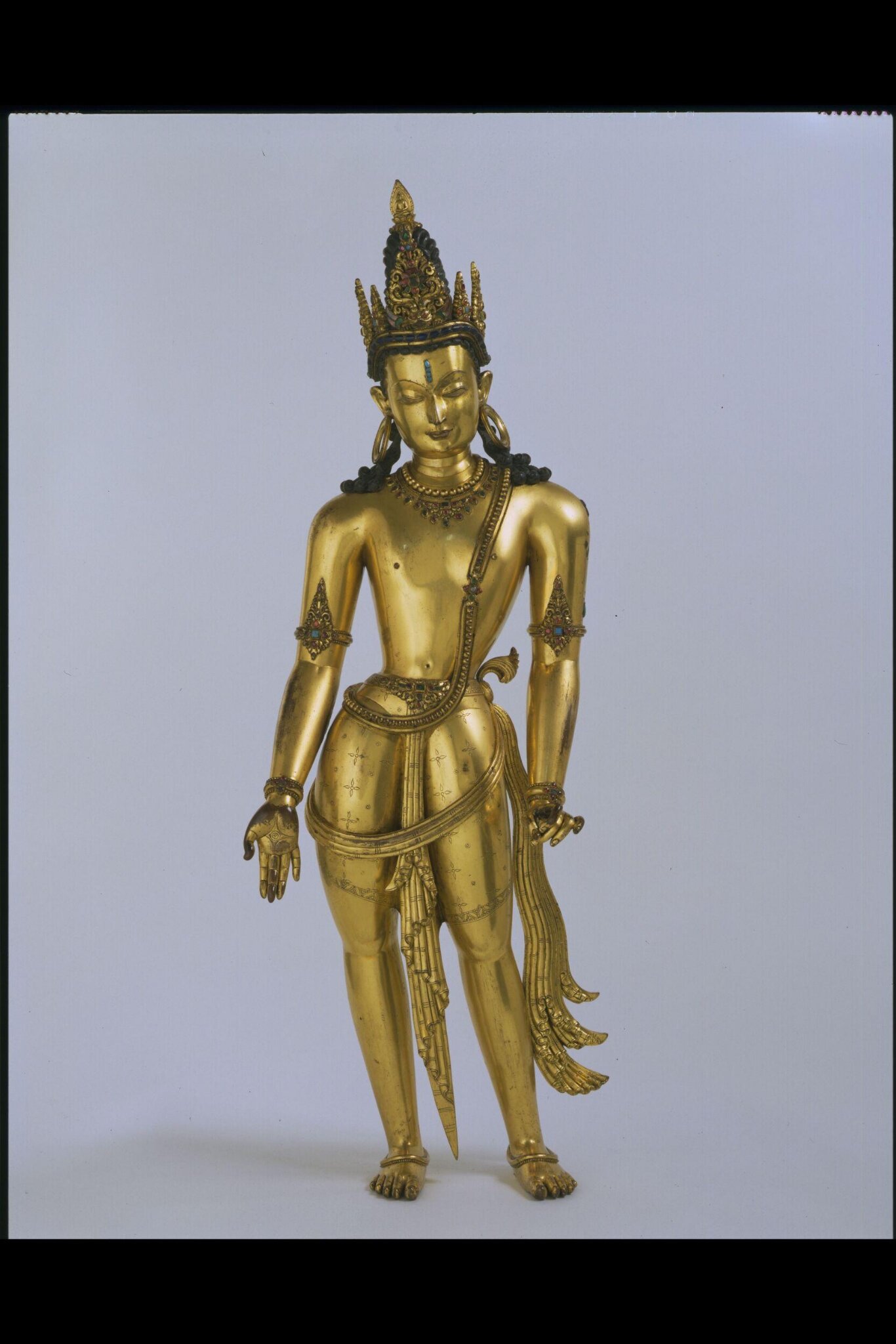
Before you is a "Bodhisattva," a small and serene limestone figure from northern China, likely created during the Northern Qi dynasty around the mid-6th century.
As a Bodhisattva, this holy being represents someone who delays their own enlightenment to help others achieve salvation. You can see this connection to the world in the long hair of the figure. Notice the slim, upright torso, which is a characteristic style of sculpture from northern China.
The figure's expression is calm and approachable, and its hand gestures carry specific meanings. The open right hand represents generosity, while the raised left hand signifies fearlessness. The figure wears a headdress and a straight robe with sashes that cross at the navel.
While the stone is similar to what you might find in the Longmen Caves, this figure stands on its own small, semi-dome-shaped base. Take a moment to look closely at the face, which has an interesting, unique appearance.
See it in person
Bodhisattva is on display in China, Room 47e at the V&A South Kensington on Cromwell Road, London — free to enter. Choose V&A South Kensington on audioguide.london and take a photo of it to hear this free audio guide in six languages — no app download needed.
New, in beta. V&A support has just launched and is still improving: 1,000 objects with audio so far, with more added all the time.