Birth Tray: The Triumph of Love
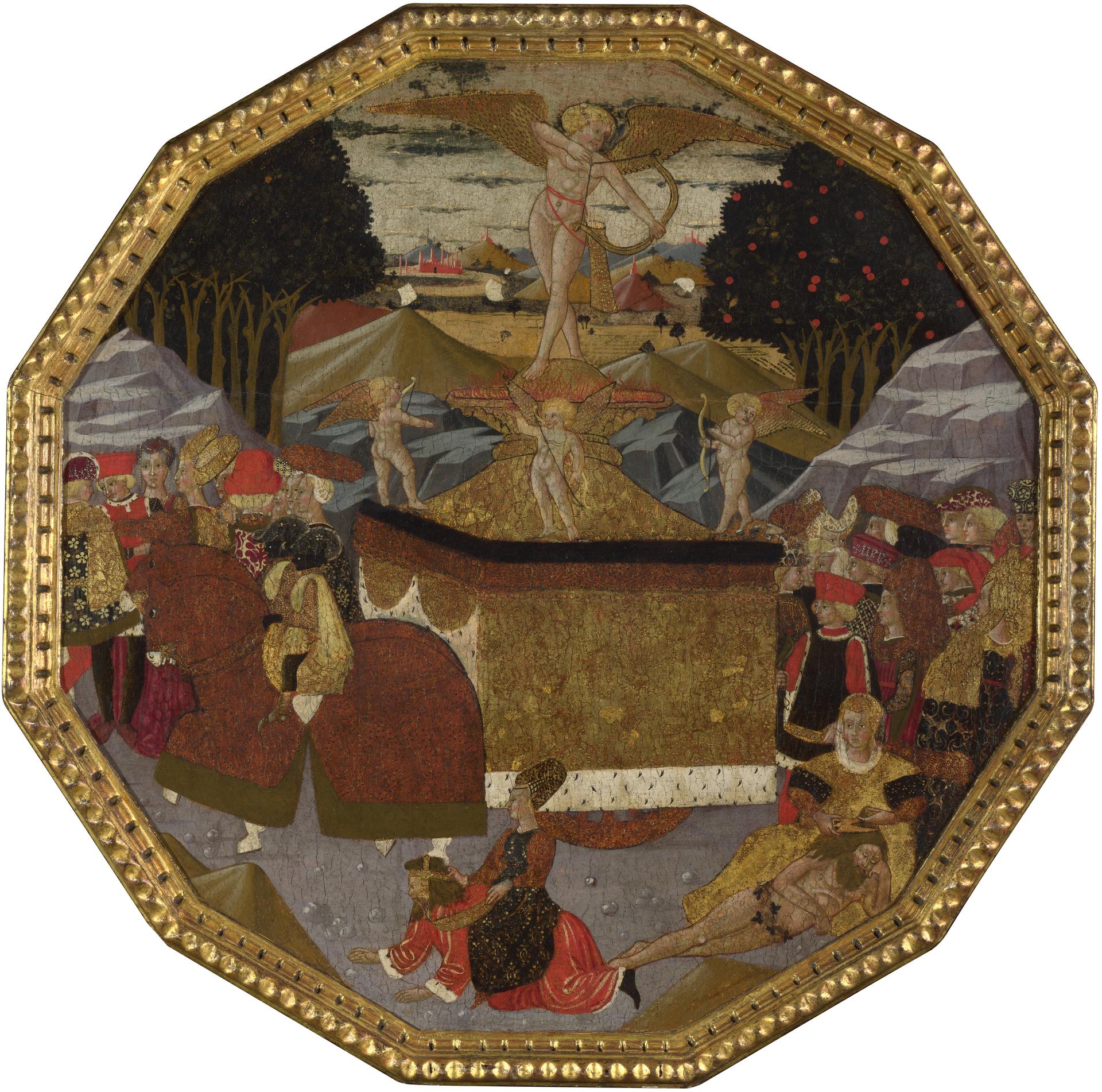
- Artist: Apollonio di Giovanni
- Date: probably about 1453-5
- Medium: egg tempera on wood
- Museum: The National Gallery
- Collection record: The National Gallery website
Listen to the free audio guide
In the museum now? Point your phone at the next artwork and hear its guide.
About this artwork
This is the "Birth Tray: The Triumph of Love" painted in the Italian north by Apollonio di Giovanni. Originally made to bring food to a woman during labour, these objects later became symbolic gifts to celebrate marriage or childbirth. This one illustrates a poem by the fourteenth-century Italian poet Petrarch, which describes 'The Triumph of Love'.
Love is represented as a naked, winged young man riding a chariot, ready to strike the crowd below with his arrows, making them fall in love. The coats of arms decorate the reverse of the tray - those of the couple for whom it was made. They were a member of the del Zaccheria family, and the heron might be a pun on her husband's name, Arditi.
The scene is very close to the words of the poem, with four small cherubic cupids at each corner of the chariot brandishing bows. The underside of this object has coats of arms pinned to a lemon and an orange tree - those of the del Zaccheria family on one side, possibly belonging to Domenico Arditi's family on the other.
This painting is made using egg tempera on wood and is believed to have been created around 1453-5. It's considered one of the most romantic subjects in this type of object, and its fantastical image has a clear literary source - a poem by the well-loved Florentine poet Petrarch.
See it in person
Birth Tray: The Triumph of Love hangs in The National Gallery on Trafalgar Square, London — free to enter. Point your phone at any artwork there and audioguide.london plays a free audio guide in six languages — no app download needed.