Belshazzar's Feast
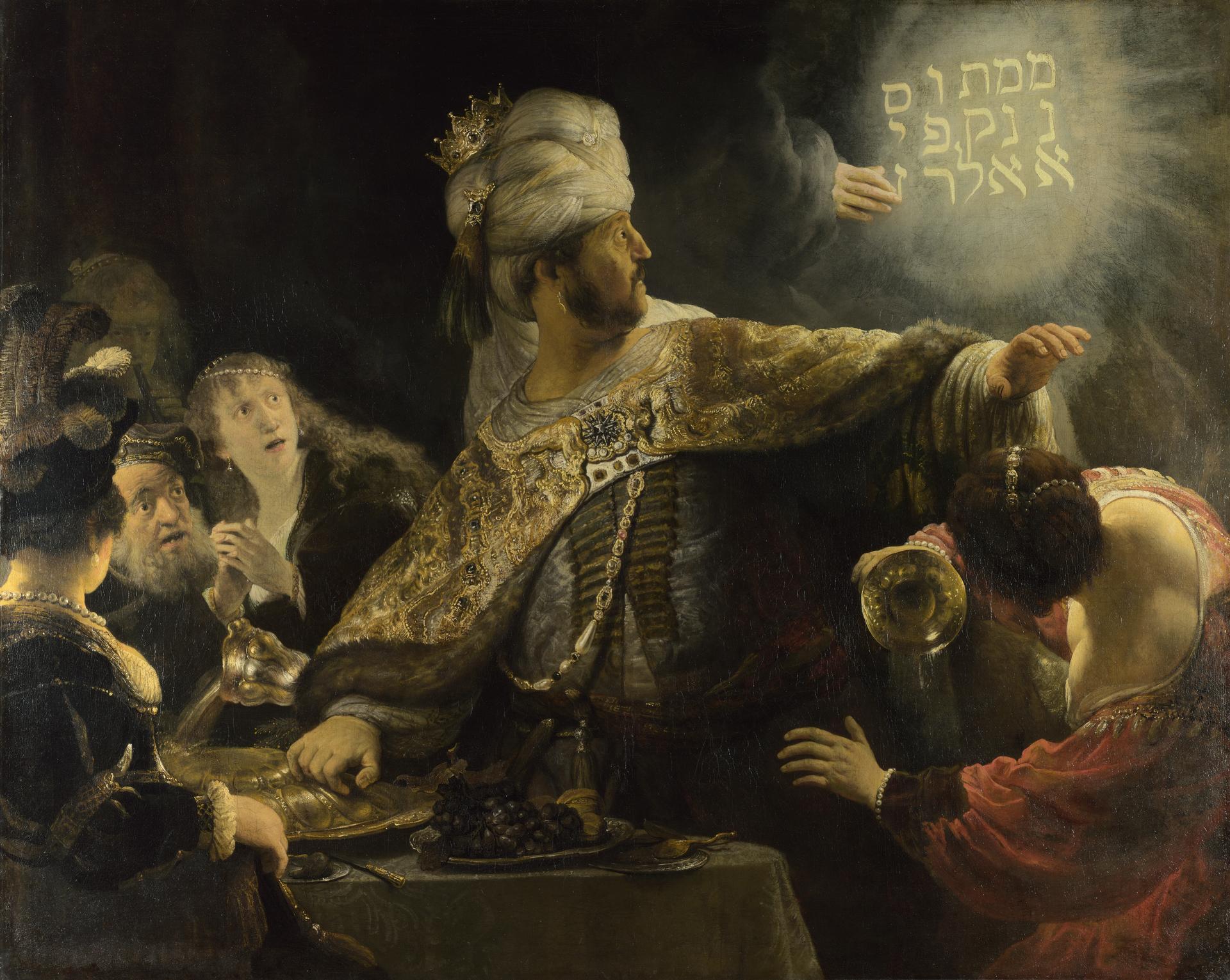
- Artist: Rembrandt
- Date: about 1636-8
- Medium: oil on canvas
- Museum: The National Gallery
- Collection record: The National Gallery website
Listen to the free audio guide
About this artwork
This is the Belshazzar's Feast by Rembrandt. Painted in the Dutch Golden Age, around 1636-8, it tells a story from the Old Testament. The man in the gold cloak, enormous turban and tiny crown is Belshazzar, King of Babylon. He's serving food at a feast using sacred vessels stolen from the Temple of Jerusalem.
As we can see, deep shadows and shafts of brilliant light capture the drama of the scene. The expressions on the faces of the onlookers are wide with fear, their eyes gaping in shock. They seem to be looking at Belshazzar, but it's not clear if they understand what's happening.
Rembrandt uses rich textures to convey opulence, sumptuous furs, pearls and velvet all glowing in the candlelight. The figures fill the canvas, creating a claustrophobic atmosphere that accentuates the feeling of being trapped with no escape – which we share as viewers.
The man posing as Belshazzar appears in several other Rembrandt paintings. He wears similar garments in 'Man in Oriental Costume', and this suggests he was perfect for the overindulged, slack-jawed King Belshazzar. The woman next to the King may be Saskia, Rembrandt's first wife, who often modelled for him.
Rembrandt's Amsterdam was a Calvinist city where churches were plain but people had pictures in their homes. This painting would have been familiar to locals who encouraged to read the Bible, and they would have known the cautionary message of Belshazzar's fate.
See it in person
Belshazzar's Feast hangs in The National Gallery on Trafalgar Square, London — free to enter. Point your phone at any artwork there and audioguide.london plays a free audio guide in six languages — no app download needed.