Benin Plaques
- Gallery: Room 25
- Made in: Benin City
- Date: 16thC-17thC
- Object type: plaque
- Materials: brass
- Museum number: Af1898,0115.7
- Museum: The British Museum
- Collection record: British Museum website
- Image © The Trustees of the British Museum, shared under a CC BY-NC-SA 4.0 licence.
Listen to the free audio guide
About this object
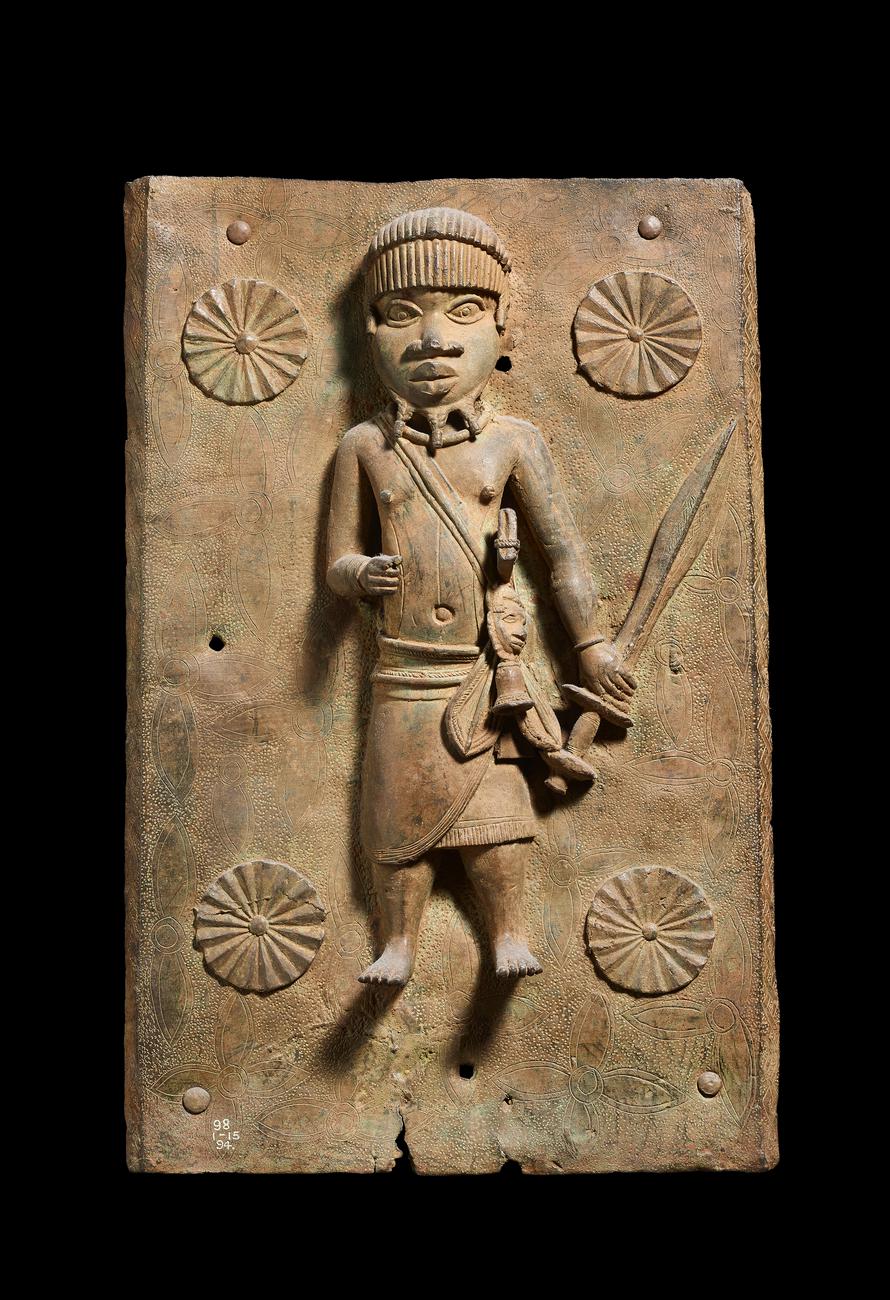
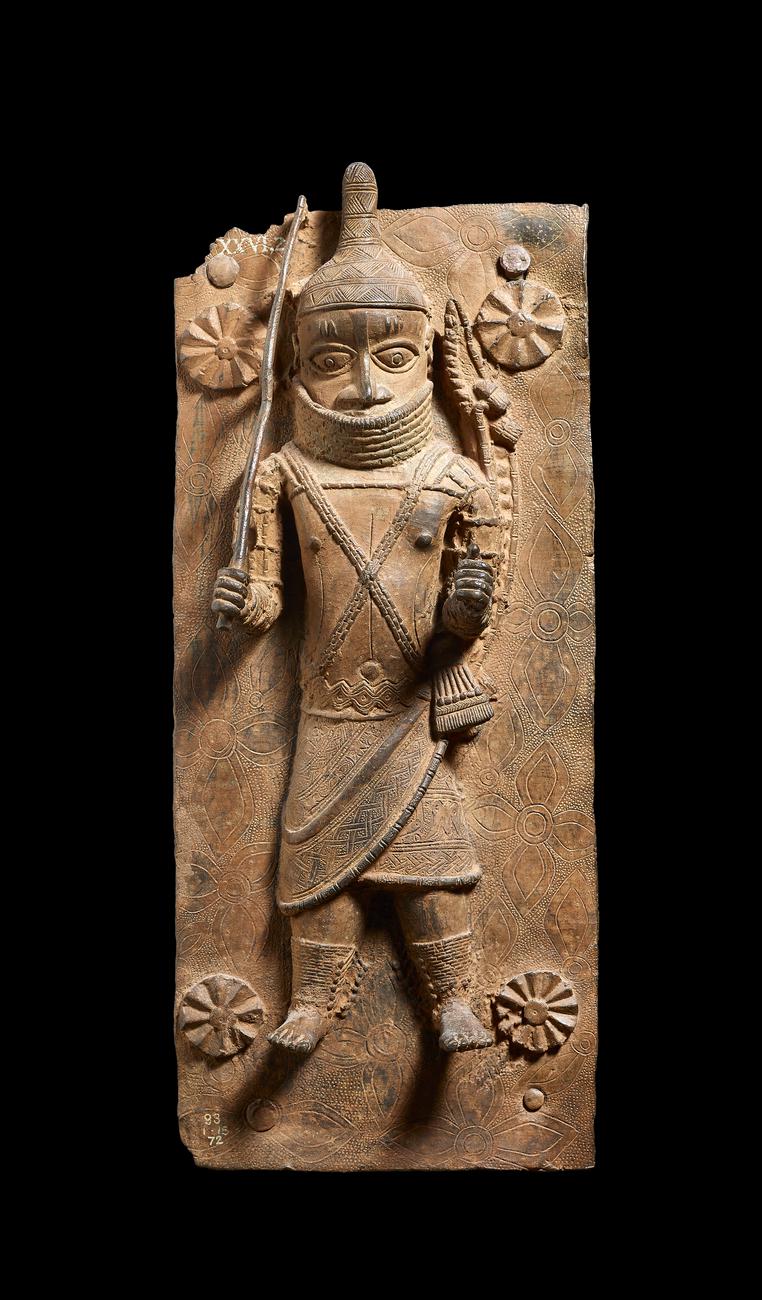
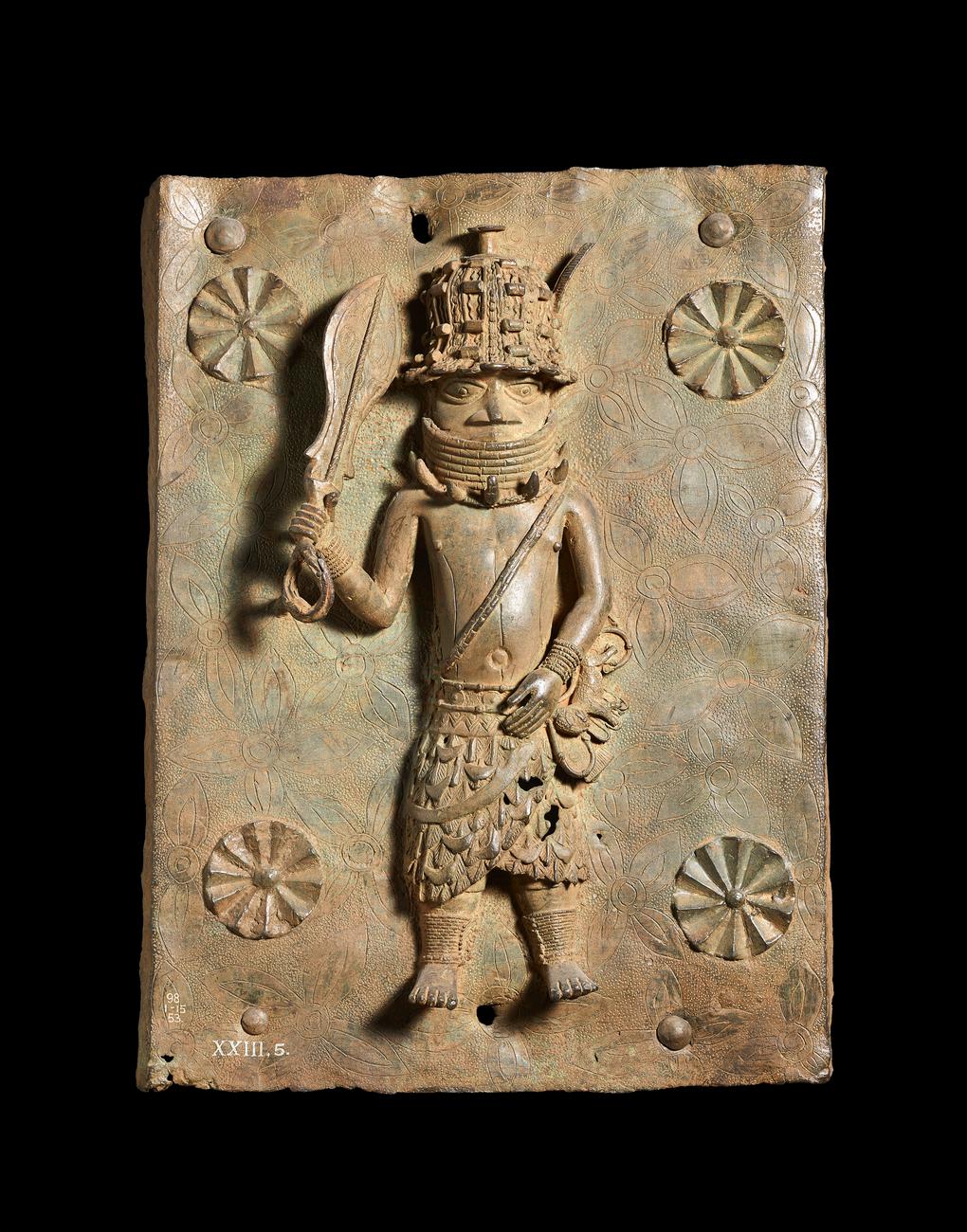
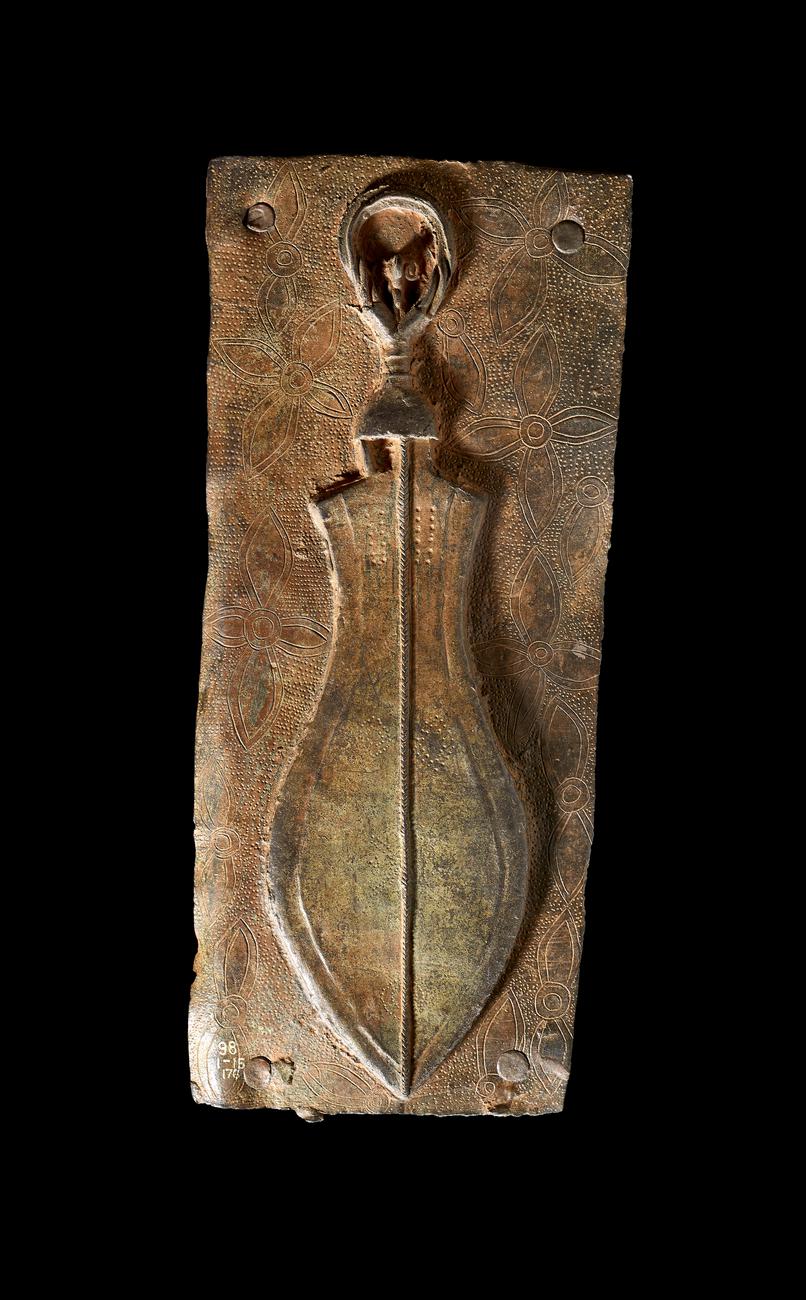
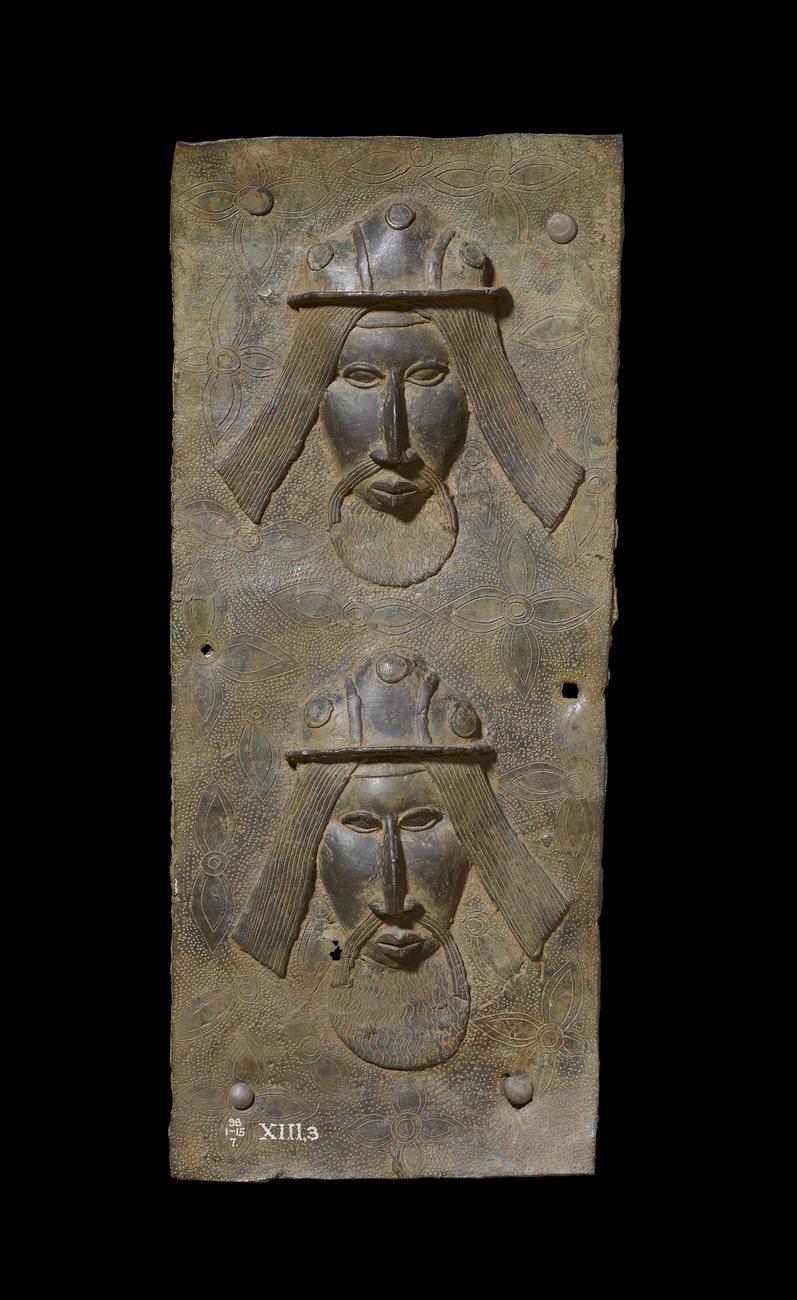
Before you is a narrow brass plaque from Benin City, created in the 16th to 17th centuries. The surface is decorated with intricate river leaf patterns and small dots, called stippling. At the top, center, and bottom of the plaque, there are six nail holes — evidence of how it was once attached to a structure.
The plaque depicts two European faces, likely Portuguese traders. Each figure wears a helmet with three raised circular bosses and has long hair, a moustache, and beard carved with precision and care.
These brass plaques were once part of the royal palace of the Benin Kingdom, used to decorate wooden pillars. They were made using a sophisticated lost-wax casting technique. Some show court life or battles, while others, like this one, capture the likeness of foreign visitors.
The plaques you see today mostly arrived in Europe after the British Expedition of 1897. This one was among over 300 sent to the British Museum by the British government’s Foreign Office.
See it in person
Benin Plaques is on display in Room 25 at the British Museum on Great Russell Street, Bloomsbury, London — free to enter. Choose British Museum on audioguide.london and take a photo of it to hear this free audio guide in six languages — no app download needed.
New, in beta. British Museum support has just launched and is still improving: over 1,000 objects so far, with more added all the time.