Benin Plaques
- Gallery: Room 25
- Made in: Benin City
- Date: 16thC-17thC
- Object type: plaque
- Materials: brass
- Museum number: Af1898,0115.197
- Museum: The British Museum
- Collection record: British Museum website
- Image © The Trustees of the British Museum, shared under a CC BY-NC-SA 4.0 licence.
Listen to the free audio guide
About this object
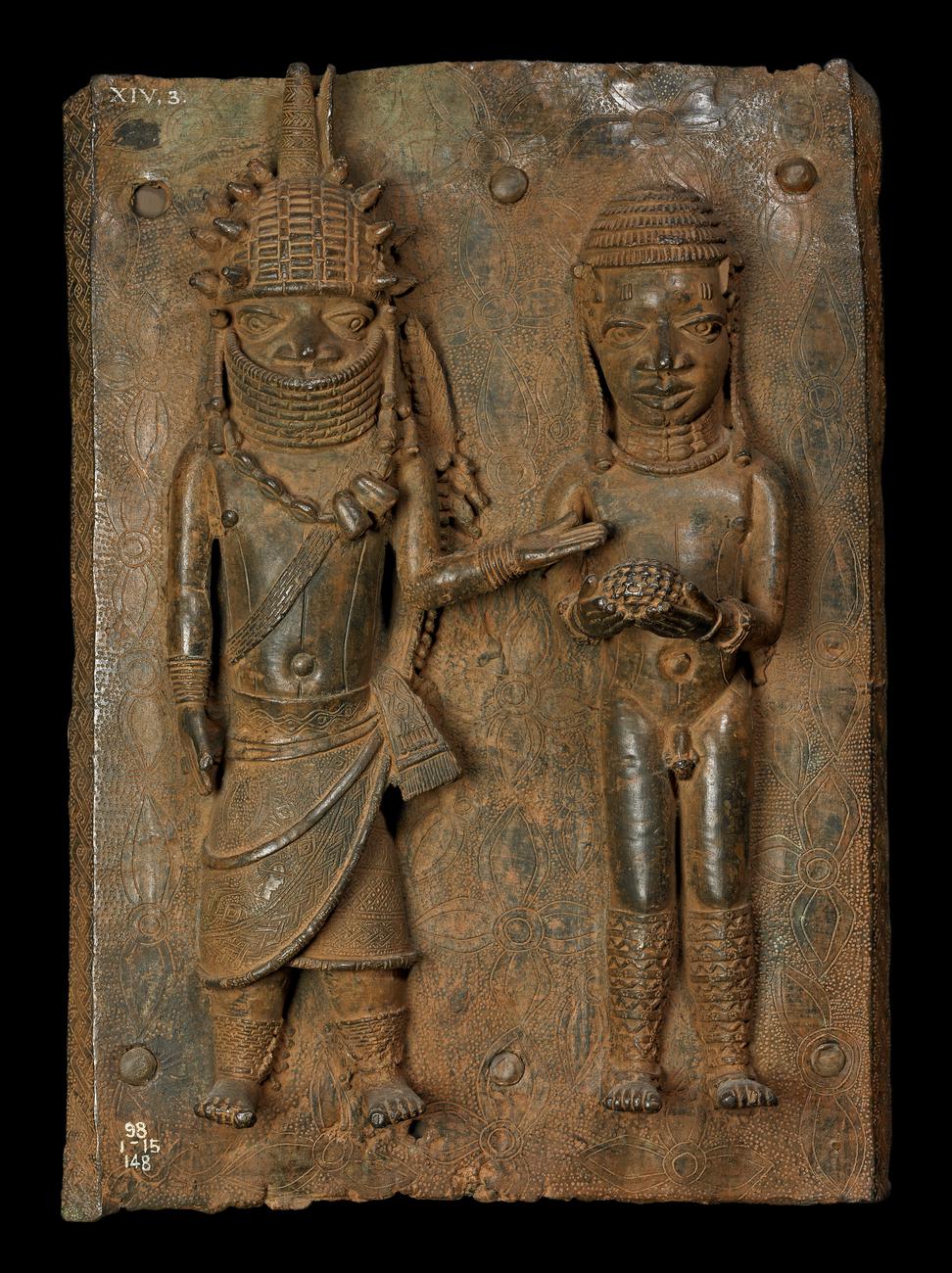
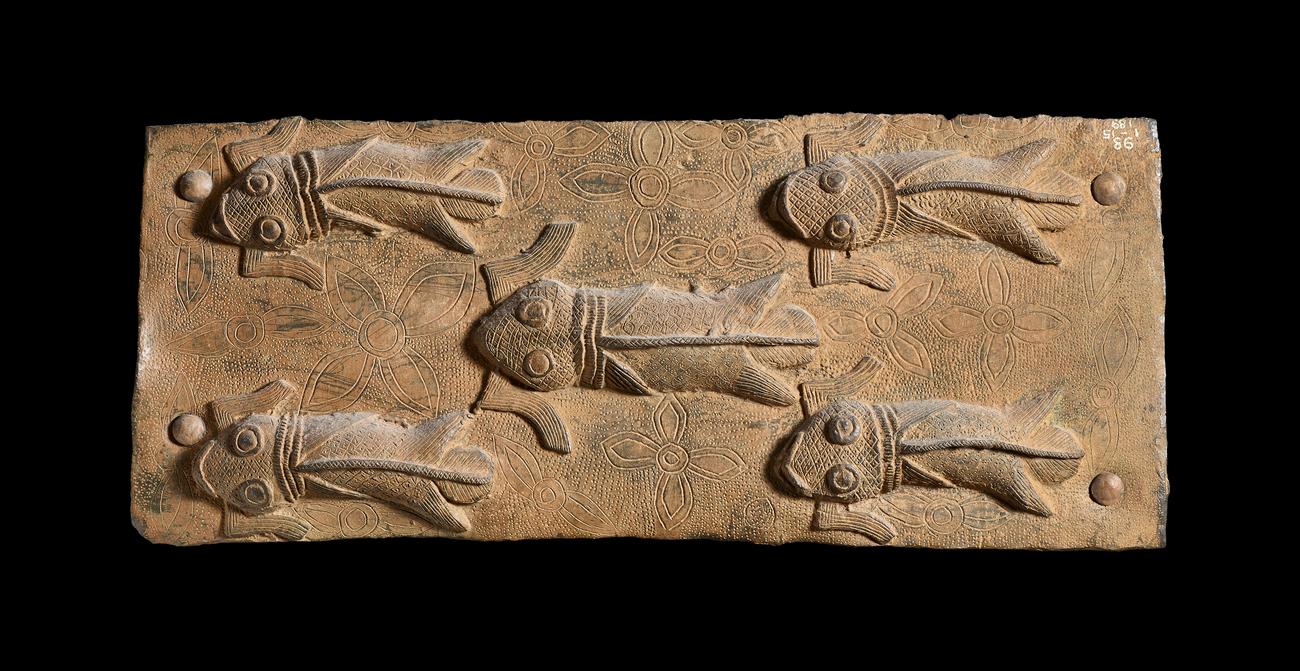
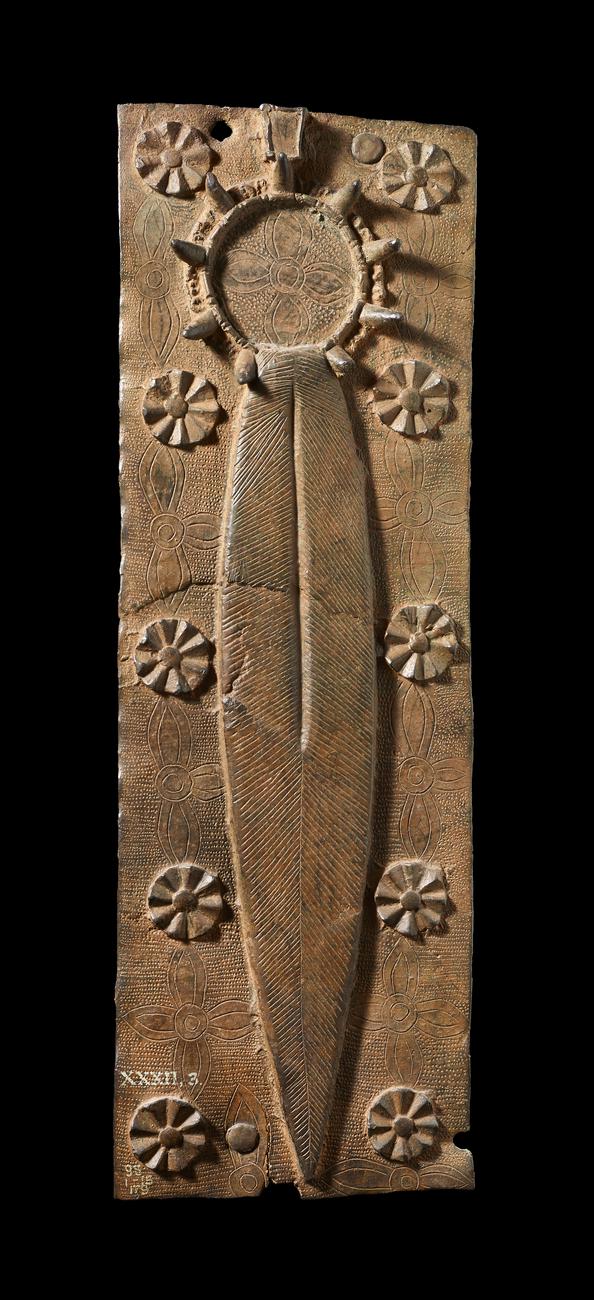
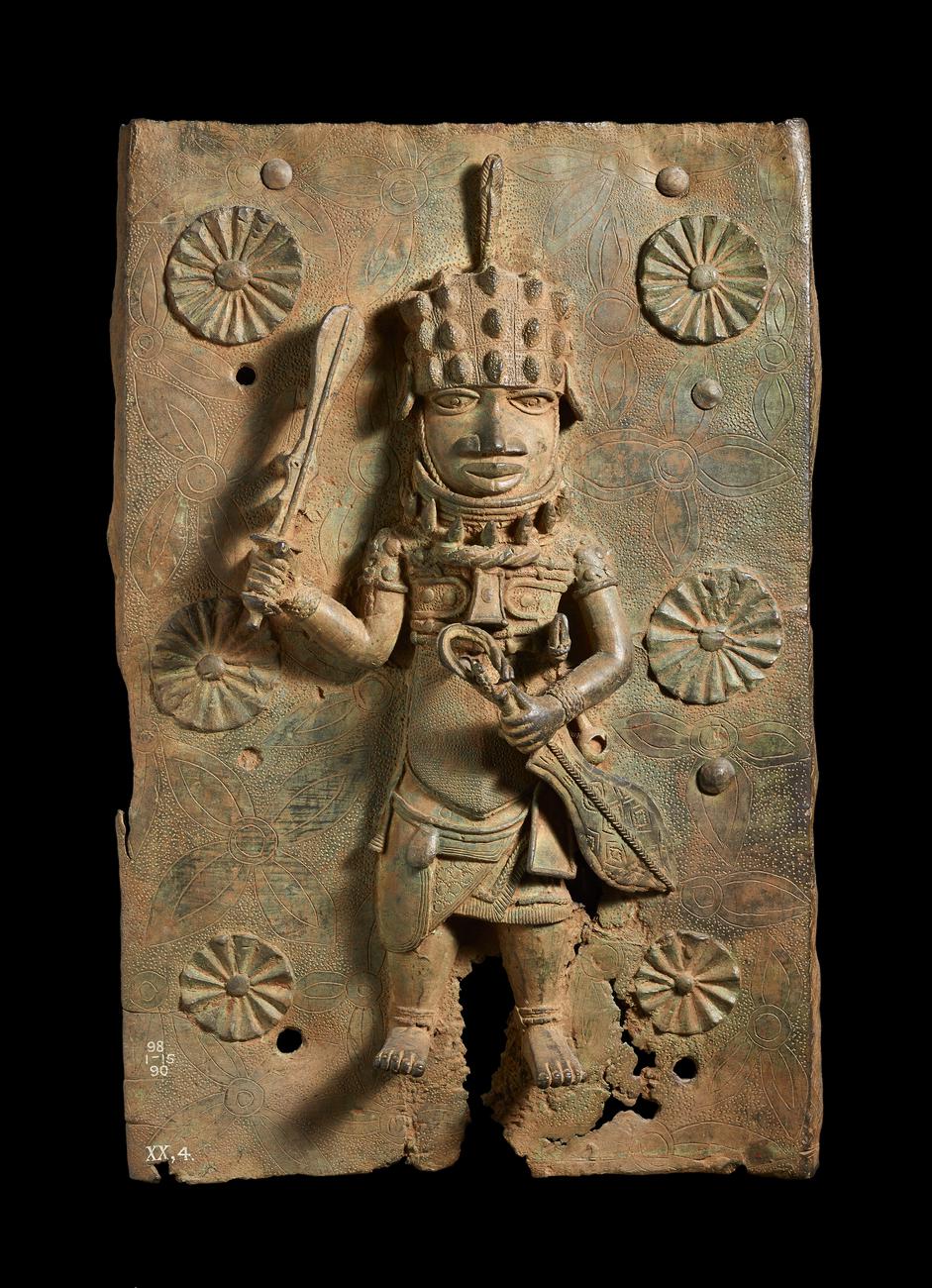
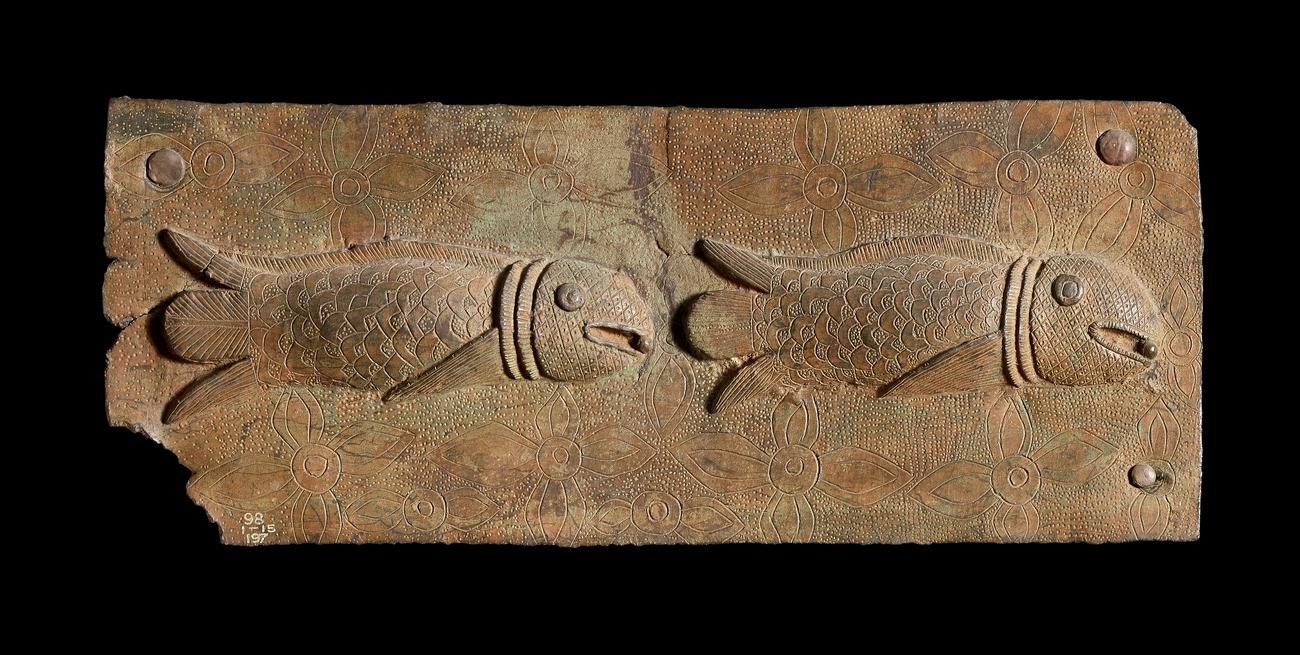
This is a Benin Plaque, created in Benin City during the 16th to 17th centuries. The plaque is made from brass using the ancient lost-wax casting method. You can see a narrow rectangle with no flanges on the sides. The background is richly decorated with river leaf patterns and tiny dots, or stippling.
The central image shows two fish, possibly mudfish, cast in relief. They are facing to the right, with open mouths containing round objects. Each fish has distinctive fins and a three-lobed tail. Their bodies are decorated with interlocking double scales and small dot patterns.
These plaques once adorned the pillars of the Oba’s palace, serving both as decoration and as historical records. Their detailed craftsmanship reflects the high mastery of Edo artisans. The plaques were made in matching pairs and displayed within the grand palace courtyards.
This artwork is one of many taken to the UK after the British Expedition to Benin in 1897, and today, these pieces offer a window into the artistic achievement and royal heritage of the Benin Kingdom.
See it in person
Benin Plaques is on display in Room 25 at the British Museum on Great Russell Street, Bloomsbury, London — free to enter. Choose British Museum on audioguide.london and take a photo of it to hear this free audio guide in six languages — no app download needed.
New, in beta. British Museum support has just launched and is still improving: over 1,000 objects so far, with more added all the time.