Ballet Dancers
- Artist: Hilaire-Germain-Edgar Degas
- Date: about 1890-1900
- Medium: oil on canvas
- Museum: The National Gallery
- Collection record: The National Gallery website
Listen to the free audio guide
About this artwork
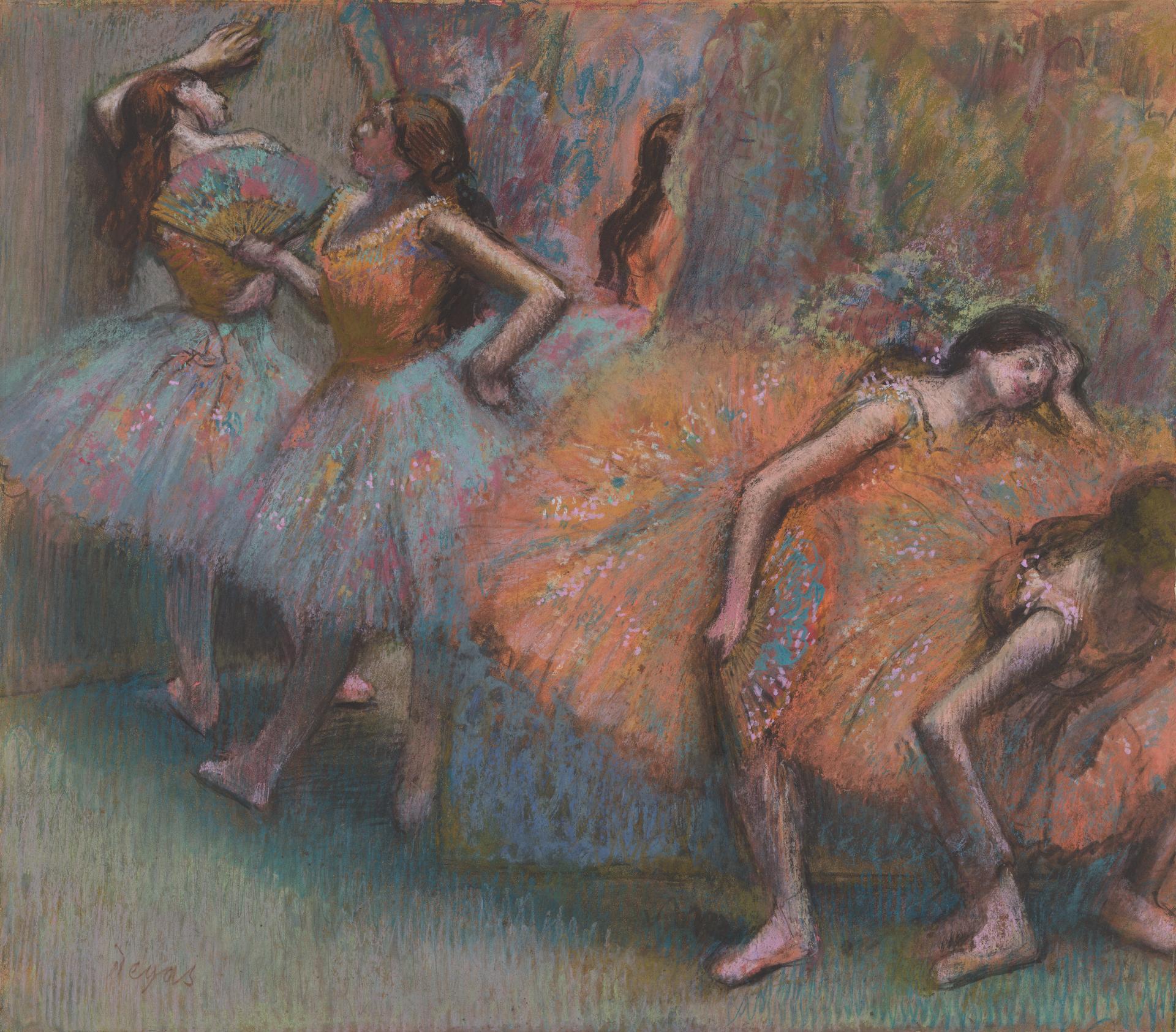
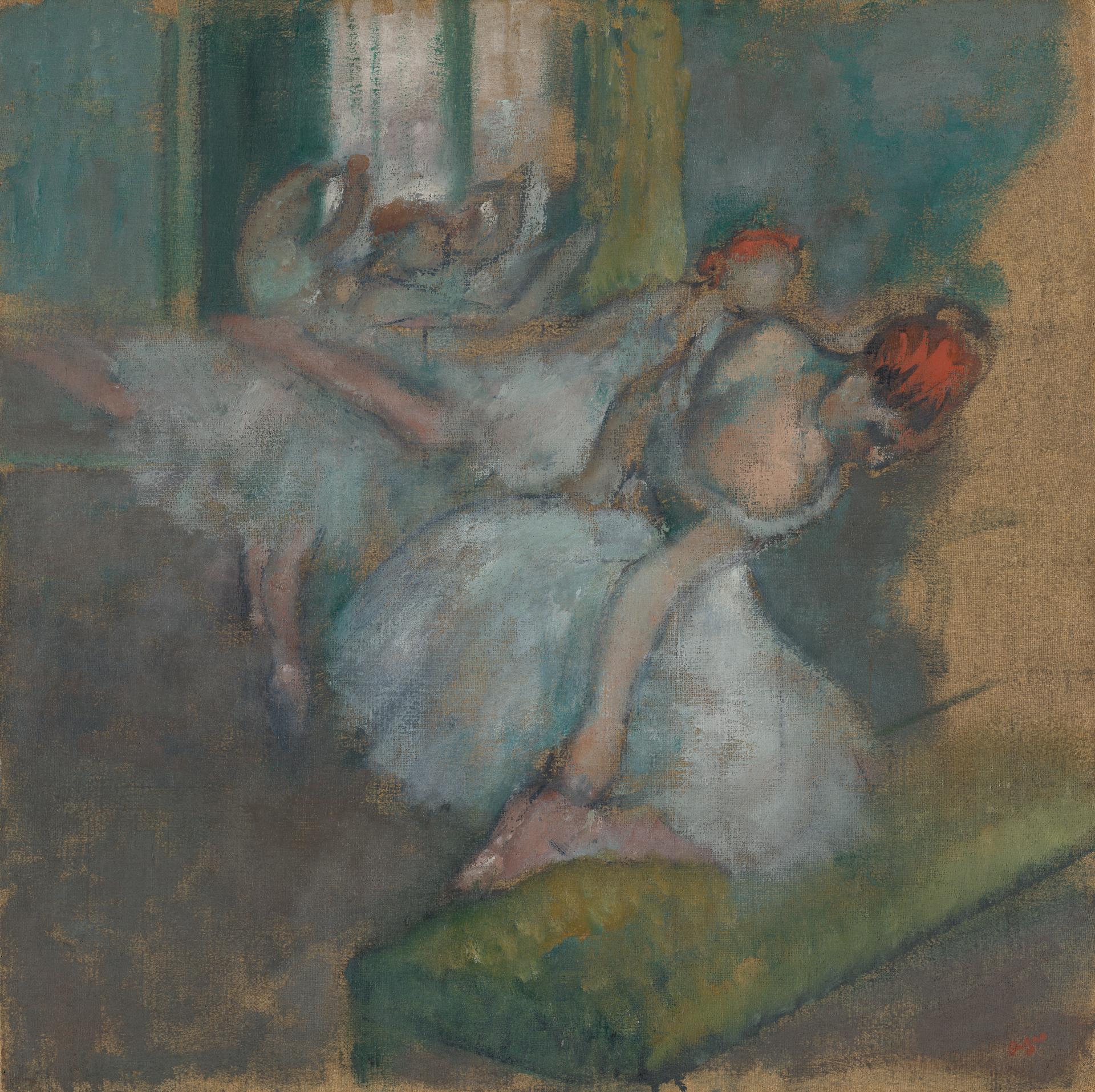
This is the "Ballet Dancers" painted in the late 19th century by Hilaire-Germain-Edgar Degas. You'll notice that the scene before you is a rehearsal of young ballet dancers at the Paris Opéra, dressed in their practice dresses, also known as tutus. The white skirts are what catch your eye - they're curved and stretched, almost like delicate wings.
These little girls were trained from a very early age, daily practicing the steps and positions that make up the language of classical ballet. Degas captures this repetition beautifully in his painting. He's not just interested in the moment when the dancers leap or twirl, but also in the moments between movements, when they're resting or adjusting their costumes.
You'll see how tenderly the dancer closest to us is posed on the bench, her foot raised as she adjusts the ribbons of her shoe. Even in this slightly awkward position, there's a sense of elegance and strength about her. The texture of the paint is almost as ephemeral as the dancers' tutus - it's delicate and web-like, with hints of dryness that remind us of pastel.
Degas often worked from memory when creating his scenes, using sketches and drawings made on the spot in the theatre, combined with images conjured up by his own imagination. He believed that repetition was essential to capturing a subject truly, whether it's a dancer or an artist working tirelessly in their studio.
See it in person
Ballet Dancers hangs in The National Gallery on Trafalgar Square, London — free to enter. Point your phone at any artwork there and audioguide.london plays a free audio guide in six languages — no app download needed.