At the Café de Châteaudun
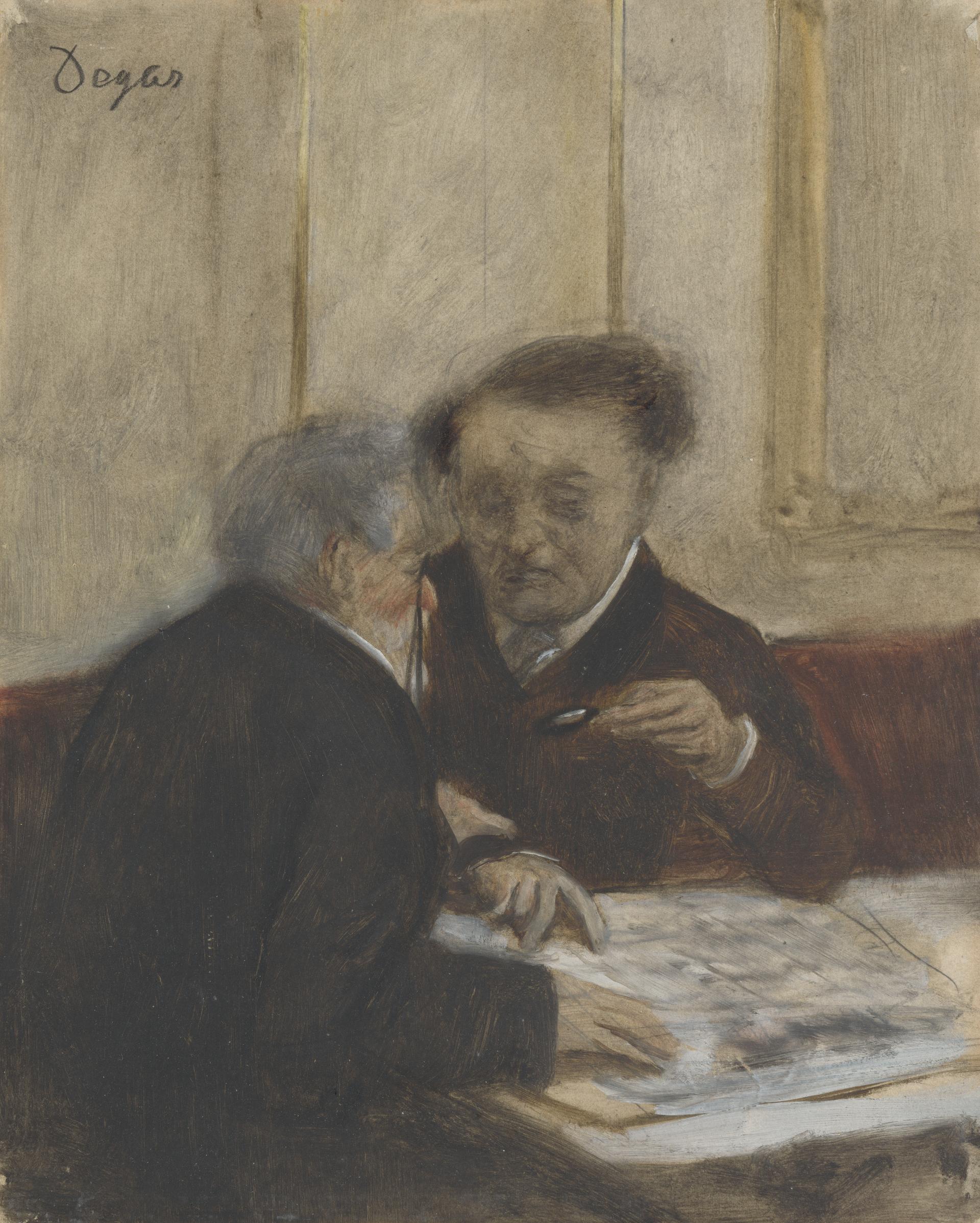
- Artist: Hilaire-Germain-Edgar Degas
- Date: about 1869-71
- Medium: oil on paper, mounted on wood
- Museum: The National Gallery
- Collection record: The National Gallery website
Listen to the free audio guide
About this artwork
This is "At the Café de Châteaudun" by Hilaire-Germain-Edgar Degas. Painted in the late 19th century, it's one of his early cafe or cafe-concert scenes, which would become a recurring theme in his work. Cafes were an essential part of Parisian social life and a rich source of inspiration for artists like Degas.
Take a look at these two men seated at a corner table. The figure facing us is pointing to an article in the newspaper, reading it through a small magnifying glass. His wrist is clasped by his older companion, who's wearing a monocle. We're placed close enough to overhear their conversation, but Degas leaves the exact nature of their interaction unclear.
What's interesting here is the way Degas focuses on the men's poses and gestures rather than their identities. He was more interested in capturing the essence of everyday life than telling us specific stories. The preparatory sketches that exist show him experimenting with different poses for similar characters, which gives you an idea of his creative process.
This small painting is actually a drawing on cream-coloured wove paper, mounted on canvas. Degas used oil paint, but he removed most of the oil and diluted it with turpentine to create a watercolour effect. The pencil marks under the paint reveal that he sketched the scene first and made changes to the poses. He's particularly detailed in his depiction of the hands, recalling the style of Daumier, an artist Degas admired and collected.
Dated around 1869-71, "At the Café de Châteaudun" is a significant work in Degas's oeuvre, showcasing his fascination with modern life subjects.
See it in person
At the Café de Châteaudun hangs in The National Gallery on Trafalgar Square, London — free to enter. Point your phone at any artwork there and audioguide.london plays a free audio guide in six languages — no app download needed.