Bag
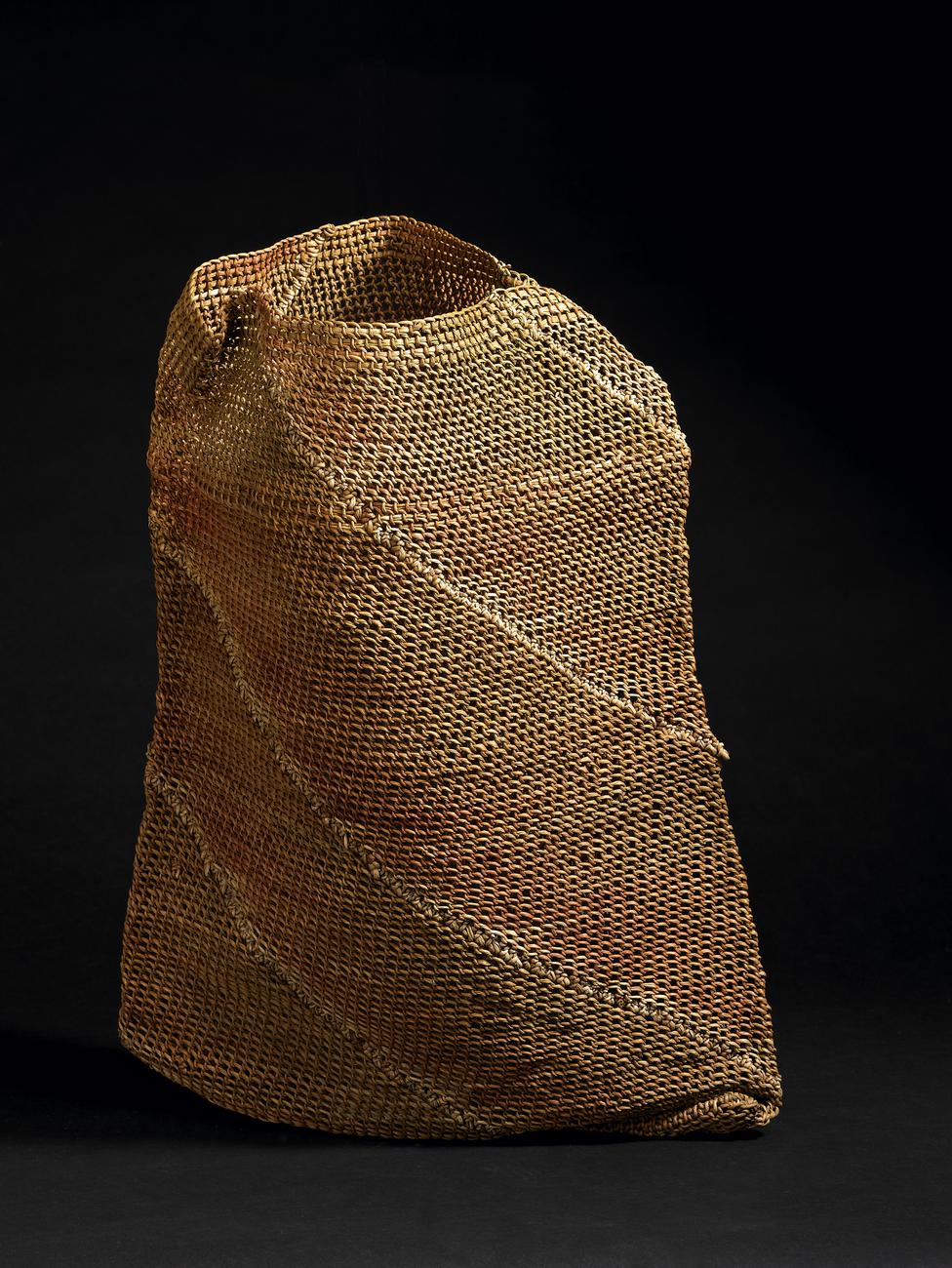
- Gallery: Room 24
- Date: 19thC (before 1888)
- Object type: bag
- Materials: grass fibre
- Museum number: Oc1954,06.386
- Museum: The British Museum
- Collection record: British Museum website
- Image © The Trustees of the British Museum, shared under a CC BY-NC-SA 4.0 licence.
Listen to the free audio guide
About this object
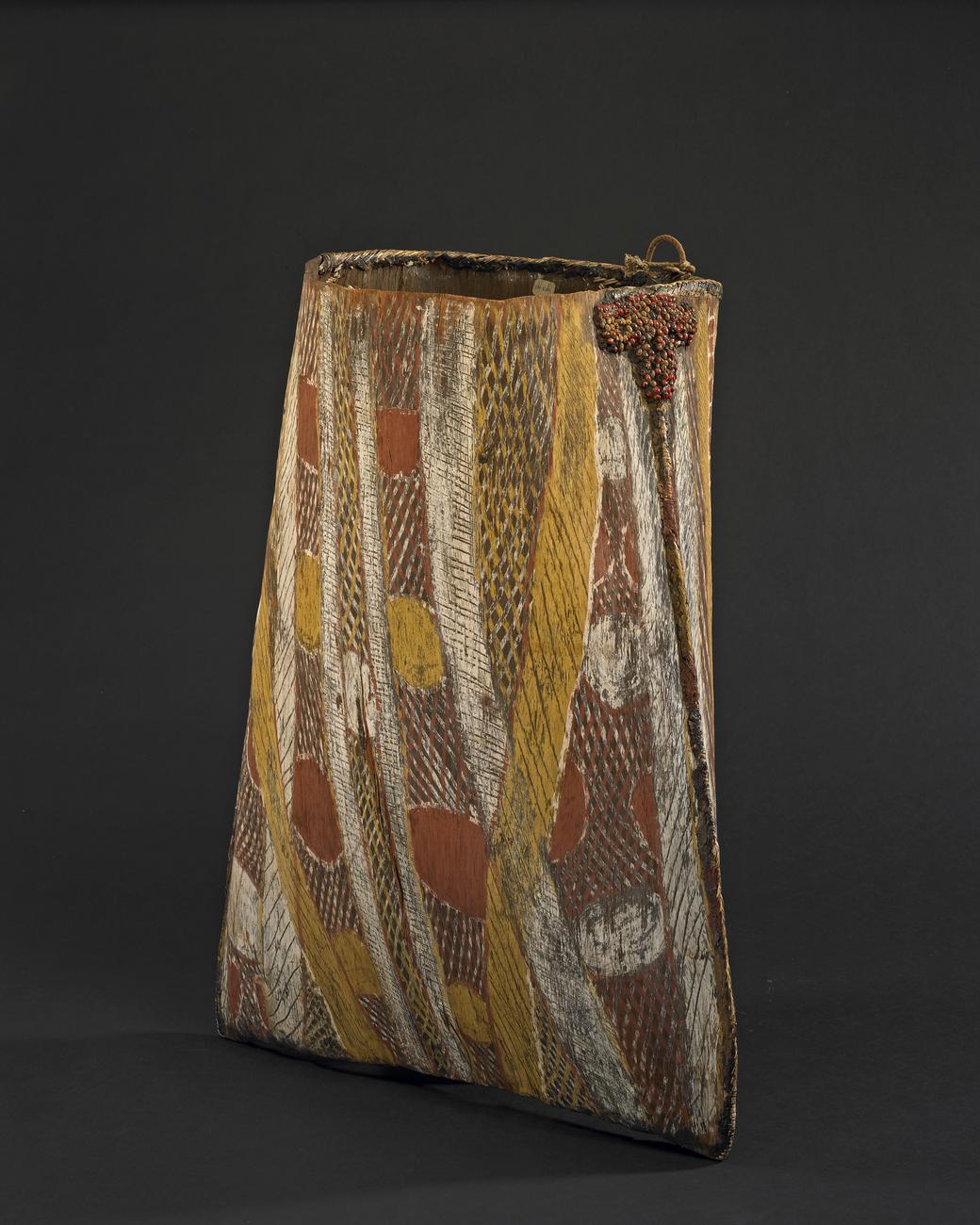
This beautifully woven bag is made from grass fiber, with diagonal lines created through a technique of looping and knotting. Take a moment to notice how color and pattern work together—the natural variations in the plant fibers contribute to its visual harmony. The craftsmanship is subtle yet refined, reflecting the deep knowledge of the maker about their materials.
Aboriginal Australian artisans crafted similar bags along Queensland’s east coast centuries ago. The design not only shows artistic sensitivity but was also tied to practical needs, as these dilly-bags were used to carry goods. One rare photograph from the 1800s in Brisbane shows women and a young girl holding similar bags.
Curiously, these bags were noted by early observers like James Backhouse, who praised the skill and sophistication behind them. The piece you see here was donated by the Wellcome Institute and dates from before 1888, making it a rare and historically valuable artifact.
See it in person
Bag is on display in Room 24 at the British Museum on Great Russell Street, Bloomsbury, London — free to enter. Choose British Museum on audioguide.london and take a photo of it to hear this free audio guide in six languages — no app download needed.
New, in beta. British Museum support has just launched and is still improving: over 1,000 objects so far, with more added all the time.