Back I
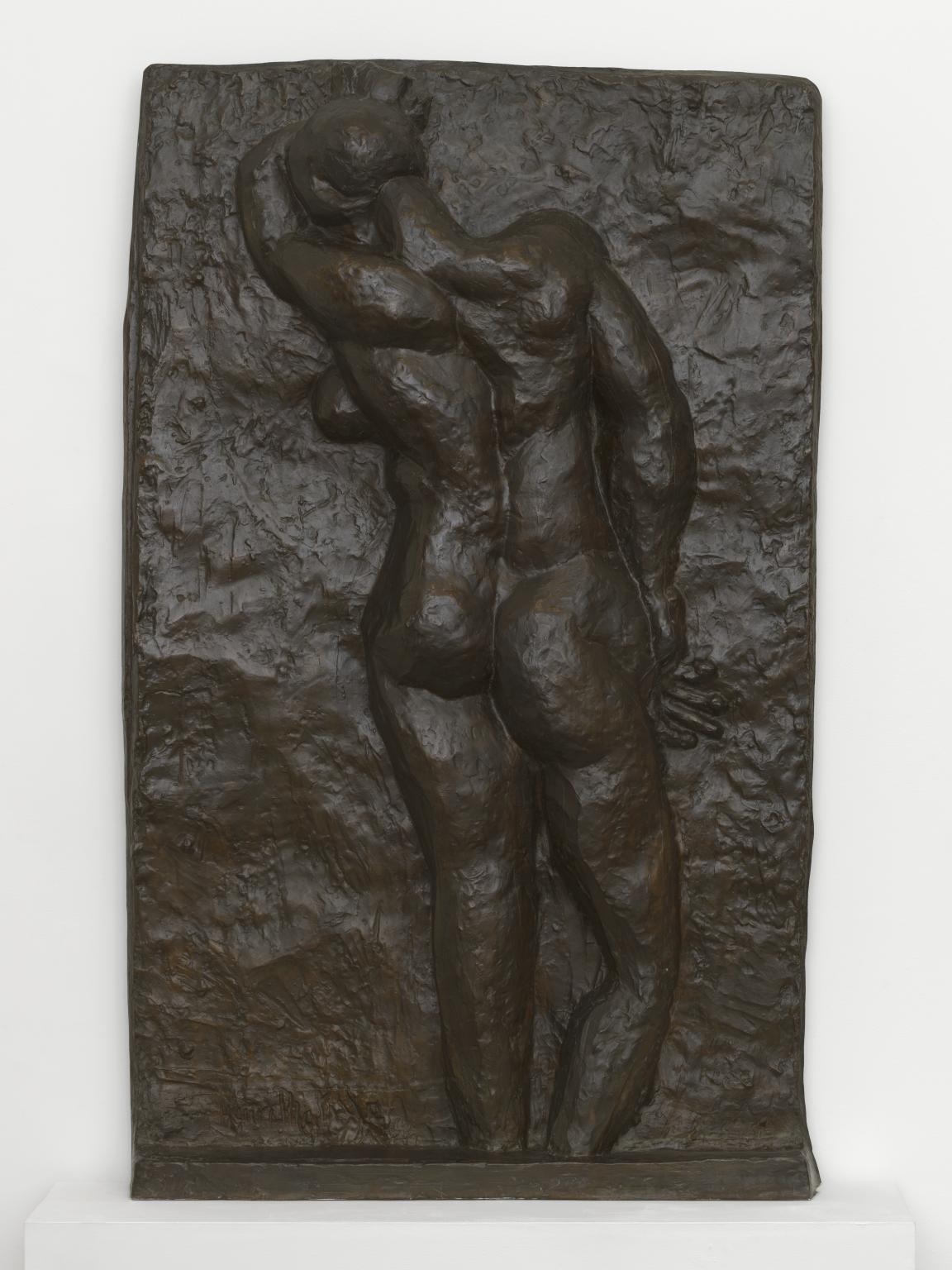
- Artist: Henri Matisse
- Date: c.1909–10, cast 1955–6
- Medium: Bronze
- Dimensions: object: 1899 × 1168 × 184 mm, 445 kg
- Museum: Tate Modern
- Collection record: Tate Modern website
Listen to the free audio guide
About this artwork
This is “Back I” by Henri Matisse. Matisse turned a simple pose—an unadorned woman leaning against a fence—into one of his biggest sculptures. He removed the face entirely, a bold move that lets the viewer focus on the mass of form rather than on a specific model. Over twenty years he refined the shape, stripping away flesh details until the back became a smooth, almost androgynous bulk with an abstracted plait replacing the spine. The finished bronze relief, cast in 1955–6 after Matisse’s death, measures about 74 × 46 cm and weighs nearly 450 kg, but in the gallery we see a scaled version that still captures the monumental scale he intended. Though first shown in 1913, the series remained largely unknown until the late 1940s when the plaster originals were exhibited in Paris and Lausanne. This piece exemplifies Matisse’s late‑period push toward simplification and stylisation.
See it in person
Back I is in the collection of Tate Modern on Bankside, London — free to enter. Point your phone at any artwork there and audioguide.london plays a free audio guide in six languages — no app download needed.